


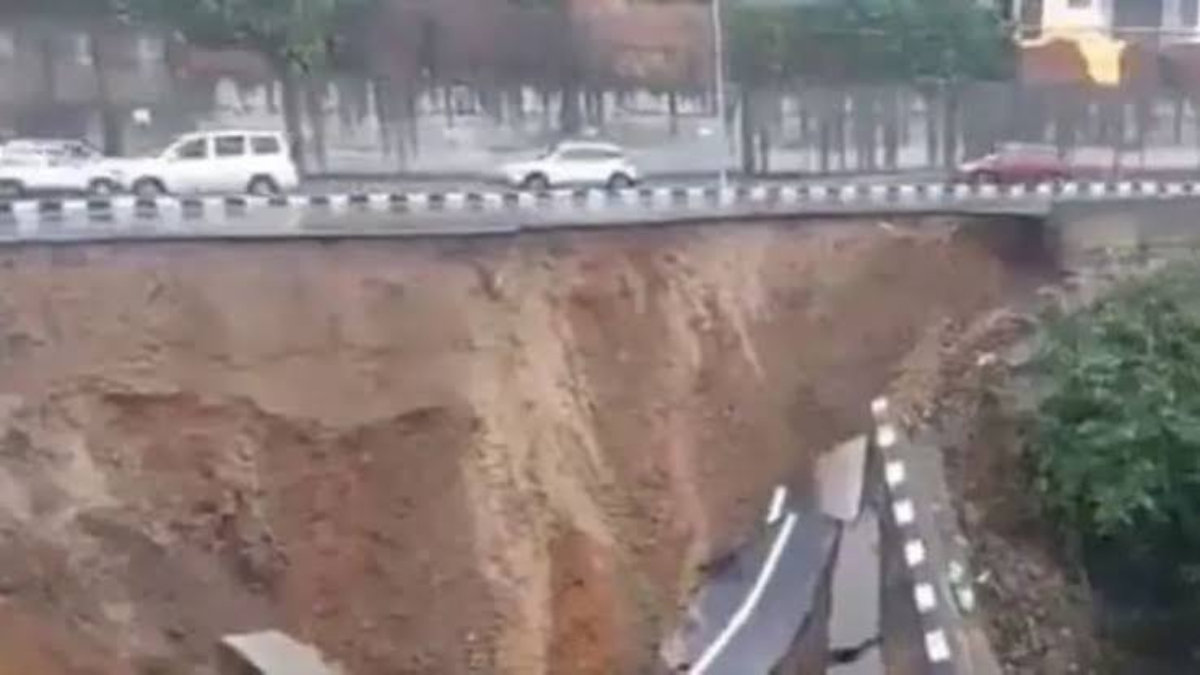
Papum Pare highway construction has come under scrutiny in Arunachal Pradesh after several newly built culverts along an ongoing road project were reportedly damaged or completely destroyed. The reported failures have raised concerns over construction quality, drainage planning and supervision while the highway is still being developed.
The road is being developed to improve connectivity from Naharlagun through Durpang village towards the Chessa River, Chengmara and Kokila areas near the Assam-Arunachal Pradesh boundary. The route is also expected to provide connectivity towards Donyi Polo Airport at Hollongi, making the project important for both local movement and access to the airport.
Culvert damage raises construction concerns
Several culverts constructed along the Papum Pare highway have reportedly suffered extensive damage despite the project remaining under construction. Some structures have allegedly been damaged beyond repair, according to local concerns reported on September 8.
Culverts are critical components of road infrastructure in hilly and high-rainfall areas. They allow water to pass beneath road embankments and help prevent waterlogging, erosion and damage to the road surface. When such structures fail before a road is completed, questions can arise about design, materials, workmanship and drainage arrangements.
However, the reported damage by itself does not establish the cause of the failures. A technical assessment would be required to determine whether the damage resulted from construction defects, inadequate drainage, heavy rainfall, soil movement or other site-specific factors.
Key connectivity route under scrutiny
The Papum Pare highway is being developed across an area that includes Durpang, Chessa, Chengmara and Kokila. These locations are also linked to the wider development around Hollongi and Donyi Polo Airport.
Government planning documents show that the Chessa, Chengmara, Hollongi and Durpang areas have previously required protection and river-training works along road and bridge infrastructure. A 2022 Arunachal Pradesh government document listed works involving piling protection and river training at bridges in these locations.
The significance of drainage and protection infrastructure is particularly important in a region exposed to intense rainfall and water flow. Damage to culverts can affect the stability of road embankments and may create additional problems if water is forced to find alternative paths.
Recent infrastructure damage adds to concerns
The latest issue comes amid other reports of road and bridge infrastructure being affected by adverse conditions in Papum Pare.
In August, the district administration directed landowners to clear debris after earth-cutting near NH 415 caused a major mudslide close to Donyi Polo Airport. The debris blocked the highway for several hours and left vehicles stranded. Officials identified three major locations where the road had been damaged because of earth-cutting.
Earlier in August, the approach embankment of the Ranga-I bridge over the Panyor River on the Kimin-Potin road was also extensively damaged following heavy rainfall. Authorities restricted heavy vehicles and advised other motorists to cross the bridge cautiously.
These incidents highlight the challenges involved in building and maintaining road infrastructure in Arunachal Pradesh, where steep terrain, heavy rain and river systems can put significant pressure on roads, culverts and bridges.
Why proper drainage matters
For the Papum Pare highway, the condition of culverts will be important to the long-term performance of the road. Properly designed drainage structures must handle expected water flows while protecting the surrounding embankment and adjoining road surface.
If damaged culverts are not assessed and restored properly, repeated water flow could worsen erosion and create further weaknesses along the highway. This could increase maintenance requirements and potentially delay completion of the project.
Need for technical inspection
The reported failures have prompted concerns among local residents about the quality of construction and monitoring of the ongoing work. A detailed inspection by the responsible engineering authorities would help establish the condition of each affected culvert and identify the reasons behind the damage.
Such an assessment would also be important before the road is completed. Identifying structural or drainage problems during construction can allow corrective work to be undertaken before the highway is opened for regular traffic.
The project is expected to improve connectivity between Naharlagun, surrounding areas and the Assam-Arunachal border region. Ensuring that its drainage and supporting structures are durable will therefore be essential for the highway to deliver reliable connectivity over the long term.
As scrutiny grows over the damaged culverts, attention is likely to remain focused on the quality of ongoing construction and the measures being taken to protect the Papum Pare highway from further deterioration.