


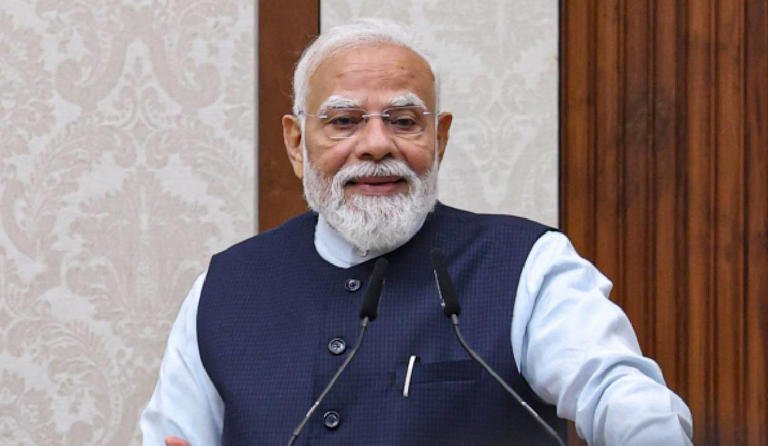
Prime Minister Narendra Modi has urged young Indian Administrative Service (IAS) officers to approach governance with empathy, responsibility, and a deep sense of public service, reminding them that every file they handle represents the aspirations, hopes, and lives of countless citizens. Addressing a group of young civil servants, the Prime Minister emphasized the critical role that administrators play in shaping the nation’s development and ensuring that government policies translate into meaningful improvements in people’s lives.
The interaction highlighted the importance of ethical governance, citizen-centric administration, and the responsibility entrusted to civil servants in a rapidly transforming India. Prime Minister Modi encouraged the officers to view their roles not merely as positions of authority but as opportunities to serve the nation and contribute to inclusive growth.
His remarks underscored the central role of the civil services in implementing government programs, delivering public services, and strengthening trust between citizens and institutions. The address also reflected the government’s continued emphasis on efficient, transparent, and responsive governance.
A Call for Citizen-Centric Governance
During the interaction, the Prime Minister stressed that government files should never be viewed as routine paperwork or administrative formalities. Instead, he urged officers to recognize that behind every document lies the story of an individual, a family, a community, or an entire region seeking solutions and support.
According to the Prime Minister, administrative decisions have far-reaching consequences that directly affect people’s lives. Whether related to welfare schemes, infrastructure projects, education, healthcare, or economic development, each decision taken by civil servants can influence the well-being of countless citizens.
He encouraged officers to remain sensitive to public needs and ensure that governance remains focused on delivering tangible outcomes. By adopting a citizen-first approach, administrators can help bridge the gap between policy formulation and effective implementation.
Importance of Public Service
Prime Minister Modi emphasized that civil service is fundamentally a profession dedicated to public welfare. He reminded young officers that their responsibilities extend beyond managing files and procedures to addressing the aspirations of a diverse and dynamic nation.
The Prime Minister noted that civil servants occupy a unique position within the governance framework, enabling them to bring positive change at both local and national levels. Their actions can influence development outcomes, improve service delivery, and enhance public confidence in institutions.
He encouraged officers to embrace their responsibilities with commitment and integrity while maintaining a strong connection with the people they serve. According to him, meaningful public service requires both administrative competence and genuine concern for citizens.
Role of IAS Officers in Nation Building
The Prime Minister highlighted the significant contribution of IAS officers to India’s development journey. From implementing flagship programs to managing crises and supporting grassroots development, civil servants play a pivotal role in translating government initiatives into reality.
He noted that the country’s progress depends not only on visionary policies but also on effective execution at the ground level. In this regard, administrators serve as a vital link between policymakers and citizens.
Young officers were encouraged to view themselves as partners in nation-building and to actively contribute to achieving developmental goals. The Prime Minister stressed that their dedication and innovation could help address complex challenges and improve the quality of life for millions.
Encouraging Innovation and Adaptability
Recognizing the rapidly changing nature of governance, Prime Minister Modi urged the officers to remain adaptable and open to new ideas. He highlighted the growing importance of technology, digital governance, and data-driven decision-making in improving administrative efficiency.
The Prime Minister encouraged officers to explore innovative approaches to problem-solving and to leverage modern tools for better service delivery. Digital platforms, he noted, have transformed the way governments interact with citizens and have created opportunities to enhance transparency and accountability.
He emphasized that embracing innovation can help administrators respond more effectively to emerging challenges while ensuring that public services reach beneficiaries in a timely and efficient manner.
Strengthening Transparency and Accountability
A major theme of the Prime Minister’s address was the importance of transparency and accountability in public administration. He stressed that trust is one of the most valuable assets in governance and that civil servants must work to maintain and strengthen that trust.
According to the Prime Minister, transparent decision-making processes and ethical conduct are essential for ensuring public confidence in institutions. Officers were encouraged to uphold the highest standards of professionalism and integrity throughout their careers.
He also highlighted the need for responsiveness and timely action in addressing public concerns. Efficient governance, he noted, requires not only sound policies but also accountable implementation mechanisms.
Learning from Grassroots Experiences
Prime Minister Modi advised young officers to spend time understanding the realities faced by people at the grassroots level. Direct engagement with communities, he suggested, provides valuable insights into local challenges and helps administrators design more effective solutions.
He encouraged officers to travel extensively within their assigned areas, interact with citizens, and gain firsthand knowledge of development needs. Such experiences can strengthen empathy and improve decision-making by ensuring that policies are informed by ground realities.
The Prime Minister observed that some of the most effective governance initiatives emerge from a deep understanding of local conditions and active collaboration with communities.
Preparing for Future Challenges
The Prime Minister also spoke about the evolving responsibilities of civil servants in a rapidly changing world. Issues such as climate change, urbanization, technological transformation, and demographic shifts are creating new governance challenges that require innovative and forward-looking solutions.
Young officers were encouraged to continuously update their knowledge and skills to remain effective in an increasingly complex administrative environment. Lifelong learning, adaptability, and strategic thinking were highlighted as essential qualities for modern civil servants.
He noted that the future of governance will depend on the ability of administrators to anticipate challenges, harness opportunities, and respond effectively to changing circumstances.
Building a Stronger India Through Effective Administration
The interaction concluded with a broader message about the role of civil servants in shaping India’s future. Prime Minister Modi emphasized that the nation’s progress depends significantly on the commitment, competence, and dedication of its administrative machinery.
He urged young IAS officers to approach their careers with a sense of purpose and responsibility, recognizing the profound impact their decisions can have on people’s lives. By remaining committed to public service, embracing innovation, and prioritizing citizens’ needs, they can contribute meaningfully to India’s development journey.
The Prime Minister’s message that every file represents the aspirations and lives of countless citizens served as a powerful reminder of the human dimension of governance. It reinforced the idea that effective administration is not merely about procedures and regulations but about improving lives, empowering communities, and building a stronger, more inclusive nation.
As India continues its path toward growth and transformation, the role of dedicated civil servants will remain crucial in ensuring that development reaches every citizen and that governance remains responsive, transparent, and people-centric.