


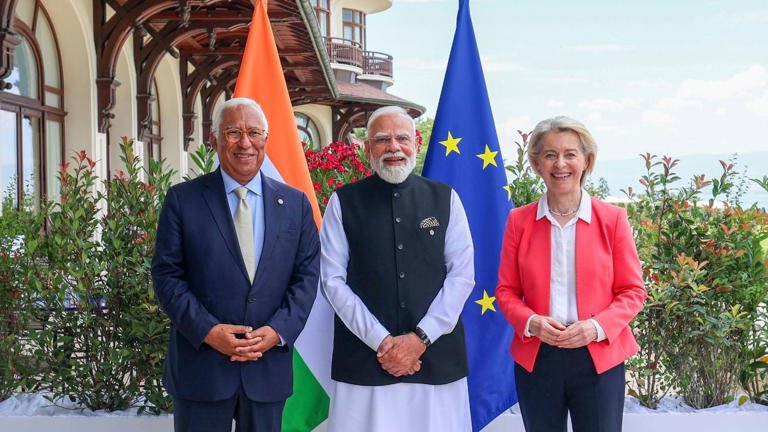
Prime Minister Narendra Modi’s participation in the G7 Summit has once again highlighted India’s growing influence on the global stage, with the country’s multi-alignment diplomatic strategy yielding significant trade and economic gains. Through a series of high-level engagements with leaders from the United Kingdom, Canada, and the European Union, India reinforced its position as a key economic partner while advancing discussions on trade, investment, technology, and strategic cooperation.
The summit provided an important platform for India to strengthen ties with major global economies amid a rapidly changing international landscape. Prime Minister Modi’s interactions demonstrated how India’s foreign policy approach—often described as multi-alignment diplomacy—enables the country to engage constructively with diverse partners while safeguarding its national interests.
Observers noted that the meetings reflected India’s increasing importance in global supply chains, technological innovation, clean energy transitions, and economic growth. The outcomes also underscored New Delhi’s ability to build partnerships across geopolitical divides while expanding trade opportunities.
Understanding India’s Multi-Alignment Diplomacy
India’s foreign policy in recent years has increasingly been characterized by a multi-alignment approach. Rather than aligning exclusively with any single geopolitical bloc, India has sought to maintain strong and mutually beneficial relationships with a wide range of countries and international organizations.
This strategy allows India to engage simultaneously with developed economies, emerging markets, regional organizations, and strategic partners. By pursuing issue-based cooperation, India has been able to strengthen economic ties, attract investment, enhance technology partnerships, and expand its global influence.
Prime Minister Modi’s engagements at the G7 reflected this diplomatic philosophy. His meetings with leaders from different countries focused on practical areas of cooperation such as trade, innovation, manufacturing, clean energy, and investment.
The approach has enabled India to position itself as a trusted and reliable partner in an increasingly fragmented global environment.
Strengthening Trade Ties with the United Kingdom
One of the major highlights of the summit was the continued focus on economic cooperation between India and the United Kingdom. Discussions centered on expanding bilateral trade, increasing investments, and deepening collaboration across various sectors.
India and the UK have been working to strengthen their economic partnership through ongoing negotiations and business engagement initiatives. The two countries share strong commercial ties, and policymakers on both sides have emphasized the importance of unlocking additional opportunities for businesses and investors.
Prime Minister Modi highlighted India’s growing economic potential, expanding consumer market, and improving business environment. The discussions reportedly covered areas such as advanced manufacturing, financial services, technology, education, and innovation.
Enhanced trade cooperation with the UK is expected to contribute to economic growth, job creation, and stronger business linkages between the two nations.
Renewed Economic Engagement with Canada
The G7 Summit also provided an opportunity for renewed engagement between India and Canada. Economic cooperation featured prominently in discussions as both countries explored ways to strengthen bilateral trade and investment relations.
Canada remains an important partner for India in sectors such as education, energy, agriculture, technology, and natural resources. Business leaders and policymakers have increasingly emphasized the potential for deeper economic cooperation between the two countries.
Prime Minister Modi’s interactions at the summit reflected a willingness to advance practical areas of collaboration despite previous challenges in bilateral relations. Trade and investment opportunities were among the key topics discussed, highlighting the mutual benefits of stronger economic engagement.
Analysts noted that improving economic ties could create opportunities for businesses in both countries while contributing to broader strategic cooperation.
The discussions reinforced the importance of maintaining open channels of dialogue and pursuing mutually beneficial partnerships.
Expanding Cooperation with the European Union
The European Union emerged as another significant focus area during India’s engagements at the G7 Summit. India and the EU have been actively exploring ways to deepen economic cooperation through enhanced trade and investment partnerships.
The EU is among India’s largest trading partners, making the relationship particularly important for both sides. Discussions reportedly focused on strengthening commercial ties, promoting investment flows, and expanding collaboration in emerging sectors.
Prime Minister Modi emphasized India’s attractiveness as an investment destination, citing its large market, skilled workforce, and rapidly growing economy. European leaders acknowledged India’s increasing role in global economic development and supply chains.
Areas such as renewable energy, digital technologies, green infrastructure, innovation, and sustainable development featured prominently in discussions. Both sides expressed interest in leveraging complementary strengths to create long-term economic value.
The summit reinforced the strategic importance of the India-EU relationship in an evolving global economy.
Trade as a Pillar of Foreign Policy
A notable aspect of India’s participation at the G7 was the emphasis placed on trade and economic diplomacy. The government has increasingly viewed economic partnerships as a critical component of foreign policy.
By strengthening commercial ties with major economies, India aims to attract investment, expand exports, create jobs, and accelerate economic growth. Trade agreements, investment partnerships, and business collaborations are increasingly being used as instruments to support national development objectives.
Prime Minister Modi’s engagements reflected this approach by focusing on practical outcomes and economic opportunities. Discussions frequently centered on how businesses, industries, and innovation ecosystems can work together to generate shared prosperity.
Officials noted that economic diplomacy remains essential for positioning India as a major global economic power.
India’s Growing Appeal as an Investment Destination
Throughout the summit, India presented itself as one of the world’s most attractive destinations for investment and innovation. Prime Minister Modi highlighted reforms aimed at improving ease of doing business, strengthening infrastructure, and promoting manufacturing.
Global investors are increasingly viewing India as a key market due to its demographic advantages, digital transformation, expanding middle class, and strong growth prospects. These factors have enhanced the country’s competitiveness in attracting foreign direct investment.
The Prime Minister emphasized that India offers opportunities across multiple sectors, including technology, renewable energy, healthcare, logistics, manufacturing, and financial services.
Business leaders participating in G7-related discussions reportedly expressed interest in exploring further investment opportunities in the Indian market.
The growing confidence of international investors reflects India’s expanding role in the global economy.
Technology and Innovation Partnerships
Technology emerged as another important area of cooperation during discussions with the UK, Canada, and the European Union. Prime Minister Modi highlighted India’s achievements in digital governance, startup development, and innovation.
India’s rapidly expanding technology ecosystem has become a major attraction for global partners seeking collaboration in areas such as artificial intelligence, digital infrastructure, cybersecurity, fintech, and research.
The Prime Minister emphasized that innovation-driven partnerships can help address global challenges while generating economic growth. Collaborative efforts in technology are increasingly viewed as essential for maintaining competitiveness and supporting sustainable development.
The summit discussions underscored the importance of building innovation networks that connect businesses, research institutions, and governments across borders.
Strategic Importance of the G7 Platform
Although India is not a member of the G7, its regular participation as an invited partner reflects its growing international significance. The summit offers an important opportunity to engage with leaders of major economies and contribute to discussions on global challenges.
For India, the G7 serves as a valuable platform for advancing economic interests, strengthening diplomatic ties, and showcasing national achievements. Prime Minister Modi’s engagements demonstrated the country’s ability to influence discussions on trade, technology, sustainability, and development.
The summit also highlighted India’s role as a bridge between developed and developing economies. This position enables New Delhi to advocate for inclusive growth and balanced international cooperation.
Observers noted that India’s voice carries increasing weight in global policymaking forums.
Looking Ahead
Prime Minister Narendra Modi’s engagements at the G7 Summit demonstrated the effectiveness of India’s multi-alignment diplomacy in advancing economic and trade interests. By strengthening ties with the United Kingdom, Canada, and the European Union, India reinforced its position as a trusted partner and a major driver of global growth.
The discussions highlighted opportunities for expanding trade, attracting investment, promoting innovation, and strengthening strategic cooperation across multiple sectors. They also underscored the growing recognition of India’s economic potential and its importance within global supply chains.
As the international environment continues to evolve, India’s ability to maintain productive relationships with diverse partners will remain a key advantage. The outcomes of the G7 engagements suggest that New Delhi’s multi-alignment approach is not only enhancing diplomatic flexibility but also delivering tangible economic benefits.
With a focus on trade, technology, sustainability, and investment, India is increasingly positioning itself as a central player in shaping the future of the global economy. The G7 Summit served as another milestone in that journey, reinforcing the country’s emergence as a confident and influential global power.