


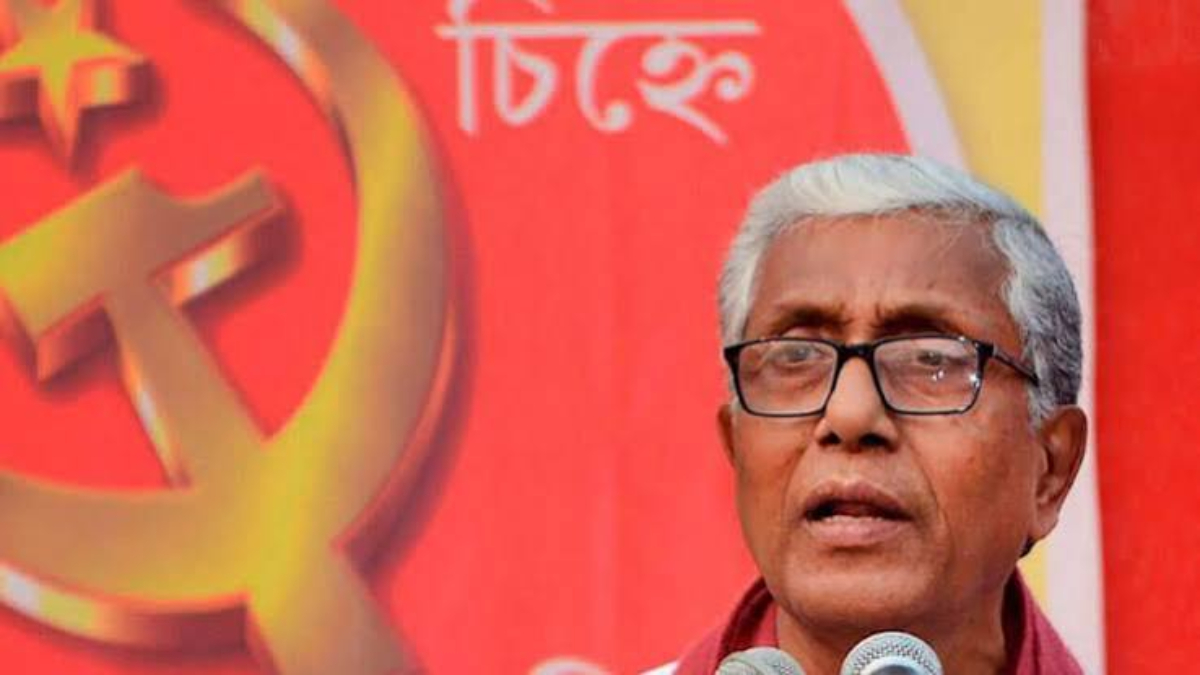
Amra Bangali protest has once again brought Tripura’s past security challenges into the spotlight after members of the regional organisation burned an effigy of former Chief Minister Manik Sarkar. The protest was held to accuse the erstwhile Left Front government of failing to take decisive action against armed tribal insurgent groups during its tenure. The demonstration sparked renewed political debate over the state’s history of insurgency, governance, and security measures, with Amra Bangali demanding greater accountability for what it described as years of administrative inaction.
Amra Bangali protest targets former CM Manik Sarkar
Members of Amra Bangali staged a demonstration in Tripura, where they burned an effigy of former Chief Minister Manik Sarkar. Protesters alleged that the previous Left Front government did not take adequate action against armed tribal insurgent outfits that were active in the state during different phases of its rule.
The organisation claimed that several Bengali families suffered due to insurgency-related violence and displacement. Protest leaders argued that the administration at the time failed to respond firmly to security threats, allowing militant activities to continue for extended periods.
During the protest, Amra Bangali members raised slogans demanding justice for victims affected by insurgency and called for a broader public discussion on the government’s handling of law and order during that period.
Why the organisation is raising the issue now
According to Amra Bangali leaders, the demonstration was intended to remind people of the challenges faced by civilians during the years when insurgent violence affected several parts of Tripura. They maintained that political accountability should extend beyond electoral politics and include discussions about public safety and governance.
The organisation alleged that the Left government overlooked the concerns of people living in vulnerable areas despite repeated incidents involving armed militant groups. Protesters said they wanted younger generations to understand the historical impact of insurgency on the state.
The renewed criticism comes at a time when political discourse in Tripura has increasingly focused on past administrations and their role in shaping the state’s security landscape.
Background of tribal insurgency in Tripura
Tripura witnessed prolonged insurgent activity from several armed tribal groups during the 1990s and early 2000s. These organisations were involved in violent attacks, extortion, kidnappings, and targeted killings, creating widespread fear across many districts.
Successive governments, supported by central security agencies, gradually intensified counter-insurgency operations. Improved intelligence gathering, enhanced policing, development initiatives, and peace agreements contributed to a significant decline in militant violence over the years.
Today, Tripura is widely regarded as one of the northeastern states that has largely overcome large-scale insurgency, although debates continue regarding the effectiveness of policies adopted by different governments during the conflict years.
Political reactions remain divided
The Amra Bangali protest has generated mixed political responses. While the organisation insists that the previous Left administration failed to adequately address insurgent activities, leaders associated with the Left have historically maintained that their government successfully restored peace through coordinated security operations and socio-economic development.
Supporters of the former government have often pointed to the steady decline in insurgency during Manik Sarkar’s tenure, arguing that improved governance and cooperation with security agencies helped normalise the situation.
Political observers believe the latest protest reflects continuing disagreements over how Tripura’s insurgency period should be assessed and remembered.
Amra Bangali’s key demands
During the protest, the organisation reiterated several demands, including:
- Public acknowledgement of the suffering experienced by civilians during insurgency.
- Greater accountability regarding decisions taken during the Left Front government’s tenure.
- Continued efforts to preserve peace and prevent any resurgence of militant activities.
- Recognition of victims affected by insurgency-related violence.
The group also urged political leaders to prioritise security and communal harmony while discussing the state’s history.
Security situation in present-day Tripura
Tripura’s security environment has improved considerably compared to previous decades. Coordinated efforts by state police, central security forces, and intelligence agencies have significantly reduced militant activity across the state.
Government initiatives focusing on infrastructure, border management, employment opportunities, and development in tribal areas have also been credited with supporting long-term peace.
Despite these improvements, organisations such as Amra Bangali argue that acknowledging past events remains essential for ensuring transparency and preventing similar challenges in the future.
Political significance ahead
The latest Amra Bangali protest has once again revived discussion over one of Tripura’s most sensitive political and security issues. While the demonstration centred on allegations against the former Left government, it also highlighted the continuing importance of historical narratives in shaping present-day political debates.
As different political parties continue to present contrasting interpretations of Tripura’s insurgency years, issues relating to governance, accountability, and public security are likely to remain significant topics in the state’s political discourse. Whether the protest leads to wider political responses or legislative debate remains to be seen, but it has undoubtedly reignited discussion about Tripura’s journey from insurgency to relative peace.