

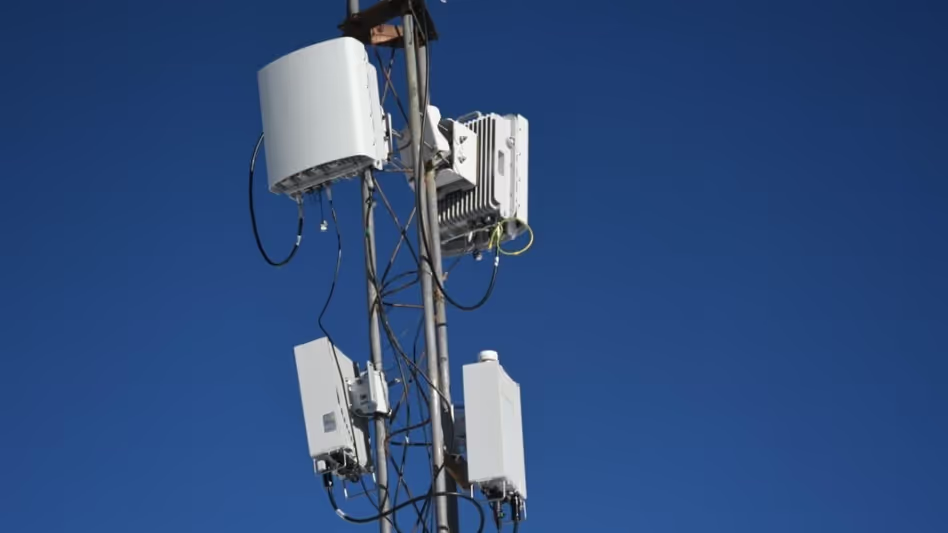
Mobile connectivity in Arunachal’s border districts to get push as Indian Army and Airtel sign pact, boosting security, development, and digital access.
Mobile Connectivity in Arunachal’s Border Districts to Get Push as Army, Airtel Ink Pact
In a historic and positive development, the long-neglected border districts of Arunachal Pradesh are set to benefit as the mobile connectivity in Arunachal’s border districts to get push through a unique pact signed between the Indian Army and telecom giant Bharti Airtel.
This move promises not just enhanced communication but also greater security, socio-economic development, and integration of remote communities into India’s digital landscape.
Why Connectivity in Border Districts Matters
Arunachal Pradesh shares a sensitive and strategic boundary with China, Bhutan, and Myanmar. Many of its border districts remain remote, hilly, and cut off due to challenging terrain. For decades, villagers and security personnel alike have struggled with poor mobile connectivity, leading to:
- Difficulty in coordinating defense and security operations.
- Limited access to education, healthcare, and emergency services.
- A sense of isolation among border residents, fueling migration to urban centers.
Thus, the news that mobile connectivity in Arunachal’s border districts to get push is seen as a game-changer.
The Army-Airtel Pact
The pact was signed in Itanagar in August 2025. Under this agreement:
- Indian Army will provide logistical support, land, and security clearances for mobile tower installations.
- Airtel will deploy its advanced 4G and 5G network infrastructure in identified locations.
- Special focus will be given to Tawang, Anjaw, Kurung Kumey, and Upper Subansiri districts—areas often cited as communication black spots.
This civil-military partnership ensures that both national security and civilian welfare are addressed simultaneously.
A Step Toward Digital Inclusion
The announcement that mobile connectivity in Arunachal’s border districts to get push is not just about defense—it’s about digital empowerment.
Residents in these areas will soon enjoy:
- Reliable voice and internet services.
- Access to online education platforms for children.
- Telemedicine services for remote healthcare.
- Opportunities for e-commerce and small businesses.
By connecting villages digitally, the pact ensures that development reaches the last mile.
Boost to National Security
From a defense perspective, the mobile connectivity in Arunachal’s border districts to get push means:
- Faster communication between Army posts during emergencies.
- Enhanced intelligence sharing along the Line of Actual Control (LAC).
- Use of real-time surveillance systems powered by mobile networks.
In sensitive zones like Tawang and Kibithu, where tensions with China occasionally flare up, secure mobile connectivity is nothing short of a strategic asset.
Challenges in Bringing Connectivity
Building networks in Arunachal Pradesh is no easy task. The state is characterized by:
- Mountainous terrain with limited road access.
- Frequent landslides and floods during monsoons.
- Sparse populations spread across vast distances.
Telecom companies often avoided heavy investment due to low profitability. However, with the Army’s backing and government incentives, Airtel is now positioned to overcome these hurdles.
This explains why the mobile connectivity in Arunachal’s border districts to get push through this pact is considered a rare breakthrough.
Voices from the Ground
Villagers in Tawang and Anjaw expressed joy and relief at the news:
“For years, we had to climb hills to catch a faint signal. Now, with towers coming, we can talk to relatives, call doctors, and connect our children to online classes,” said a resident of Zemithang village.
Such reactions highlight how the mobile connectivity in Arunachal’s border districts to get push will transform daily lives.
Government’s Digital India Vision
The pact aligns perfectly with Prime Minister Narendra Modi’s Digital India mission, which aims to provide internet access to every citizen. Arunachal Pradesh, due to its location and terrain, has often lagged behind.
Now, with the mobile connectivity in Arunachal’s border districts to get push, the government can:
- Strengthen border infrastructure.
- Empower tribal communities with digital literacy programs.
- Foster entrepreneurship and startups in rural areas.
This makes the pact not just a regional initiative but a national milestone.
The Role of Airtel
Airtel, one of India’s largest telecom operators, has been expanding aggressively in Northeast India. With this pact:
- Airtel will install dozens of new towers across border belts.
- The company will bring 4G services initially, followed by 5G in select areas.
- Special emphasis will be placed on network resilience against extreme weather.
For Airtel, the pact is both a business opportunity and a nation-building exercise.
Comparisons with Other States
Similar efforts have been made in Ladakh and Sikkim, where military-civil partnerships improved connectivity in remote outposts. However, Arunachal presents the largest challenge due to its size and remoteness.
The news that mobile connectivity in Arunachal’s border districts to get push signals that the region is finally receiving priority attention.
Impact on Tourism and Economy
Arunachal Pradesh is known for its breathtaking landscapes, monasteries, and eco-tourism potential. Yet poor connectivity discouraged tourists.
Better mobile services will:
- Encourage safe travel and online bookings.
- Boost local homestays and eco-tourism businesses.
- Create new job opportunities for youth.
Thus, the mobile connectivity in Arunachal’s border districts to get push will directly impact the state’s economy.
Critics and Concerns
Not everyone is convinced. Some critics argue:
- Connectivity might lead to increased surveillance of communities.
- There are concerns about radiation from towers in fragile ecosystems.
- The success depends on consistent maintenance and funding.
Nevertheless, most experts agree the benefits outweigh the risks.
Global Perspective
Worldwide, border areas often face communication gaps. India’s move ensures that Arunachal’s villages will not be left behind in the digital divide.
The pact is also a message to neighboring countries—India is committed to strengthening its border regions, not just militarily but also socially and digitally.
Future Prospects
The pact is only the beginning. If successful, it could lead to:
- Deployment of satellite-based internet in ultra-remote villages.
- Collaboration with other telecom giants like Jio and BSNL.
- Expansion of e-governance services across Arunachal.
With this, the mobile connectivity in Arunachal’s border districts to get push may evolve into a comprehensive digital revolution.
Read More: Powerful Supreme Court Orders Status Quo on Golaghat Eviction Drive in Assam