


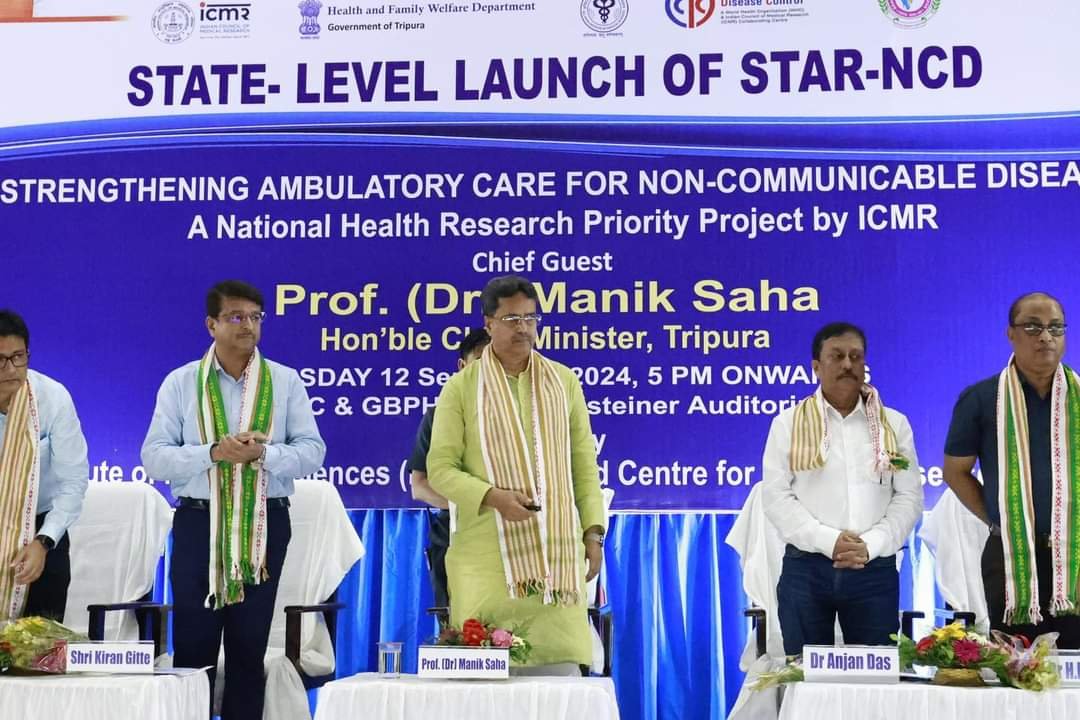
The STAR NCD project review meeting highlighted major healthcare improvements in Tripura, including free medicines for hypertension and diabetes and plans for AI-based monitoring systems.
Breaking Assam Prime Time Update: Regional Development Debate Airs
Key Highlights from the Review Meeting
The STAR NCD project review meeting took place at the Agartala Secretariat with participation from top officials. Representatives from AIIMS New Delhi and the National Health Mission Tripura attended the session. They discussed strategies to strengthen healthcare delivery across the state.
Moreover, the meeting focused on improving access to essential medicines and integrating advanced technology. Officials emphasized the need for efficient systems to ensure timely distribution. As a result, the initiative aims to benefit thousands of patients suffering from chronic diseases.
Strategic Mizoram Economic Ties: Ghana Visa Shift Opens Trade Doors
Focus on Hypertension and Diabetes Care
The STAR NCD project review meeting placed strong emphasis on managing hypertension and diabetes. These conditions affect a large number of people in Tripura. Therefore, the government decided to prioritize free medicines for patients.
Additionally, officials highlighted that early treatment reduces complications and healthcare costs. By ensuring consistent access to medicines, the program aims to improve patient outcomes. Consequently, this approach supports long-term public health goals.
Role of AIIMS New Delhi and NHM Tripura
Experts from AIIMS New Delhi played a crucial role during the STAR NCD project review meeting. They provided insights on best practices and advanced healthcare solutions. Their involvement ensures that Tripura adopts nationally recognized standards.
At the same time, the National Health Mission Tripura continues to implement these strategies at the ground level. The collaboration between national and state bodies strengthens the overall healthcare system. Therefore, the partnership enhances both planning and execution.
Introduction of AI-Based Monitoring Systems
One of the most important discussions during the STAR NCD project review meeting involved the use of artificial intelligence. Officials plan to introduce AI-based monitoring for medicine supplies. This system will track stock levels and predict future demand.
Furthermore, AI tools can reduce shortages and prevent wastage. By analyzing data in real time, authorities can make informed decisions. As a result, patients will receive medicines without delays, improving trust in public healthcare services.
Benefits of Free Medicine Distribution
The STAR NCD project review meeting highlighted the importance of free medicine distribution. Many patients struggle to afford long-term treatment for chronic diseases. Therefore, providing medicines at no cost reduces financial stress.
In addition, consistent treatment helps patients maintain stable health conditions. This reduces hospital visits and emergency cases. Consequently, the healthcare system becomes more efficient and accessible.
Strengthening Public Healthcare Infrastructure
The STAR NCD project review meeting also focused on improving healthcare infrastructure. Officials discussed ways to enhance supply chains and service delivery. They stressed the importance of coordination between different departments.
Moreover, the integration of technology will modernize existing systems. By combining traditional healthcare practices with digital tools, the state can achieve better results. As a result, Tripura moves closer to building a robust healthcare network.
Challenges in Implementation
Despite the positive outlook, the STAR NCD project review meeting acknowledged several challenges. Implementing AI systems requires technical expertise and proper training. Therefore, authorities must invest in capacity building.
Additionally, maintaining consistent medicine supply across remote areas remains a concern. However, officials expressed confidence in overcoming these issues through careful planning. Consequently, the project continues to move forward with clear objectives.
Future Roadmap for the STAR NCD Project
The STAR NCD project review meeting outlined a clear roadmap for the future. Authorities plan to expand healthcare services and improve monitoring systems. They also aim to increase awareness about non-communicable diseases.
Furthermore, the introduction of AI technology will play a key role in achieving these goals. By leveraging innovation, the state can deliver better healthcare outcomes. Therefore, the project sets a strong foundation for long-term success.
Importance of Addressing Non-Communicable Diseases
Non-communicable diseases pose a major health challenge across India. The STAR NCD project review meeting addressed this issue with a focused approach. By targeting hypertension and diabetes, the initiative tackles two of the most common conditions.
Moreover, preventive care and early intervention remain essential. The program encourages regular check-ups and timely treatment. As a result, it promotes healthier communities and reduces disease burden.
FAQs
1. What is the STAR NCD project?
The STAR NCD project focuses on improving the management and treatment of non-communicable diseases like hypertension and diabetes.
2. What was discussed in the review meeting?
Officials discussed free medicine distribution, AI-based monitoring systems, and strategies to strengthen healthcare services.
3. How will patients benefit from this initiative?
Patients will receive free medicines and better healthcare services, leading to improved health outcomes.
4. What role does AI play in the project?
AI will monitor medicine supplies, predict demand, and reduce shortages in healthcare facilities.
5. Who participated in the meeting?
Officials from AIIMS New Delhi and the National Health Mission Tripura attended the review meeting.