


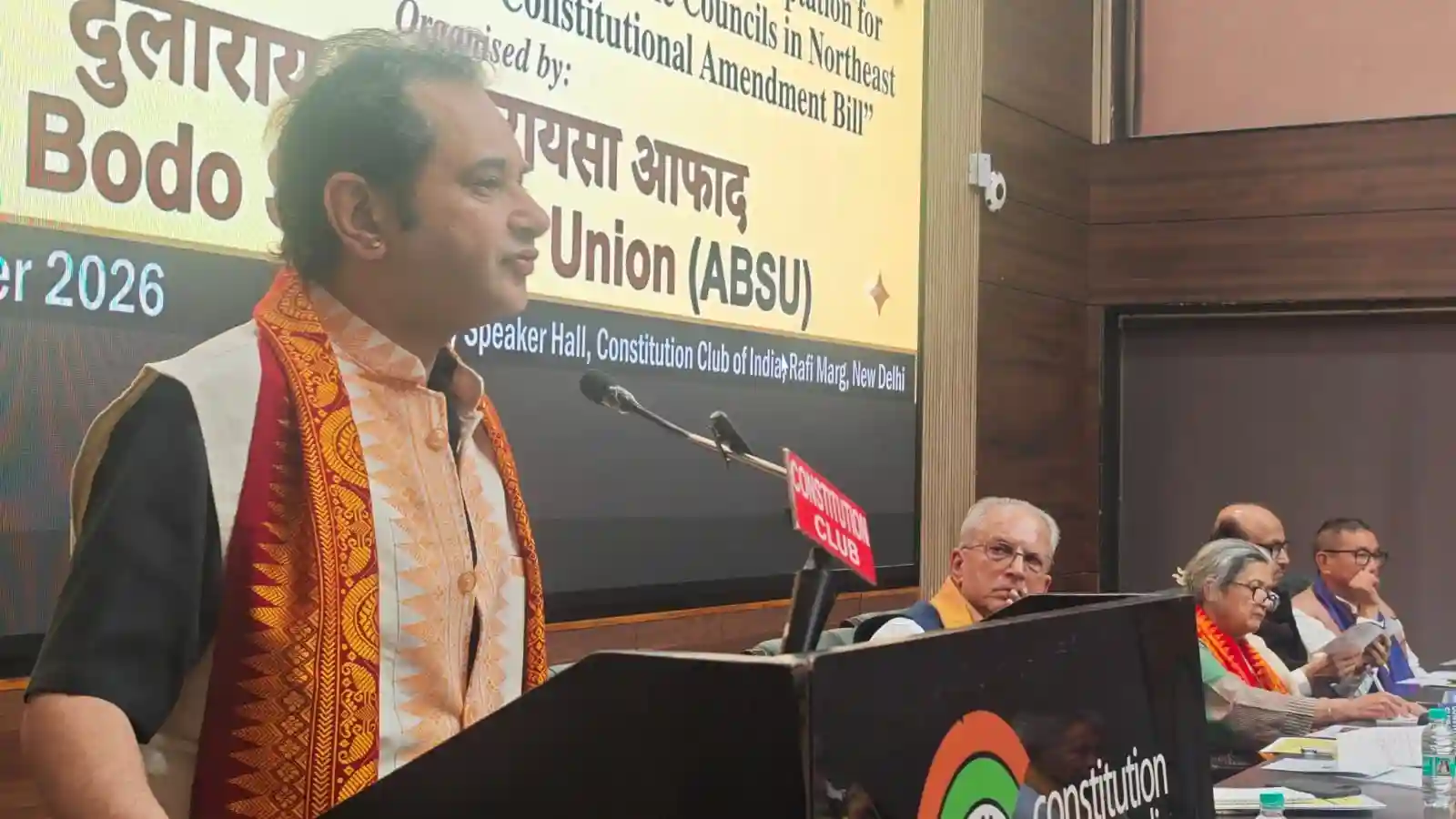
Tipra Motha founder Pradyot Bikram Manikya Debbarma has urged the Centre to pass the 125th Constitutional Amendment Bill to strengthen indigenous self-governance across Northeast India. He made the demand while addressing a national seminar on Sixth Schedule councils in New Delhi on November 20, 2026. Organised by the All Bodo Students Union (ABSU), the event focused on constitutional reforms, peace accords and the future of autonomous councils. Pradyot argued that indigenous communities need stronger financial powers, quality education and equal opportunities for young people. He also called for unity among tribal communities to advance their shared interests.
Manipur Toxic Liquor Tragedy Triggers Urgent Probe
Pradyot Raises Demand at New Delhi Seminar
Pradyot Bikram Manikya Debbarma attended the national seminar at the Constitution Club of India in New Delhi.
The All Bodo Students Union organised the programme under the theme of constitutional adaptation and governance reforms for Sixth Schedule councils.
The discussions focused on the 125th Constitutional Amendment Bill and the implementation of peace agreements across Northeast India.
Tripura MLA Ranjit Debbarma also attended the event alongside Pradyot.
Addressing the gathering, Pradyot urged Parliament to take up and pass the proposed amendment without further delay.
He argued that waiting for a perfect legislative framework could postpone reforms that autonomous councils urgently need.
He also described the proposed amendment as an important step towards greater financial authority, political strength and clarity in council administration.
President Murmu to Attend Hornbill Festival
What Is the 125th Constitutional Amendment Bill?
The Constitution (125th Amendment) Bill, 2019, was introduced in the Rajya Sabha on February 6, 2019.
The proposed legislation seeks to amend provisions relating to the Sixth Schedule and the Finance Commission.
The Sixth Schedule provides autonomous governance arrangements for specified tribal areas in Assam, Meghalaya, Tripura and Mizoram.
The Bill proposes several changes to strengthen these institutions.
Its key provisions include:
- Establishment of elected village councils in rural areas.
- Creation of municipal councils in urban areas.
- Greater clarity over the responsibilities of autonomous councils.
- Financial arrangements involving grants and resource distribution.
- A role for State Election Commissions in conducting council elections.
- Provisions concerning the disqualification of council members.
These measures aim to strengthen local governance and improve financial accountability.
However, Parliament has not passed the Bill. Therefore, its proposed provisions have not become law.
Pradyot Highlights Unequal Powers Among Autonomous Councils
During his address, Pradyot highlighted differences in the powers and resources available to autonomous councils across the Northeast.
He referred to institutions in Karbi Anglong, Tripura, Garo Hills, Khasi Hills and Dima Hasao.
According to him, these councils operate under different administrative arrangements and receive varying levels of authority.
He argued that such disparities weaken the overall framework of indigenous self-governance.
Pradyot also raised concerns about the financial condition of autonomous councils.
He claimed that around 90% of some council budgets go towards salaries and employment-related expenses. As a result, limited funds remain available for development projects.
He further alleged that state governments often release only a small portion of the funds requested by councils.
His remarks highlighted the need for stronger financial arrangements and more predictable funding.
Indigenous Youth Need Education and Equal Opportunities
Pradyot placed particular emphasis on the future of indigenous youth.
He argued that young people across the Northeast want access to quality education, professional training and economic opportunities.
He criticised approaches that focus mainly on cultural showcases in New Delhi without addressing long-term development needs.
According to him, indigenous communities want the same educational facilities and employment opportunities available to other sections of society.
He also stressed the importance of skill development and knowledge-based growth.
His address linked constitutional empowerment with the economic future of younger generations.
He maintained that stronger councils should help communities improve education, employment and local development.
Calls for Greater Unity Among Northeast Communities
Pradyot also urged indigenous organisations across the Northeast to strengthen cooperation.
He referred to communities including Bodo, Karbi, Dimasa, Chakma, Tiprasa, Garo, Khasi, Jaintia and Mizo groups.
He argued that divisions along political and community lines weaken collective efforts to protect indigenous rights.
He called on leaders to work together on shared concerns rather than focus on party interests.
He also stressed that unity should not prevent communities from maintaining their distinct cultural identities.
According to his remarks, indigenous organisations need a common platform to discuss constitutional safeguards, land rights and economic development.
TTAADC and the Demand for Wider Political Participation
Pradyot highlighted the position of indigenous communities in Tripura during the seminar.
He argued that tribal aspirations should not remain limited to the Tripura Tribal Areas Autonomous District Council (TTAADC).
The council administers a substantial portion of Tripura’s geographical area under the Sixth Schedule.
However, indigenous communities live across all districts of the state.
Pradyot therefore called for greater participation in wider state-level governance and decision-making.
He argued that communities should have a voice in policies affecting their land, resources and development.
His remarks connected autonomous council reforms with broader questions of political representation.
Raises Concerns Over Delayed Council Bills
Pradyot also criticised delays in approving legislation passed by autonomous councils.
Referring to Tripura, he said that the council had sent 16 bills to the Governor, but only one had received approval.
He argued that prolonged delays weaken the ability of elected councils to implement decisions.
He also referred to his legal efforts concerning village council elections in Tripura.
According to his account, repeated postponements had affected grassroots democracy. He said he approached the Supreme Court to seek action on the delayed elections.
He maintained that elected local institutions need timely administrative decisions to function effectively.
Land and Natural Resources Must Benefit Local Communities
Another major issue in Pradyot’s address concerned the use of natural resources in Sixth Schedule areas.
He referred to resources such as natural gas, petroleum, limestone and coal.
He clarified that he was not opposed to development projects or resource extraction.
However, he questioned whether indigenous communities receive a fair share of the revenue generated from resources found on their land.
He argued that development should create wider benefits for local residents rather than concentrate gains among a small group of individuals.
The issue links constitutional autonomy with land rights, economic participation and local accountability.
Conclusion
Pradyot Bikram Manikya Debbarma’s November 20 address renewed attention on the proposed 125th Constitutional Amendment Bill and the future of Sixth Schedule councils. He called for stronger financial and administrative powers, equal opportunities for indigenous youth and greater unity among Northeast communities. He also raised concerns about delayed council legislation, limited development funding and the distribution of natural-resource benefits. The Bill remains pending in Parliament. Its future progress will shape discussions on autonomous governance in Assam, Meghalaya, Tripura and Mizoram.
FAQs
1. What did Pradyot Debbarma demand in New Delhi?
He urged the Centre and Parliament to advance and pass the 125th Constitutional Amendment Bill to strengthen Sixth Schedule councils.
2. When did Pradyot make the demand?
He made the demand on November 20, 2026, during a national seminar in New Delhi.
3. Who organised the national seminar?
The All Bodo Students Union organised the seminar at the Constitution Club of India.
4. What does the 125th Constitutional Amendment Bill propose?
The 2019 Bill proposes changes involving village and municipal councils, council finances, elections and administrative arrangements under the Sixth Schedule.
5. Which states come under the Sixth Schedule framework?
The Sixth Schedule provides for specified tribal areas in Assam, Meghalaya, Tripura and Mizoram.
6. Has Parliament passed the 125th Constitutional Amendment Bill?
No. The Bill was introduced in the Rajya Sabha in February 2019 but remains pending in Parliament.