


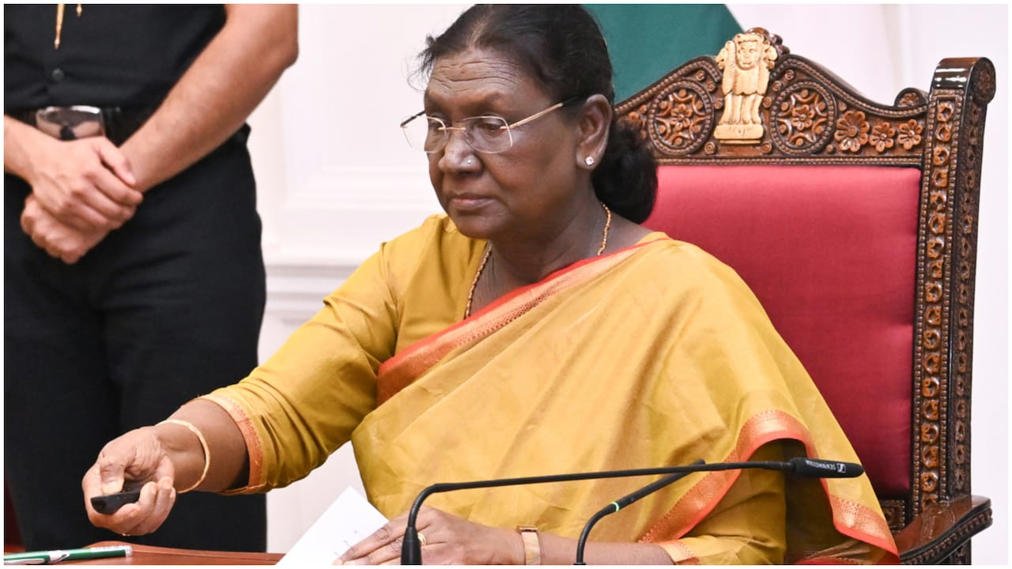
Gujarat has become the second state in India, after Uttarakhand, to enact a Uniform Civil Code (UCC) after President Droupadi Murmu gave her assent to the Gujarat Uniform Civil Code Bill, 2026.
The President’s assent was granted on September 17, while the legislation was published in the Gujarat Government Gazette on October 1.
The law establishes a common legal framework governing marriage, divorce, inheritance, succession and live-in relationships. However, it will come into force on a date to be notified by the Gujarat government.
The development marks a significant step in the state’s legislative process and adds Gujarat to the list of states that have adopted a common framework for personal civil laws.
Gujarat UCC Bill Receives Presidential Assent
The Gujarat Assembly passed the Uniform Civil Code Bill on March 24, 2026, following a debate lasting nearly eight hours.
The legislation was introduced by Chief Minister Bhupendra Patel after a committee headed by retired Supreme Court judge Justice Ranjana Prakash Desai submitted its report on the proposed code.
With the President’s assent, the Bill has become the Gujarat Uniform Civil Code Act, 2026.
The state government will now notify the necessary rules and determine the date from which the law will be implemented.
Gujarat Becomes Second State After Uttarakhand
Uttarakhand was the first state in independent India to implement a Uniform Civil Code, bringing its legislation into force in January 2025.
Gujarat is the second state to receive presidential assent for its UCC legislation.
The Gujarat law draws substantially from the framework adopted in Uttarakhand and seeks to establish common provisions for personal civil matters across religious communities.
The legislation also provides exemptions for Scheduled Tribes and certain groups whose customary rights are protected under the Constitution.
Common Rules for Marriage and Divorce
The Gujarat UCC establishes common provisions governing marriage and divorce.
It prohibits bigamy and requires marriages to be registered within the prescribed period. Failure to register a marriage within 60 days may attract penalties.
The legislation also provides common grounds and procedures for divorce, bringing different personal laws under a statutory framework.
The law covers matters relating to matrimonial rights and responsibilities, with the objective of establishing uniform legal procedures.
Live-in Relationships to Come Under Legal Framework
One of the notable provisions of the Gujarat UCC concerns the registration of live-in relationships.
Couples entering such relationships will be required to submit a joint statement to the designated registrar under the prescribed procedure.
The law also provides a formal process for reporting the termination of such relationships.
Children born from live-in relationships will receive legal recognition, with provisions addressing their rights.
Common Inheritance and Succession Provisions
The legislation introduces common rules governing inheritance and succession.
It provides equal inheritance rights for sons and daughters and establishes provisions for the distribution of property when a person dies without leaving a will.
The law also addresses the rights of spouses, children and parents in succession matters.
These provisions seek to establish a common statutory framework for inheritance across religious communities, subject to the exemptions specified in the Act.
Opposition Had Raised Concerns Over the Bill
During the Assembly debate in March, Congress and Aam Aadmi Party legislators opposed the legislation and sought its referral to a select committee.
Opposition members raised concerns regarding the Bill’s provisions and its implications for different communities.
The state government defended the legislation, stating that it was intended to establish uniformity in civil laws and provide equal legal treatment.
The Bill was subsequently passed by the Assembly.
Implementation to Follow State Notification
Although the Gujarat UCC has received presidential assent, its implementation will depend on the state government’s notification of the commencement date and the necessary rules.
The administration will have to establish the procedures and mechanisms required for registration, enforcement and handling of matters covered under the Act.
With the legislation receiving final assent, Gujarat has moved closer to implementing a common legal framework for marriage, divorce, inheritance and related civil matters.