


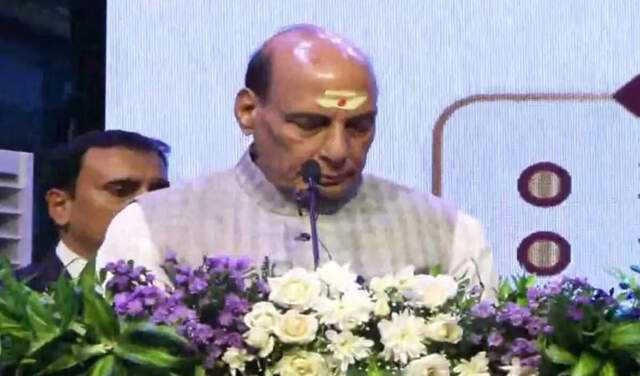
Defence Minister Rajnath Singh inaugurated an advanced aluminum extrusion press in Nagpur, marking a significant milestone in India’s efforts to strengthen its manufacturing ecosystem, enhance industrial capabilities, and promote self-reliance in strategic sectors. The state-of-the-art facility is expected to play an important role in supporting industries such as defence, aerospace, transportation, infrastructure, and engineering by enabling the production of high-quality aluminum components within the country.
The inauguration reflects the government’s continued emphasis on expanding domestic manufacturing capacity and reducing dependence on imports for critical industrial materials. Advanced manufacturing technologies are increasingly being viewed as essential for supporting India’s ambitions of becoming a global industrial hub while strengthening the country’s economic and strategic capabilities.
Addressing the gathering during the inauguration ceremony, Rajnath Singh highlighted the importance of technological advancement, innovation, and industrial self-sufficiency in shaping India’s future growth trajectory. He emphasized that modern manufacturing facilities such as the new extrusion press will contribute significantly to the country’s development objectives.
A Major Boost for Advanced Manufacturing
The newly inaugurated aluminum extrusion press represents a major advancement in India’s manufacturing infrastructure. Aluminum extrusion is a critical industrial process used to create components with precise shapes and specifications for a wide range of applications.
The advanced facility is expected to enhance domestic production capabilities by enabling the manufacture of complex and high-performance aluminum products. Such components are widely used in sectors requiring strength, durability, and lightweight characteristics.
Industry experts note that modern extrusion technologies help improve product quality, increase efficiency, and support the production of specialized materials for demanding applications. The facility’s capabilities are expected to contribute to both industrial growth and technological progress.
Officials believe that investments in advanced manufacturing infrastructure are essential for ensuring long-term competitiveness in global markets.
Strengthening India’s Defence Manufacturing Ecosystem
One of the key areas expected to benefit from the new facility is the defence sector. Aluminum components play an important role in military equipment, aerospace systems, vehicles, and other strategic applications.
Rajnath Singh emphasized that strengthening domestic manufacturing capacity is central to India’s defence modernization efforts. Producing critical materials and components within the country enhances supply chain security and supports the objective of achieving greater self-reliance in defence production.
The advanced extrusion press is expected to help meet the growing demand for specialized materials required in defence projects. By reducing dependence on imported products, the facility can contribute to improving operational readiness and supporting indigenous manufacturing initiatives.
The government continues to encourage investments that strengthen India’s defence industrial base and promote innovation in strategic sectors.
Supporting the Vision of Atmanirbhar Bharat
The inauguration aligns closely with the broader vision of Atmanirbhar Bharat, which seeks to enhance domestic manufacturing capabilities and reduce reliance on foreign imports across critical sectors.
Over the past several years, the government has introduced numerous initiatives aimed at promoting local production, encouraging technological innovation, and attracting industrial investments. Advanced manufacturing facilities form an important part of this strategy.
According to Rajnath Singh, self-reliance does not imply isolation but rather the development of strong domestic capabilities that enable India to compete effectively in global markets. Investments in technology-driven industries can strengthen economic resilience while creating opportunities for growth and innovation.
The new extrusion press is expected to contribute to these objectives by supporting domestic industries and enhancing manufacturing efficiency.
Expanding Opportunities for Aerospace and Transportation
Beyond defence applications, the facility is expected to support industries such as aerospace, automotive manufacturing, railways, and transportation. Aluminum is increasingly preferred in these sectors because of its lightweight properties, corrosion resistance, and structural strength.
Modern transportation systems often rely on advanced aluminum components to improve efficiency, reduce weight, and enhance performance. Aerospace manufacturers similarly use specialized aluminum products in aircraft structures and systems.
The advanced extrusion press will provide domestic industries with access to high-quality materials required for these applications. This can help reduce production costs, improve supply chain reliability, and encourage further industrial development.
Officials believe that strengthening manufacturing capabilities in these sectors can generate significant economic benefits while enhancing technological expertise.
Nagpur Emerging as an Industrial Hub
The establishment of the advanced aluminum extrusion facility further strengthens Nagpur’s growing reputation as an important industrial and manufacturing center. The city has increasingly attracted investments in infrastructure, logistics, engineering, and industrial development.
Its strategic location and improving connectivity have contributed to its emergence as a preferred destination for manufacturing projects. Industrial investments in Nagpur are creating employment opportunities and supporting regional economic growth.
Rajnath Singh noted that industrial development in emerging growth centers is essential for achieving balanced economic progress. Facilities such as the extrusion press can stimulate local economic activity while contributing to broader national objectives.
The project is expected to reinforce Nagpur’s position within India’s evolving industrial landscape.
Technological Innovation and Industrial Growth
The inauguration also highlights the growing importance of technological innovation in manufacturing. Advanced production systems enable industries to achieve higher levels of precision, efficiency, and productivity while maintaining stringent quality standards.
Modern extrusion technology supports the production of complex designs and customized components required for high-performance applications. Such capabilities are increasingly important as industries seek to meet evolving technological requirements and global quality benchmarks.
Officials emphasized that innovation remains a critical driver of industrial competitiveness. Investments in advanced technologies can help Indian manufacturers move up the value chain and strengthen their presence in international markets.
The government continues to encourage research, development, and technological adoption across key industrial sectors.
Employment and Economic Benefits
Large-scale manufacturing projects often generate significant economic benefits through job creation, skill development, and industrial expansion. The advanced aluminum extrusion facility is expected to contribute to local and regional economies by creating direct and indirect employment opportunities.
Skilled engineers, technicians, machine operators, and support staff will be required to operate and maintain the facility. Additional opportunities may arise through ancillary industries, supply chains, logistics services, and related business activities.
Rajnath Singh emphasized that industrial growth plays an important role in creating sustainable employment and improving economic prospects. Investments in manufacturing can contribute to income generation, infrastructure development, and overall economic progress.
The facility is expected to support broader efforts aimed at strengthening India’s industrial workforce and promoting skill development.
Enhancing Global Competitiveness
As global manufacturing becomes increasingly technology-driven, countries are investing heavily in advanced industrial capabilities to remain competitive. India has been actively working to strengthen its manufacturing ecosystem and position itself as a leading production destination.
The advanced aluminum extrusion press represents a step toward enhancing the country’s ability to produce sophisticated industrial products that meet international standards. Such capabilities can help Indian manufacturers compete more effectively in global markets and expand export opportunities.
Officials believe that strengthening domestic production infrastructure is essential for improving competitiveness and attracting future investments. High-quality manufacturing facilities contribute to a favorable business environment and support long-term economic growth.
The project demonstrates India’s commitment to building world-class industrial capabilities.
Looking Ahead
The inauguration of the advanced aluminum extrusion press in Nagpur marks an important development in India’s manufacturing and industrial journey. By strengthening domestic production capabilities, supporting strategic sectors, and promoting technological innovation, the facility is expected to contribute significantly to national development objectives.
Rajnath Singh’s participation in the inauguration underscores the importance attached to industrial self-reliance, defence manufacturing, and technological advancement. The project aligns with broader efforts to create a robust manufacturing ecosystem capable of meeting both domestic and international demand.
As the facility becomes operational and begins serving industries across multiple sectors, its impact is expected to extend beyond manufacturing alone. Through job creation, technological progress, and enhanced industrial capacity, the advanced extrusion press has the potential to contribute meaningfully to India’s economic growth and self-reliance goals.
The project stands as a symbol of the country’s determination to build modern industrial infrastructure and emerge as a leading manufacturing power in the years ahead.