


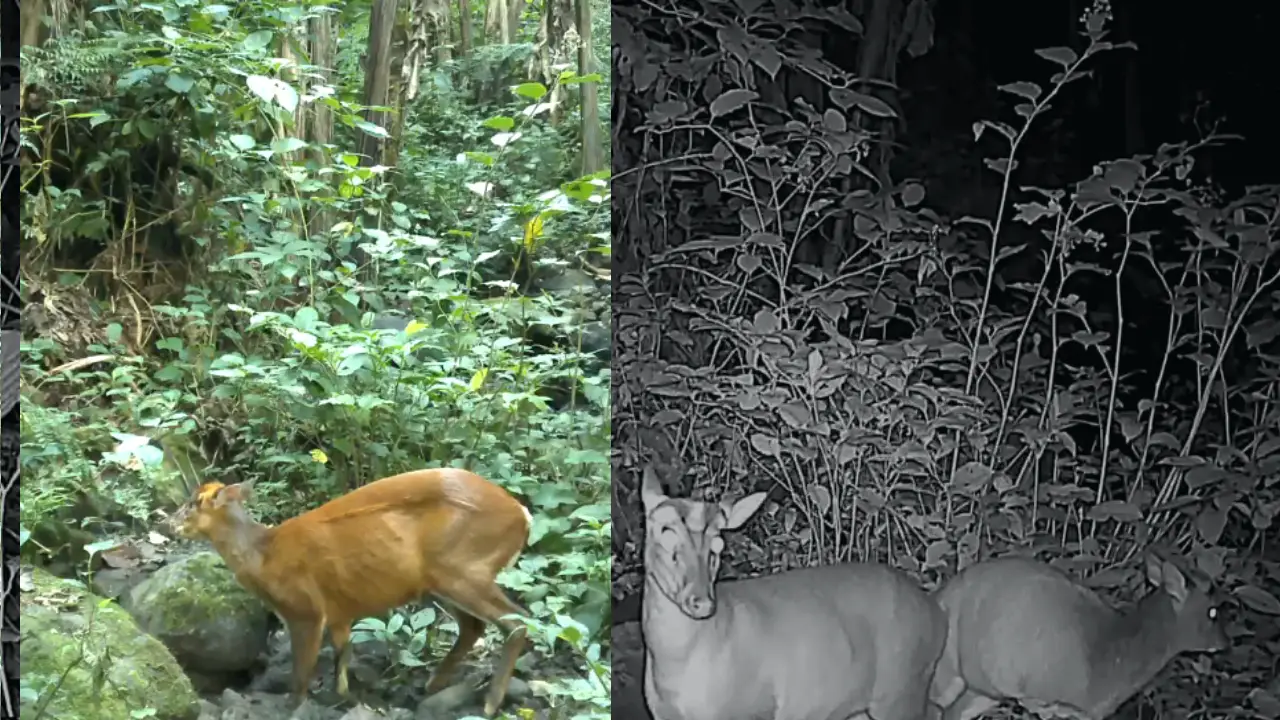
Rare wildlife footage from Manipur’s Ukhrul district has highlighted the conservation value of the Kangkhui Khunou Forest Closure Area. Camera traps installed by the Ukhrul Forest Division recorded a female Red Serow with its young offspring near a forest stream. The cameras also captured a Barking Deer, another protected species. The sightings took place on November 4, 9 and 14, 2026. Forest officials say the repeated appearance of the mother and young indicates breeding activity in the area and reflects the importance of sustained habitat protection.
Mizoram Student Protest Targets MPSC Chairman
Imphal Silchar Flight Resumption Restores Regional Connectivity
Camera Traps Record Rare Red Serow and Offspring
The Ukhrul Forest Division captured the footage using camera traps installed near a stream inside the Kangkhui Khunou Forest Closure Area.
The cameras recorded a female Red Serow accompanied by its young during three separate visits. These sightings occurred on November 4, 9 and 14.
The repeated records provide evidence that the animals continue to use the protected forest habitat. They also offer valuable information about wildlife movement and breeding activity in the area.
Divisional Forest Officer Laishram Gitla, IFS, said the sightings indicated successful breeding within the forest closure area.
She credited sustained protection measures and cooperation from local residents for supporting wildlife conservation.
Barking Deer Also Captured in the Forest
The camera traps also recorded a Barking Deer, adding to the significance of the wildlife observations.
Both the Red Serow and Barking Deer receive the highest level of legal protection under Schedule I of the Wildlife (Protection) Act, 1972.
The presence of both species indicates that the forest supports different forms of wildlife. The stream also provides an important water source for animals moving through the habitat.
These records strengthen the understanding of the area’s ecological importance. They also demonstrate how camera traps can help forest officials monitor elusive species without disturbing their natural behaviour.
Red Serow: A Rare Mountain-Dwelling Mammal
The Red Serow, scientifically known as Capricornis rubidus, is a mountain-dwelling mammal found in parts of Northeast India and neighbouring regions.
It belongs to the goat-antelope group and typically inhabits forested hills and rugged terrain. Its reddish coat distinguishes it from several other serow species.
Red Serows often remain difficult to observe because they use dense vegetation and remote mountain habitats. Therefore, camera-trap records provide useful information about their distribution and activity.
The sighting of a female with its offspring carries particular conservation significance. It suggests that the Kangkhui Khunou forest provides conditions suitable for the species to reproduce and raise its young.
However, continued monitoring will help officials understand how regularly the animals use the area.
Both Species Receive Schedule I Protection
The Red Serow and Barking Deer enjoy Schedule I protection under the Wildlife (Protection) Act, 1972.
This category provides the highest level of legal protection under India’s wildlife legislation. Authorities can take action against hunting, illegal capture and other prohibited activities involving protected species.
The protection framework also highlights the importance of conserving natural habitats. Forest degradation, hunting pressure and disturbance can threaten wildlife even when legal protection exists.
Therefore, forest monitoring and community participation remain essential to protecting these animals.
The latest footage provides forest officials with fresh information about the species using the Kangkhui Khunou forest.
Community Participation Strengthens Forest Conservation
The conservation work at Kangkhui Khunou receives support through the Community-Based Sustainable Forest Management for Water Resource Conservation in Manipur project, known as COSFOM.
KfW, the German Development Bank, supports the initiative. The organisation Environmental Force at Grass Root Level, or ENFOGAL, helps facilitate community participation.
The Ukhrul Forest Division provides overall supervision and coordination. Meanwhile, local residents contribute to forest protection and the sustainable management of natural resources.
The project connects forest conservation with water-resource protection. It encourages communities to safeguard streams, vegetation and wildlife habitats through local participation.
Forest officials have acknowledged the Kangkhui Khunou community’s cooperation in protecting the area’s natural environment.
Camera-Trap Monitoring Supports Wildlife Protection
Camera traps allow forest departments to document wildlife without requiring frequent human presence in sensitive habitats.
The devices automatically capture images or videos when animals pass through their detection zones. This method helps officials identify species, record movement patterns and monitor repeated visits.
In Kangkhui Khunou, the three separate records of the female Red Serow and its young provide useful evidence of continued habitat use.
The Barking Deer footage adds further information about wildlife diversity in the forest.
Such monitoring can help officials identify important feeding areas, water sources and movement corridors. It can also guide future conservation planning.
The Ukhrul Forest Division has reiterated its commitment to scientific wildlife monitoring and community-based habitat protection across the district.
Kangkhui Khunou Emerges as an Important Wildlife Habitat
The latest sightings underline the ecological importance of the Kangkhui Khunou Forest Closure Area.
Its forest cover, natural water sources and surrounding vegetation provide essential habitat conditions for wildlife.
The presence of a female Red Serow with its offspring also makes the area important for monitoring breeding activity.
Meanwhile, the Barking Deer record confirms that other protected mammals also use the same forest landscape.
Continued cooperation between forest officials and local communities will remain important for protecting these habitats. Regular monitoring can help detect changes in wildlife activity and support long-term conservation efforts.
Conclusion
Camera traps in Manipur’s Kangkhui Khunou Forest Closure Area have recorded a female Red Serow with its offspring and a Barking Deer. The Ukhrul Forest Division captured the animals near a stream on November 4, 9 and 14, 2026. Both species receive Schedule I protection under the Wildlife (Protection) Act, 1972. Forest officials have linked the repeated sightings to breeding activity and sustained habitat protection. The records highlight the role of community participation, scientific monitoring and forest conservation in safeguarding Manipur’s wildlife.
FAQs
1. Which rare animals were spotted in Manipur’s Ukhrul district?
Camera traps recorded a female Red Serow with its offspring and a Barking Deer in Kangkhui Khunou.
2. Where did the camera traps capture the animals?
The Ukhrul Forest Division installed the cameras near a stream inside the Kangkhui Khunou Forest Closure Area.
3. When did the camera traps record the Red Serow?
The cameras recorded the female Red Serow and its young on November 4, 9 and 14, 2026.
4. Are the Red Serow and Barking Deer protected species?
Yes. Both species receive Schedule I protection under the Wildlife (Protection) Act, 1972.
5. What does the Red Serow sighting indicate?
Forest officials said the repeated sightings of the female with its offspring indicate breeding activity in the protected area.
6. Which project supports conservation at Kangkhui Khunou?
The Community-Based Sustainable Forest Management for Water Resource Conservation in Manipur project supports the initiative, with funding from KfW and community participation facilitated by ENFOGAL.