


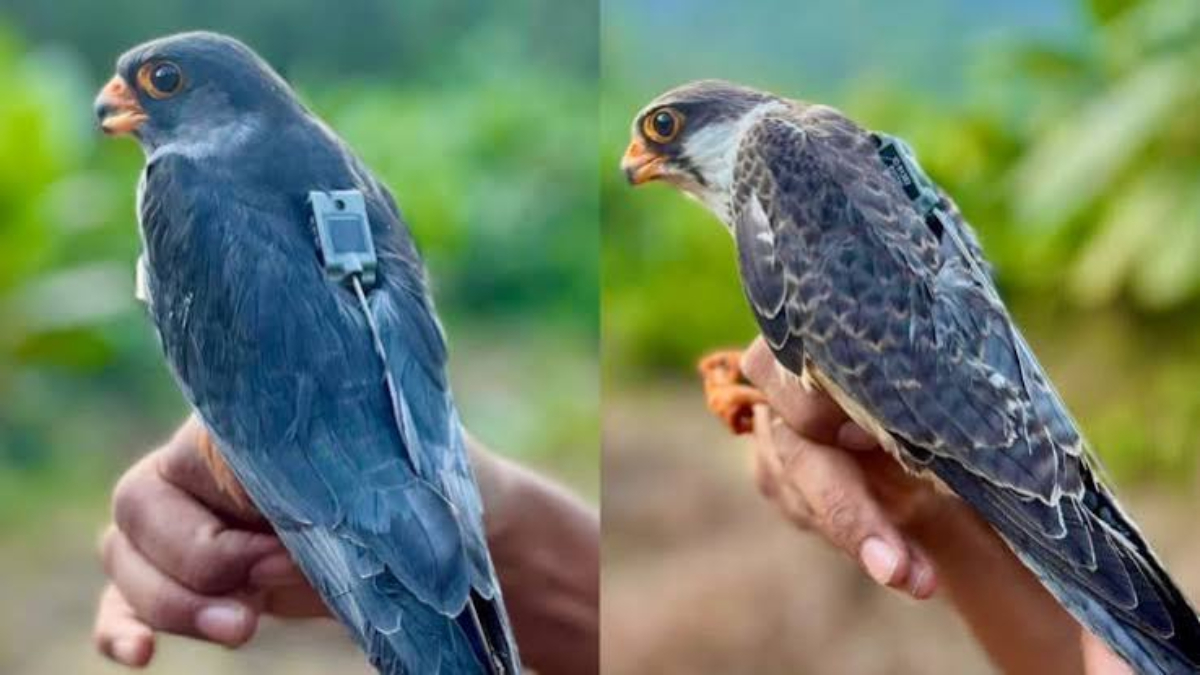
Amur falcons Apapang and Alang have returned to Manipur after an extraordinary migration across 23 countries, completing a nearly year-long tracking journey monitored by wildlife scientists. The two satellite-tagged migratory birds arrived in the northeastern state on October 22, 2026, after travelling from their breeding grounds in northeastern China. Their return highlights the remarkable endurance of migratory birds and the importance of community-led wildlife conservation in Manipur.
Union Environment Minister Bhupender Yadav announced the development on October 23, describing the birds as global travellers whose movements across Asia and Africa have provided valuable insights into their migration patterns. The latest milestone also brings renewed attention to Tamenglong district, where local communities have played an important role in protecting the visiting falcons.
Amur Falcons Apapang and Alang Complete Their Return Journey
According to Yadav, the two birds began their southbound migration from their breeding areas in northeastern China on October 10, 2026. After travelling for 11 days, they reached Manipur on October 22, marking their return to the region where they were fitted with satellite transmitters in November 2025.
Their journey across 23 countries demonstrates the extraordinary distances covered by these relatively small birds during their annual migration. Their movements are being monitored under a tracking initiative involving the Wildlife Institute of India (WII) and the Manipur Forest Department.
The satellite data help researchers understand migration routes, seasonal movements and the challenges faced by the species during its long-distance flights.
Tamenglong Prepares for the Falcons’ Seasonal Stopover
The birds are expected to spend two to three weeks at selected stopover sites in the mountainous areas of Manipur’s Tamenglong district. These locations provide important feeding and resting opportunities before the falcons continue their migration towards Africa.
Local residents eagerly await the birds’ annual arrival and have contributed to conservation efforts by helping protect their roosting areas. Villages such as Chiuluan have become important locations for monitoring and safeguarding the migratory species.
The return of the satellite-tagged falcons also comes as other Amur falcons have begun arriving in the state. Residents of Guangram village reported the first sightings of this season on October 11, while forest officials subsequently confirmed that birds were arriving in small groups.
How the Falcons Prepare for Their Next Flight
During their stopover in Manipur, the birds are expected to feed on termites emerging around their roosting sites. This food source helps them build the fat reserves necessary for the next demanding stage of their migration.
Yadav said the falcons would subsequently undertake a flight of nearly 6,000 kilometres to Somalia, including an approximately 3,000-kilometre crossing of the Arabian Sea. The journey is expected to take around six days without stopping, depending on flying conditions.
Such long-distance flights require considerable energy and endurance. Suitable feeding grounds in Northeast India therefore play a crucial role in helping the birds prepare for their onward journey.
Satellite Tracking Reveals a Remarkable Migration
The tracking initiative has helped scientists follow individual birds across continents and document their movements throughout the year. Apapang and Alang were among three Amur falcons named Ahu, Alang and Apapang that received satellite transmitters in November 2025.
The tagging exercise was conducted at the Chiuluan roosting site in Tamenglong district through collaboration between the Manipur Forest Department and the Wildlife Institute of India.
Earlier tracking updates documented the birds’ movements through Africa during their previous wintering period and their subsequent northward migration towards their breeding grounds. Their latest return to Manipur provides another important record of their annual migration cycle.
The information collected through satellite monitoring can help researchers identify critical stopover locations and understand how the birds use different habitats during their journeys.
Conservation Efforts Remain Critical in Manipur
The seasonal arrival of Amur falcons has also renewed attention to wildlife protection in Tamenglong. Ahead of the birds’ arrival, district authorities issued measures prohibiting hunting, trapping, killing and the sale of the migratory birds. Authorities also directed residents to deposit air guns under the district’s protective measures.
These steps are intended to reduce threats during the birds’ stay in the region. Community participation remains essential because the falcons gather in large numbers at particular roosting sites, making local awareness and protection especially important.
The species’ dependence on suitable resting and feeding locations across several countries also highlights the need for wider cooperation in migratory bird conservation.
The return of Apapang and Alang is an important milestone for wildlife researchers and conservationists in Manipur. As the birds prepare for their next flight towards Somalia, their journey demonstrates the value of scientific monitoring and local stewardship. Continued protection of their stopover habitats will be essential to ensure that these remarkable travellers can safely return to Manipur in the seasons ahead.
Meghalaya Legal Services Authority Unveils Garo Language Mediation Film