


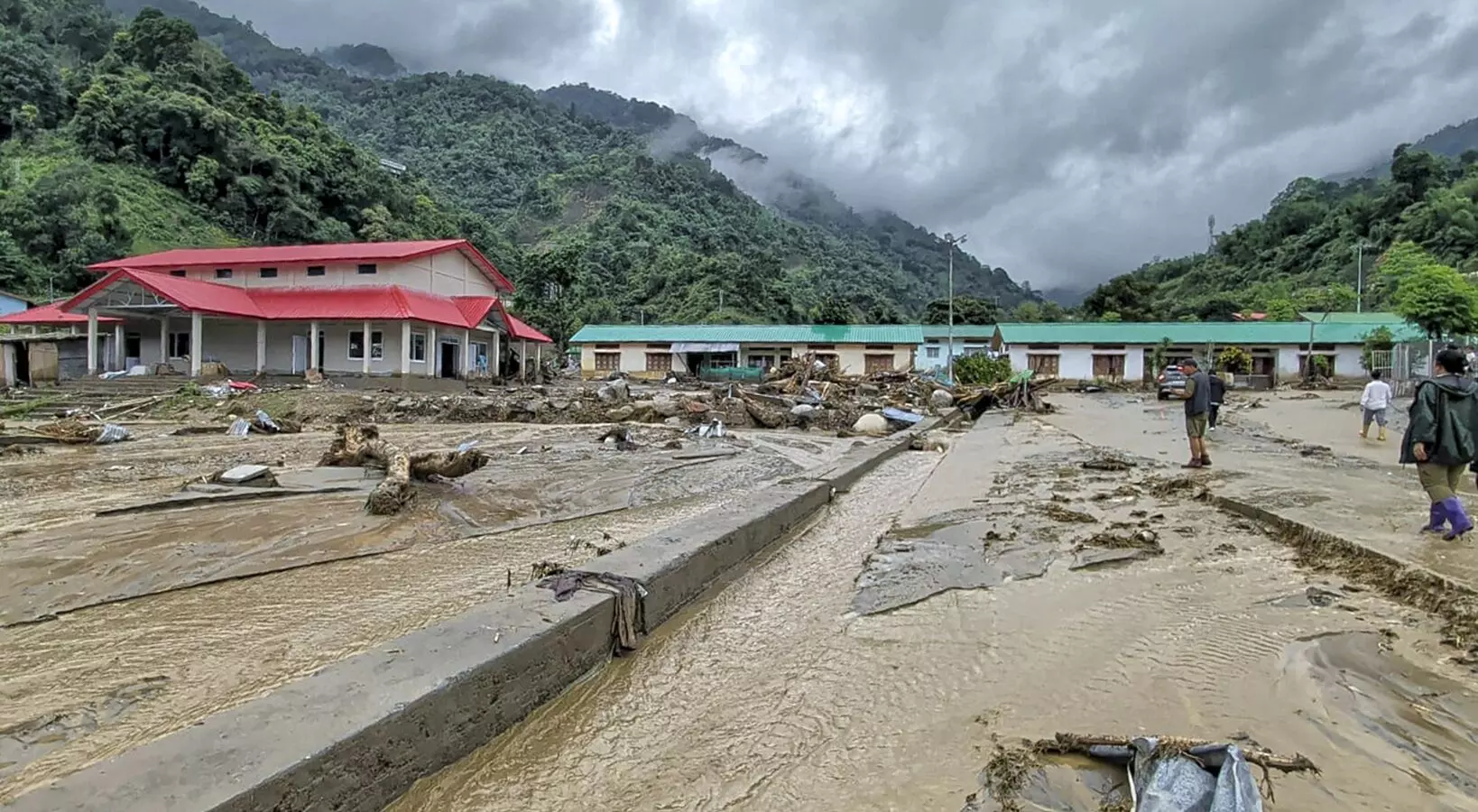
Intensive land erosion and rising river levels have severely affected infrastructure across 12 of Arunachal Pradesh’s 28 districts, with regions including Kurung Kumey and Lower Subansiri among the worst impacted. Authorities have reported extensive damage to roads, bridges, embankments, and public utilities as persistent monsoon activity continues to trigger flooding and erosion. Moreover, disaster management agencies and local administrations have intensified monitoring and emergency response efforts to address the worsening situation. The widespread damage highlights the growing vulnerability of mountainous and riverine regions during the monsoon season.
Kanchanpur Administration Issues Final Three-Day Notice for Removal of Illegal Structures
Meghalaya Honeymoon Murder Verdict Upholds Bail
Widespread Monsoon Damage Reported Across Multiple Districts
Twelve out of twenty-eight districts have reportedly suffered significant damage due to heavy rainfall, river swelling, and ongoing land erosion. Consequently, transportation networks and public infrastructure have experienced severe disruptions.
The districts of Kurung Kumey and Lower Subansiri have emerged among the most affected areas, where overflowing rivers and landslides have damaged roads and isolated several communities. Moreover, continuous rainfall has complicated restoration and emergency response operations. Therefore, authorities have maintained a high level of preparedness.
Officials emphasized that the evolving weather conditions require continuous monitoring and rapid intervention. Furthermore, field assessment teams have been deployed to evaluate the extent of damage. As a result, emergency restoration efforts have been initiated in priority areas.
Meanwhile, district administrations continue to monitor vulnerable locations. Consequently, additional precautionary measures remain under consideration.
River Erosion and Floodwaters Disrupt Critical Infrastructure
The extensive damage has been attributed largely to riverbank erosion and swelling river systems caused by persistent monsoon rainfall. Moreover, several transport corridors and public facilities have suffered structural damage. Therefore, connectivity challenges have increased in affected regions.
Authorities reported disruptions to roads, bridges, culverts, and utility services in multiple districts. Consequently, movement of people, goods, and emergency supplies has become more difficult in some areas. Such disruptions present significant challenges for disaster response agencies.
Furthermore, engineering teams have begun assessing the structural integrity of damaged infrastructure. As a result, temporary restoration measures are being implemented wherever possible.
Meanwhile, emergency repair equipment and personnel have been mobilized. Similarly, communication networks are being monitored to ensure operational continuity.
Emergency Response and Monitoring Intensified
State authorities and disaster management agencies have intensified emergency response operations following reports of widespread infrastructure damage. Moreover, rescue and relief teams remain on standby to respond to any further deterioration in conditions. Therefore, coordination among various agencies has been strengthened.
Officials stated that vulnerable communities are being monitored closely, particularly in flood-prone and landslide-prone regions. Consequently, evacuation preparedness measures have been reviewed in several districts. Such precautionary steps are essential during severe monsoon events.
Furthermore, emergency operation centers continue to function around the clock to coordinate response activities. As a result, authorities remain prepared for rapid deployment if required.
Meanwhile, weather forecasts and hydrological data continue to be analyzed regularly. Similarly, field reports are being used to update response strategies.
Long-Term Concerns Over Climate and Infrastructure Resilience
The widespread damage has renewed concerns regarding the resilience of infrastructure in mountainous and environmentally sensitive regions. Moreover, extreme weather events have increasingly affected transportation and public service networks. Therefore, long-term adaptation strategies are receiving greater attention.
Officials and experts emphasized the need for improved flood management systems, stronger infrastructure standards, and enhanced disaster preparedness planning. Consequently, discussions on climate-resilient development are expected to intensify.
Furthermore, investments in erosion control measures and infrastructure strengthening may become increasingly important. As a result, future planning could prioritize disaster mitigation and resilience-building.
Meanwhile, authorities continue to assess the broader economic and social impacts of the ongoing monsoon emergency. Similarly, rehabilitation planning is expected to begin once conditions stabilize.
Conclusion
The extensive monsoon-related damage reported across 12 districts of Arunachal Pradesh underscores the severity of the ongoing weather crisis. Moreover, the impact of river erosion and flooding on infrastructure has highlighted the challenges faced by vulnerable regions during extreme weather events.
The situation demonstrates the importance of rapid disaster response, infrastructure resilience, and long-term climate adaptation planning. Therefore, authorities remain focused on protecting communities and restoring essential services.
As monsoon conditions persist, emergency agencies and local administrations continue their efforts to minimize further damage and support affected populations.
FAQs
1. How many districts have reportedly been affected?
Twelve out of Arunachal Pradesh’s twenty-eight districts have reported significant damage.
2. Which districts are among the worst affected?
Kurung Kumey and Lower Subansiri are among the severely affected districts.
3. What caused the infrastructure damage?
Heavy monsoon rainfall, river swelling, flooding, and land erosion.
4. What types of infrastructure have been affected?
Roads, bridges, embankments, and public utility networks.
5. What actions are authorities taking?
Emergency monitoring, damage assessment, restoration work, and disaster response operations.