


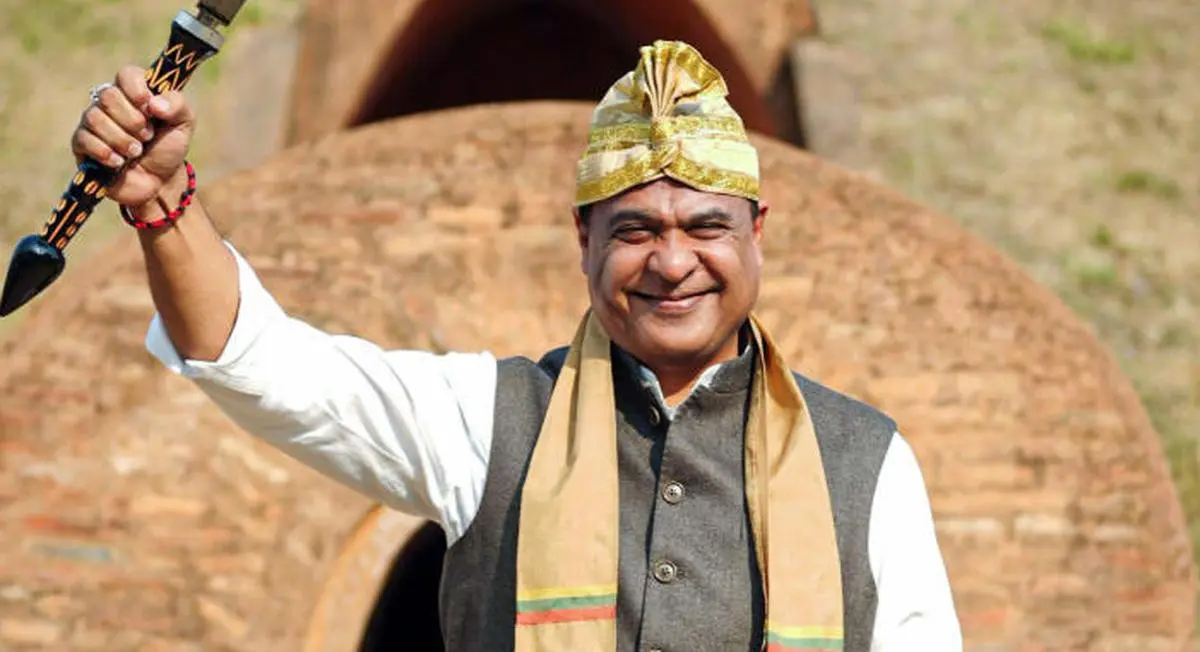
The Sarma Religious Influence Claim has sparked political debate after Himanta Biswa Sarma suggested that a “particular religion” worked against the National Democratic Alliance in parts of the Northeast. Moreover, he stated that this alleged influence affected Lok Sabha election performance in Nagaland, Manipur, and Meghalaya. The Sarma Religious Influence Claim has drawn strong reactions and renewed political discussion.
Rahul Gandhi Alleges BJP “Stole” Assam and Bengal Elections
Tipra Motha Leadership Change in TTAADC Ahead of Key Vote
Statement by CM Sarma
In the Sarma Religious Influence Claim, Himanta Biswa Sarma argued that external social and religious factors influenced voting patterns. Notably, he linked these factors to electoral outcomes in multiple Northeast states.
As a result, the Sarma Religious Influence Claim has become a controversial political statement.
States Mentioned in the Claim
The Sarma Religious Influence Claim specifically referenced Nagaland, Manipur, and Meghalaya. Furthermore, these states have diverse demographic and political landscapes.
Therefore, the Sarma Religious Influence Claim touches on sensitive regional dynamics.
Link to Lok Sabha Performance
According to the Sarma Religious Influence Claim, these factors impacted the Indian general elections results in the Northeast. Moreover, he suggested it influenced NDA’s performance in specific constituencies.
In addition, the Sarma Religious Influence Claim connects social factors with electoral outcomes.
Political Reactions Likely
The Sarma Religious Influence Claim is expected to generate responses from opposition parties and civil society. Furthermore, such statements often lead to intense political debate.
Consequently, the Sarma Religious Influence Claim may deepen political divisions.
Sensitivity of the Issue
The Sarma Religious Influence Claim involves sensitive references to religion and voting behavior. Moreover, it highlights the complexities of identity politics in the Northeast.
Thus, the Sarma Religious Influence Claim remains a delicate and contested issue.
Conclusion
The Sarma Religious Influence Claim made by Himanta Biswa Sarma has added a new layer to political discussions in Nagaland, Manipur, and Meghalaya. With this in mind, the statement linking religion and electoral outcomes is likely to remain debated.
In conclusion, the Sarma Religious Influence Claim reflects ongoing tensions in interpreting voting patterns and political influence in the Northeast.
FAQs
1. What is the Sarma Religious Influence Claim?
A statement about alleged religious influence on elections in Northeast India.
2. Who made the claim?
Himanta Biswa Sarma.
3. Which states were mentioned?
Nagaland, Manipur, and Meghalaya.
4. Which election was referenced?
The Indian general elections.
5. Why is the claim controversial?
It involves sensitive references to religion and voting behavior.
6. What impact could it have?
It may trigger political debate and responses from opposition parties.