


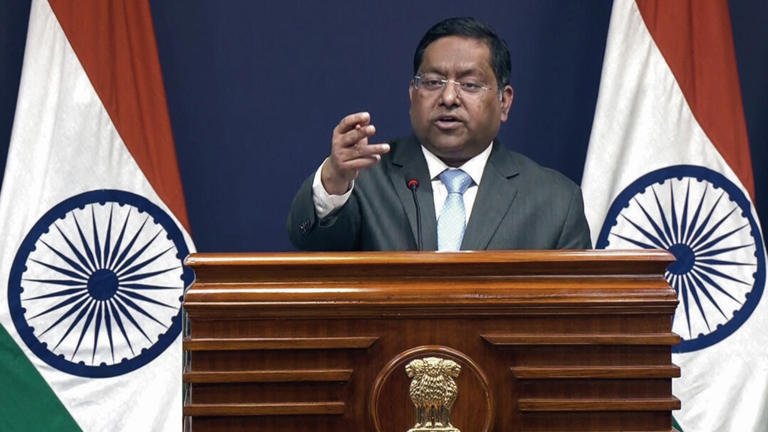
At least seven people have reportedly lost their lives amid unrest in Pakistan-occupied Kashmir (PoK), prompting a strong response from India. The Indian government said Pakistan must be held accountable for the situation and accused Islamabad of failing to address the concerns and aspirations of people living in the region.
The developments have once again drawn international attention to conditions in PoK. Reports indicate that demonstrations and clashes erupted in parts of the region, leading to casualties and injuries. The incident has also triggered political reactions from both sides, further intensifying discussions surrounding governance and human rights issues in the area.
India stated that the unrest reflects deeper concerns among residents and highlighted what it described as long-standing administrative and economic challenges faced by people in PoK.
The situation continues to be closely monitored as authorities assess developments and community leaders call for calm.
Unrest Leads to Casualties in PoK
According to reports, unrest in parts of Pakistan-occupied Kashmir resulted in the deaths of seven individuals. The incidents reportedly occurred during demonstrations and subsequent confrontations involving protesters and security personnel.
Witness accounts and local reports suggested that tensions had been building over a range of issues, including economic concerns and public grievances. Demonstrations reportedly took place in several locations before the situation escalated.
Authorities in the region have taken measures to restore order and prevent further disturbances. Security deployments were reportedly increased in affected areas as officials sought to contain the unrest.
The deaths have sparked concern among residents and community leaders. Many have called for a peaceful resolution to ongoing tensions and urged authorities to address underlying issues.
The situation remains sensitive, and observers continue to follow developments closely.
India Reacts to the Developments
India responded strongly to reports of the violence and casualties. Government representatives stated that Pakistan must be held accountable for conditions in Pakistan-occupied Kashmir.
Indian officials argued that the unrest reflects dissatisfaction among local residents and highlighted concerns regarding governance and development in the region. They said the reported incidents underscore broader challenges that have persisted for years.
According to India’s position, the people living in PoK deserve greater attention to their social, economic, and political needs. Officials maintained that the recent events reveal the consequences of neglecting those concerns.
The Indian government also reiterated its long-standing stance on Pakistan-occupied Kashmir, emphasizing its views regarding the region’s status and administration.
These remarks added a diplomatic dimension to an already sensitive situation.
Reports Highlight Local Grievances
Observers have noted that recent protests were reportedly linked to a combination of economic and governance-related issues. Residents in some areas have expressed concerns over inflation, employment opportunities, public services, and living conditions.
Community groups have periodically raised demands related to development and administrative reforms. Such concerns have occasionally led to demonstrations and public gatherings.
Analysts suggest that economic challenges often contribute to social unrest when communities feel that their grievances remain unaddressed. Therefore, many observers are urging authorities to engage with local populations and seek constructive solutions.
The recent incidents have renewed discussions about the need for dialogue and responsive governance in the region.
Many local voices continue to call for measures that improve living standards and address public concerns.
Security Situation Remains Under Watch
Following the unrest, security agencies reportedly increased their presence in affected areas. Authorities have sought to maintain law and order while preventing additional disturbances.
Officials have appealed for calm and urged residents to avoid actions that could escalate tensions further. Community leaders have also encouraged peaceful engagement and constructive dialogue.
Security measures often become necessary during periods of unrest. However, experts note that long-term stability typically depends on addressing the root causes of public dissatisfaction.
Observers believe that restoring confidence among communities will require both effective governance and meaningful engagement with local concerns.
The coming days are expected to be important in determining how the situation evolves.
Humanitarian Concerns Draw Attention
The loss of life during the unrest has raised humanitarian concerns among community members and rights advocates. Families affected by the violence continue to seek answers regarding the circumstances surrounding the incidents.
Calls have emerged for transparency, accountability, and measures to prevent similar situations in the future. Many observers argue that protecting civilians should remain a top priority during periods of tension.
Humanitarian concerns often become central during episodes of unrest because ordinary citizens bear the greatest impact. Therefore, community leaders have stressed the importance of maintaining peace and ensuring public safety.
The reported casualties have intensified demands for greater attention to the welfare and concerns of local populations.
Observers continue to monitor how authorities respond to these issues in the aftermath of the unrest.
India Reiterates Its Position on PoK
In its response, India reiterated its established position regarding Pakistan-occupied Kashmir. Officials stated that developments in the region continue to reinforce concerns previously raised by New Delhi.
The government argued that the unrest demonstrates the need for accountability and greater attention to the rights and welfare of residents. Indian representatives also highlighted what they described as persistent governance challenges.
These remarks form part of a broader diplomatic narrative that has accompanied discussions surrounding PoK for many years. The latest incidents have once again brought the issue into public and political focus.
Analysts note that developments in the region often influence diplomatic exchanges and public discourse between India and Pakistan.
As a result, the recent unrest has attracted significant regional and international attention.
Regional Implications of the Unrest
Events in Pakistan-occupied Kashmir often carry wider regional implications. Political developments, security concerns, and public protests in the region are closely watched by governments, analysts, and international observers.
The recent unrest has prompted renewed discussions about governance, economic development, and public welfare. It has also highlighted the importance of maintaining stability in a region that remains politically sensitive.
Experts believe that addressing local grievances and promoting dialogue can contribute to reducing tensions. Sustainable solutions typically require a combination of effective administration, economic opportunities, and public engagement.
The developments have therefore generated interest beyond the immediate area affected by the unrest.
Looking Ahead
The deaths of seven people during unrest in Pakistan-occupied Kashmir have brought renewed attention to conditions in the region. As authorities work to restore calm, questions remain regarding the factors that contributed to the protests and subsequent violence.
India has responded by stating that Pakistan must be held accountable and by highlighting concerns related to governance and public welfare in PoK. The remarks have added diplomatic significance to an already sensitive situation.
Meanwhile, local communities continue to seek stability, security, and solutions to their concerns. The coming weeks may prove crucial in determining how authorities respond to public grievances and whether efforts toward dialogue gain momentum.
As developments continue to unfold, attention will remain focused on both the humanitarian impact of the unrest and the broader political implications for the region.