


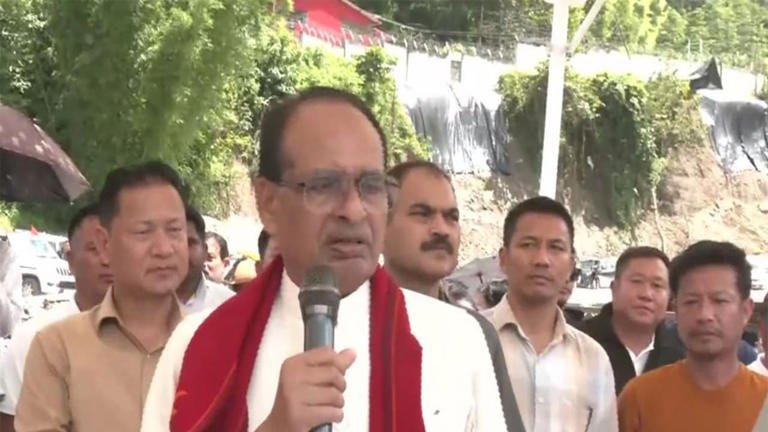
Union Minister for Agriculture and Farmers’ Welfare and Rural Development Shivraj Singh Chouhan has assured full support from the Central government to flood-affected Assam and Arunachal Pradesh, reaffirming the Centre’s commitment to assisting both states in relief, rehabilitation, and long-term recovery efforts. The assurance comes as several districts in the two northeastern states continue to recover from widespread flooding triggered by heavy rainfall, which caused damage to homes, agricultural land, public infrastructure, and livelihoods.
During discussions with state leaders and officials, Chouhan emphasised that the Centre would work closely with both state governments to ensure that relief measures are implemented efficiently and that adequate assistance reaches affected communities. He also highlighted the importance of strengthening disaster preparedness and building resilient infrastructure to minimise the impact of future floods.
The Union Minister’s assurance reflects the Centre’s continued focus on supporting flood-prone regions through coordinated disaster management, agricultural assistance, and rural development initiatives.
Centre Reaffirms Commitment to Flood-Affected States
Shivraj Singh Chouhan reiterated that the Central government stands firmly with the people of Assam and Arunachal Pradesh during this challenging period. He assured that every possible assistance would be extended to support relief operations and facilitate the rehabilitation of families affected by the floods.
The Union Minister stated that the Centre remains committed to working in close coordination with both state governments to ensure timely implementation of relief measures and accelerate recovery efforts.
Officials noted that effective cooperation between the Centre and the states is essential for addressing immediate humanitarian needs while planning long-term reconstruction initiatives.
The assurance has been welcomed as a significant step towards strengthening collaborative disaster response mechanisms in the Northeast.
Relief and Rehabilitation Remain Top Priorities
The discussions focused extensively on providing immediate relief to flood-affected families and restoring normalcy in the impacted regions. Chouhan emphasised that rehabilitation efforts should prioritise the needs of displaced families, farmers, and vulnerable communities who have suffered losses due to the floods.
The Centre is expected to support initiatives related to temporary shelters, food distribution, drinking water, healthcare services, sanitation, and restoration of essential public services.
Officials also stressed the importance of ensuring that relief materials reach remote and inaccessible areas where floodwaters have disrupted connectivity.
Rehabilitation programmes aimed at rebuilding homes and restoring livelihoods are expected to receive continued attention as floodwaters recede.
Agricultural Recovery Takes Centre Stage
As the Union Minister responsible for Agriculture and Farmers’ Welfare, Shivraj Singh Chouhan placed particular emphasis on supporting farmers affected by the floods. Large areas of agricultural land in Assam and Arunachal Pradesh have suffered damage due to inundation, affecting crops, livestock, and rural livelihoods.
The discussions included measures to assist farmers through agricultural recovery programmes, restoration of irrigation systems, distribution of quality seeds, and support for crop rehabilitation.
Officials highlighted that timely intervention is essential to minimise long-term economic losses and enable farmers to resume cultivation during the next cropping season.
Strengthening agricultural resilience remains a key component of the broader flood recovery strategy.
Focus on Rural Development Initiatives
The Union Minister also reviewed the role of rural development programmes in supporting flood recovery. Various schemes implemented by the Ministry of Rural Development are expected to contribute to rebuilding community infrastructure and generating employment in affected districts.
Public works undertaken under rural employment programmes can help restore roads, water conservation structures, drainage systems, and other community assets damaged by floods.
Such initiatives not only improve infrastructure but also provide wage employment to affected rural households during the recovery period.
Officials believe that integrating relief with rural development programmes will strengthen long-term resilience while supporting local economies.
Infrastructure Restoration to Accelerate Recovery
Floods often cause extensive damage to roads, bridges, embankments, schools, healthcare facilities, and public utilities. During the discussions, emphasis was placed on restoring critical infrastructure to ensure that essential services resume without unnecessary delays.
The Centre is expected to coordinate with the state governments to facilitate the repair and reconstruction of damaged infrastructure using appropriate financial and technical support.
Improved connectivity is particularly important for ensuring the efficient delivery of relief materials, restoring economic activities, and improving access to healthcare and education.
Officials reiterated that resilient infrastructure capable of withstanding future disasters remains an important objective of reconstruction efforts.
Disaster Preparedness and Climate Resilience
The recent floods have once again highlighted the importance of strengthening disaster preparedness and climate resilience in the flood-prone Northeastern region. Chouhan emphasised the need for improved early warning systems, scientific flood management, watershed conservation, and resilient infrastructure.
Officials also discussed the importance of integrating disaster risk reduction into development planning to minimise the impact of future natural disasters.
Investments in embankment strengthening, flood forecasting technologies, sustainable water management, and community awareness programmes are expected to contribute to improved preparedness.
Building long-term resilience remains a key priority for both the Centre and the affected states.
Centre-State Coordination to Continue
The Union Minister underlined the importance of continuous coordination between the Central government, state administrations, disaster management authorities, and local agencies throughout the recovery process.
Regular review meetings, field assessments, and monitoring of relief operations are expected to ensure that assistance reaches beneficiaries efficiently and that emerging challenges are addressed promptly.
Officials believe that collaborative governance plays a critical role in ensuring effective disaster response and successful implementation of rehabilitation programmes.
The Centre has reaffirmed its commitment to maintaining close engagement with both Assam and Arunachal Pradesh until recovery efforts are completed.
Support for Livelihood Restoration
Beyond immediate relief, restoring livelihoods remains an important component of flood rehabilitation. Farmers, small businesses, daily wage earners, and rural entrepreneurs affected by the floods require sustained support to resume their economic activities.
The government is expected to explore various assistance measures aimed at helping affected communities rebuild income sources while strengthening local economic resilience.
Skill development, financial assistance, rural employment programmes, and agricultural support are likely to contribute to long-term livelihood restoration.
Officials believe that rebuilding livelihoods is essential for ensuring sustainable recovery in flood-affected regions.
A Strong Commitment to Recovery and Resilience
Shivraj Singh Chouhan’s assurance of full Central support to flood-hit Assam and Arunachal Pradesh reflects the government’s continued commitment to assisting the Northeastern states during times of natural disaster. By prioritising relief, rehabilitation, agricultural recovery, infrastructure restoration, and rural development, the Centre aims to help affected communities recover quickly while strengthening resilience against future floods.
As coordinated recovery efforts continue, close cooperation between the Central and state governments will remain vital in ensuring timely assistance and effective implementation of rehabilitation programmes. The Union Minister’s commitment underscores the importance of a comprehensive approach that combines immediate humanitarian support with long-term development strategies, enabling Assam and Arunachal Pradesh to rebuild stronger and more resilient communities in the aftermath of the floods.