


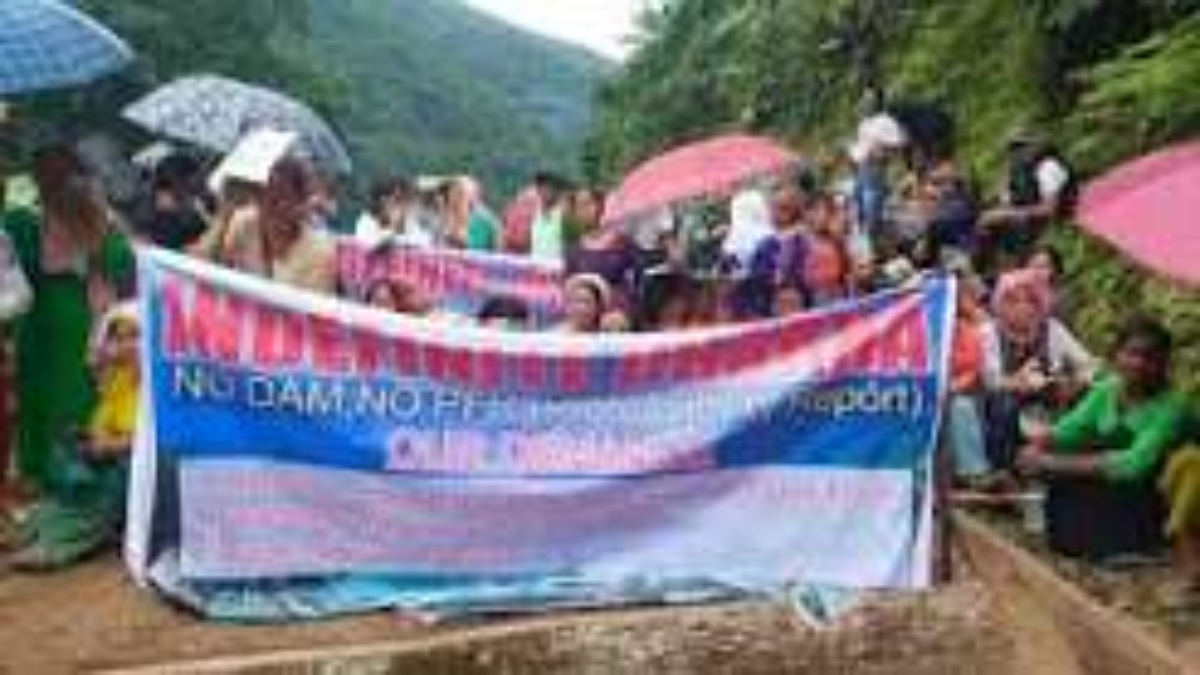
Siang project protest intensified in Arunachal Pradesh as villagers in Ugeng opposed activities linked to the proposed Siang Upper Multipurpose Project (SUMP), blocking a road and performing a traditional ritual to assert their resistance. The latest action reflects the continuing disagreement between local communities and authorities over the proposed mega hydropower project and the survey work needed to determine its final site.
The development has renewed attention on Ugeng, one of the locations being considered for the project. The other proposed locations are Dite Dime and the Parong-Deging area. The project has faced sustained opposition from sections of the indigenous communities, who fear displacement, loss of farmland and damage to their cultural and environmental heritage.
Ugeng villagers step up Siang project protest
The road blockade in Ugeng represents another form of community resistance against the project. Villagers also used a traditional ritual during the protest, underlining that their opposition is linked not only to land and livelihood concerns but also to their relationship with ancestral territory.
The use of customary practices has featured prominently in the wider movement against SUMP. A March 2026 research brief by the Centre of Excellence for Himalayan Studies noted that Adi communities have used indigenous methods of mobilisation and resistance because land in the Siang region is closely connected with identity, heritage and cultural continuity.
For many residents, the issue goes beyond the construction of a dam. The proposed project could affect agricultural areas and settlements along the Siang, raising concerns about where affected families would relocate and how traditional livelihoods would survive.
Project faces continuing local resistance
The Siang project protest comes against the backdrop of years of resistance to the SUMP. The proposed project has an installed capacity of around 11,000 MW to 11,200 MW and is planned as a large storage-based facility on the Siang River. NHPC has been tasked with conducting investigations and preparing the groundwork for the project.
Three sites have been considered for the project: Ugeng, Dite Dime and Parong. The exact final location remains linked to technical assessments and local conditions.
Opposition groups, including the Siang Indigenous Farmers’ Forum (SIFF), have repeatedly argued that the project threatens indigenous land, wet-rice cultivation and the wider ecological balance of the region. Earlier protests also focused on attempts to conduct pre-feasibility surveys.
The Centre for Excellence for Himalayan Studies said the proposed project could potentially submerge 27 villages and affect 43 more, either directly or indirectly. However, the precise extent of submergence remains dependent on the final project design and site selection.
Strategic project, difficult local debate
The Siang project protest also highlights the tension between national strategic priorities and local concerns. The Siang enters Arunachal Pradesh from Tibet, where it is known as the Yarlung Tsangpo, before flowing downstream into Assam as part of the Brahmaputra system.
The government has promoted SUMP as important for power generation, water storage, flood management and regional development. Officials have also linked the project to concerns arising from China’s proposed mega dam on the Yarlung Tsangpo. The proposed Indian project is expected to provide strategic storage and help regulate water flows.
However, those arguments have not removed concerns among communities that could face disruption. Previous protests have shown that resistance remains strong where villagers believe decisions affecting their land are being taken without adequate consultation.
Consent remains a key issue
The latest Siang project protest in Ugeng comes as authorities and community representatives continue to navigate the question of consent.
There have also been instances of villages agreeing to allow pre-feasibility activities. In March 2026, residents of Pangkang Jorkong signed an MoU with the Arunachal Pradesh government, with 79 of 86 households reportedly giving consent for PFR-related activities. Such developments have added another layer to the debate because support and opposition vary between villages.
At the same time, the Adi Baane Kebang, the apex body of the Adi community, has said it is neither pro-dam nor anti-dam and intends to engage with affected areas. The organisation has planned visits to Geku, Yingkiong, Riga and other locations after the Solung festival and monsoon period.
The road blockade and traditional ritual at Ugeng therefore add to a broader and unresolved debate over the Siang project. As authorities weigh the project’s strategic and economic importance, local communities continue to demand that their land, livelihoods, cultural traditions and consent receive equal consideration before survey work or construction advances.