


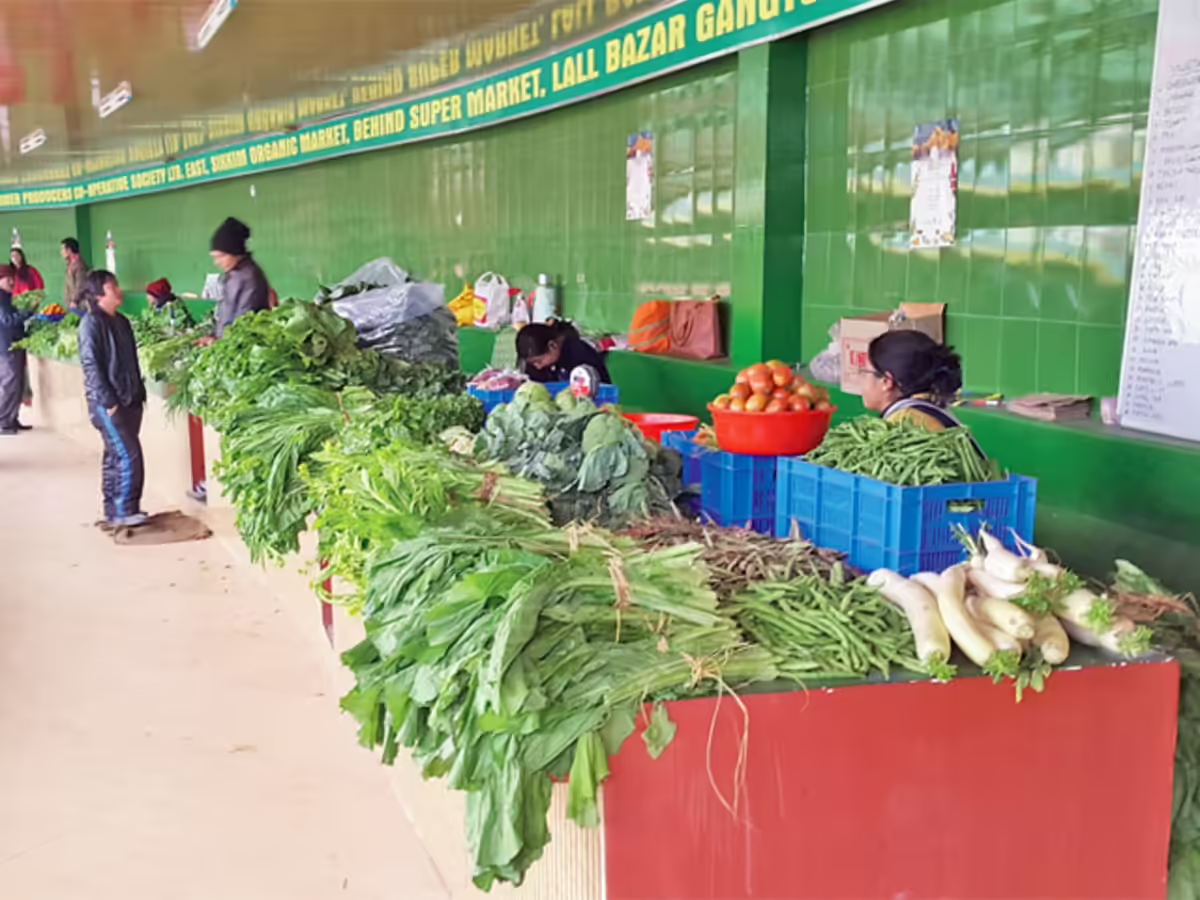
Sikkim’s organic farmers have received special direct market linkages to major metropolitan supermarkets, marking a significant step toward expanding the reach of the state’s certified organic produce. The initiative aims to eliminate middlemen and improve farmer earnings while ensuring steady supply chains to urban retail markets. Moreover, officials stated that the move will strengthen Sikkim’s position as India’s first fully organic state. The development reflects a growing focus on structured organic market integration.
BSF Border Sports Event Held on Indo-Bangla Maitri Bridge to Promote Fitness
Red Alert Across Assam, Meghalaya, and Sikkim for Severe Rainfall
Direct Market Access Strengthens Organic Supply Chain
Sikkim organic farmers get special direct market linkages to major metropolitan supermarkets, enabling smoother access to large urban consumer markets. Consequently, farmers can now supply produce directly to retail chains without intermediary layers.
The initiative connects farmer groups and cooperatives with supermarket procurement systems in major cities. Moreover, this ensures faster and more transparent transactions. Therefore, supply chain efficiency is expected to improve significantly.
Officials emphasized that direct linkages reduce dependency on traditional mandis and traders. Furthermore, this helps stabilize pricing mechanisms for organic produce. As a result, farmers are likely to receive better and more consistent income.
Meanwhile, logistics support is being strengthened to ensure timely delivery. Consequently, cold-chain and transport infrastructure are being prioritized.
Boost to Income and Organic Farming Sustainability
The direct market linkage initiative is expected to significantly improve the income of Sikkim’s organic farmers. Moreover, eliminating intermediaries allows farmers to retain a larger share of final retail value. Therefore, the economic benefits are more direct and substantial.
Organic farming requires certification and adherence to strict agricultural practices. Consequently, assured market access encourages more farmers to continue organic cultivation. Such stability is crucial for long-term sustainability.
Furthermore, consistent demand from metropolitan supermarkets provides financial predictability. As a result, farmers can plan production cycles more effectively.
Meanwhile, government agencies are supporting capacity-building programs for farmers. Similarly, training is being provided on quality standards and packaging requirements.
Strengthening Sikkim’s Organic Brand in Urban Markets
Sikkim organic farmers get special direct market linkages to major metropolitan supermarkets, helping strengthen the state’s brand as a leading organic producer. Moreover, certified organic produce from Sikkim is increasingly in demand across urban India. Therefore, structured market access enhances visibility.
Supermarkets benefit from consistent supply of high-quality organic fruits, vegetables, and grains. Consequently, consumer trust in Sikkim’s organic brand is reinforced. Such branding is important in competitive retail markets.
Furthermore, product labeling and traceability systems are being improved. As a result, consumers can verify the origin and authenticity of produce.
Meanwhile, promotional campaigns in urban markets are being considered. Similarly, partnerships with retail chains are expanding.
Role of Cooperatives and Logistics Infrastructure
The success of direct market linkages depends heavily on strong cooperative networks and logistics systems. Moreover, farmer cooperatives play a central role in aggregating produce. Therefore, organized collection systems are essential.
Efficient transport and cold storage facilities ensure that organic produce reaches supermarkets in fresh condition. Consequently, post-harvest losses are minimized. Such infrastructure improvements are critical for scaling operations.
Furthermore, digital platforms are being introduced to track supply orders and deliveries. As a result, coordination between farmers and buyers is becoming more efficient.
Meanwhile, state agencies are working to expand logistics support in remote areas. Similarly, investment in supply chain infrastructure is expected to increase.
Conclusion
Sikkim organic farmers get special direct market linkages to major metropolitan supermarkets, marking a major advancement in strengthening organic agriculture supply chains. Moreover, the initiative enhances farmer income, improves market efficiency, and boosts Sikkim’s organic brand value.
The direct linkage system is expected to transform how organic produce reaches urban consumers. Therefore, it supports both agricultural sustainability and economic growth.
As Sikkim organic farmers get special direct market linkages to major metropolitan supermarkets, the initiative reinforces the state’s leadership in India’s organic farming movement.
FAQs
1. What new facility have Sikkim farmers received?
Direct market linkages to metropolitan supermarkets.
2. How does this benefit farmers?
It increases income by removing intermediaries.
3. What type of farming is promoted?
Certified organic farming.
4. Where will produce be supplied?
Major urban supermarket chains.
5. Why is Sikkim important in organic farming?
It is India’s first fully organic state.