


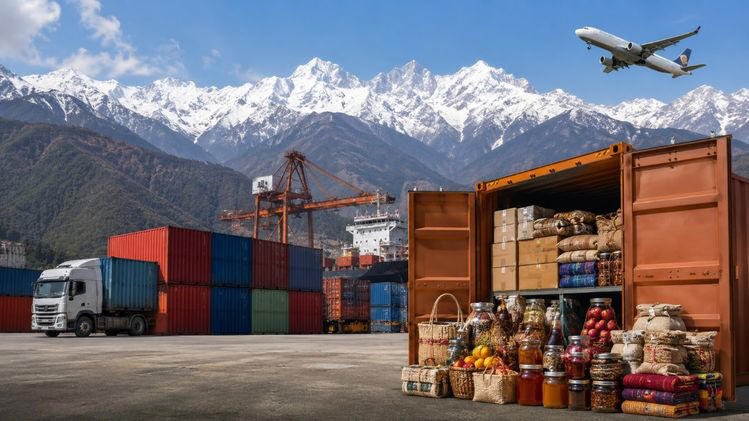
The Sikkim government has called for the creation of a dedicated export promotion framework tailored specifically for the Himalayan and Northeast states, highlighting the need for policies that address the unique geographical, economic, and logistical challenges faced by the region. The proposal aims to strengthen exports, improve market access, and unlock the vast economic potential of the Himalayan and Northeastern states by developing a more inclusive and region-sensitive trade ecosystem.
State officials emphasized that while the Himalayan and Northeast regions possess abundant natural resources, high-value agricultural products, organic produce, handicrafts, medicinal plants, and tourism-related opportunities, existing export policies often fail to adequately address the distinct needs of these geographically challenging areas.
The proposed framework seeks to create an enabling environment that allows producers, entrepreneurs, and exporters from the region to compete more effectively in national and international markets.
Unique Challenges Require Tailored Solutions
Sikkim argued that the Himalayan and Northeast states face challenges that differ significantly from those experienced by many other parts of the country. Mountainous terrain, difficult transportation networks, limited logistics infrastructure, higher freight costs, and relatively small domestic markets often increase the cost of doing business and reduce export competitiveness.
Officials noted that exporters frequently encounter difficulties in transporting goods efficiently to ports, airports, and major commercial centres. Seasonal weather conditions, landslides, and disruptions in connectivity further complicate supply chains, particularly for perishable agricultural products.
A dedicated export promotion framework would enable policymakers to design targeted interventions that reflect the region’s geographical realities while improving the competitiveness of local industries.
The state believes that addressing these structural constraints is essential for unlocking sustainable export growth.
Promoting High-Value Regional Products
Sikkim highlighted the immense export potential of products unique to the Himalayan and Northeast regions. The state has earned recognition for its organic farming initiatives and produces a variety of high-quality agricultural and horticultural products with significant international market potential.
Organic vegetables, spices, large cardamom, ginger, medicinal and aromatic plants, floriculture products, tea, processed food items, and traditional handicrafts represent important sectors that could benefit from stronger export support.
Officials stressed that many of these products possess geographical uniqueness and premium quality that can attract global buyers if supported by efficient marketing, branding, certification, and logistics infrastructure.
The proposed framework would encourage value addition, product diversification, and better integration with international supply chains.
Improving Logistics and Market Connectivity
One of the major priorities outlined by the Sikkim government is the strengthening of logistics infrastructure to facilitate smoother export operations. Efficient transportation networks, warehousing facilities, cold storage infrastructure, cargo handling systems, and multimodal connectivity are considered essential for expanding export opportunities.
Officials emphasized that reducing transportation costs would significantly improve the competitiveness of exporters from remote mountainous regions.
Better road, rail, and air connectivity, along with improved access to ports and border trade points, would help businesses transport products more efficiently while minimizing delays and spoilage.
The government also highlighted the importance of developing modern logistics hubs capable of supporting export-oriented industries across the Himalayan and Northeast states.
Supporting Small Businesses and Entrepreneurs
A dedicated export promotion framework would particularly benefit micro, small, and medium enterprises (MSMEs), farmer-producer organizations, cooperatives, artisans, and rural entrepreneurs who form the backbone of the regional economy.
Many small producers possess high-quality products but often lack adequate knowledge of export procedures, international standards, market requirements, certification processes, and overseas marketing opportunities.
Officials suggested expanding capacity-building programmes, export awareness initiatives, financial assistance, and technical guidance to help local businesses enter global markets.
Improved institutional support would encourage entrepreneurship while creating new income opportunities for rural communities across the region.
Leveraging Border Trade Opportunities
Sikkim’s strategic location, sharing international borders with neighbouring countries, offers significant opportunities for expanding cross-border trade and regional economic cooperation.
The state believes that a specialized export framework could strengthen trade linkages with neighbouring countries by improving border infrastructure, customs procedures, trade facilitation measures, and regional connectivity.
Officials observed that enhanced cross-border commerce would not only support exporters but also contribute to broader economic integration within the region.
Strengthening trade corridors could create new markets for locally produced goods while promoting investment, tourism, and commercial partnerships.
The proposal aligns with broader national efforts to enhance connectivity and economic cooperation in India’s eastern and northeastern regions.
Building a Competitive Export Ecosystem
The Sikkim government stressed that export promotion should extend beyond financial incentives and include comprehensive institutional support for businesses.
Key areas identified include product quality certification, branding, packaging, digital marketing, participation in international trade fairs, export financing, market intelligence, and easier regulatory compliance.
Officials also highlighted the growing role of digital commerce in enabling businesses from remote regions to access global customers directly.
Encouraging innovation, improving productivity, and strengthening collaboration between government agencies, research institutions, and industry stakeholders will further enhance export competitiveness.
The proposed framework seeks to build a resilient export ecosystem capable of supporting long-term economic growth while preserving the region’s environmental and cultural heritage.
Government Calls for Inclusive Trade Policies
The Sikkim government reiterated that national export strategies should recognize the unique strengths and developmental needs of the Himalayan and Northeast states. A dedicated policy framework, officials argued, would promote balanced regional development by ensuring that geographically disadvantaged states receive targeted support to overcome structural barriers.
By addressing logistics challenges, improving market access, strengthening institutional support, and promoting value-added products, the proposed framework has the potential to transform the region into an important contributor to India’s export economy.
The government believes that greater collaboration between the Centre and the Himalayan and Northeast states will be essential for designing effective trade policies that reflect regional priorities while supporting national export growth.
As India continues expanding its global trade footprint, Sikkim’s proposal highlights the importance of adopting inclusive, region-specific approaches that unlock the economic potential of every part of the country. A dedicated export promotion framework could serve as a catalyst for sustainable development, increased employment, enhanced competitiveness, and stronger integration of the Himalayan and Northeast states into both national and international markets.