


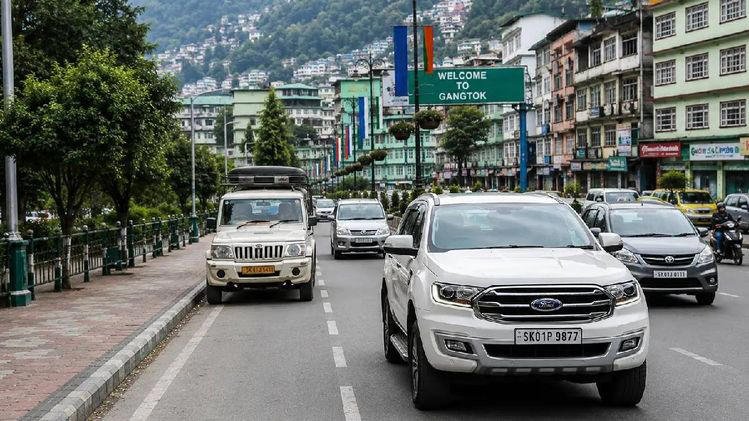
The Sikkim government has withdrawn the odd-even traffic restriction on private vehicles across the state, providing relief to thousands of motorists. However, the restriction will continue to remain in force within Gangtok, where authorities aim to manage traffic congestion and maintain smoother vehicle movement in the state capital.
The decision marks a significant change in the state’s traffic management policy. Officials stated that the revised arrangement takes into account changing transportation needs while ensuring that measures remain in place to address congestion in Gangtok, which continues to experience heavy traffic pressure.
The move has been welcomed by vehicle owners and commuters across Sikkim, who will now be able to use their private vehicles without the constraints imposed by the odd-even system outside the capital city.
Government Revises Traffic Regulation Policy
The withdrawal of the odd-even rule reflects the government’s decision to modify traffic regulations based on current conditions and transportation requirements.
Under the previous system, private vehicles operated according to the last digit of their registration numbers. Vehicles with odd-numbered registrations could travel on designated days, while even-numbered vehicles operated on alternate days.
Authorities introduced the measure to manage vehicle movement and reduce congestion in certain areas. However, following a review of traffic conditions, the government decided to relax the restriction across most parts of the state.
Officials emphasized that the revised policy seeks to balance convenience for citizens with effective traffic management.
Gangtok Remains Under Odd-Even System
While the restriction has been removed across Sikkim, Gangtok will continue to follow the odd-even system for private vehicles.
The state capital faces unique traffic challenges due to its geography, road network, and increasing number of vehicles. Narrow roads and limited parking spaces often contribute to congestion, particularly during peak hours and tourist seasons.
Authorities believe that retaining the odd-even system in Gangtok will help manage traffic flow and reduce pressure on key roads.
Officials stated that the decision reflects the need for targeted measures in areas where congestion remains a significant concern.
Relief for Vehicle Owners
The withdrawal of the restriction outside Gangtok is expected to benefit a large number of vehicle owners across the state.
Residents in districts beyond the capital had often expressed concerns regarding the inconvenience caused by the odd-even rule. Many people rely on private vehicles for commuting, business activities, education, healthcare, and other daily requirements.
The revised policy allows greater flexibility and convenience for motorists. Citizens can now use their vehicles without worrying about alternating travel days in areas where traffic conditions do not require such restrictions.
The decision has received positive responses from several sections of the public.
Impact on Daily Commuters
Daily commuters are among those expected to benefit significantly from the policy change.
People traveling for work, education, and personal purposes will no longer face restrictions on vehicle usage in most parts of the state. This can help reduce logistical challenges and improve mobility.
Business owners and professionals who depend on private transportation may also experience greater convenience under the revised arrangement.
Officials noted that easier access to transportation can contribute to improved productivity and support economic activities across different sectors.
The government believes that the decision aligns with the practical needs of citizens while maintaining necessary traffic controls where required.
Managing Traffic in the State Capital
Traffic management remains a major challenge in Gangtok due to the city’s topography and urban growth.
Over the years, the number of vehicles in the capital has increased significantly. As a result, authorities have implemented various measures to improve traffic flow and reduce congestion.
The odd-even rule remains one of the tools used to manage vehicle density on roads. Officials indicated that the system has contributed to easing traffic pressure in certain areas.
The government will continue to monitor traffic conditions in Gangtok and evaluate the effectiveness of existing measures.
Any future changes, officials said, will depend on traffic patterns and administrative assessments.
Balancing Mobility and Regulation
The revised policy demonstrates the government’s attempt to balance public convenience with effective traffic regulation.
Authorities recognized that different regions of the state face varying transportation challenges. While some areas can function efficiently without restrictions, Gangtok continues to require special measures due to its traffic situation.
Officials stated that policy decisions should reflect local realities and address specific concerns rather than apply uniform rules across all regions.
The withdrawal of the restriction outside Gangtok reflects this approach and highlights the government’s focus on practical governance.
Economic and Social Benefits
Greater mobility can have positive effects on economic and social activities. Easier transportation supports businesses, tourism, education, healthcare access, and public services.
Vehicle owners can now plan travel more freely, which may contribute to increased economic activity and convenience for residents.
Tourists visiting destinations outside Gangtok may also benefit from simplified transportation arrangements. Improved mobility can support local businesses and strengthen the tourism sector.
Officials noted that transportation policies often influence broader development outcomes and therefore require careful consideration.
The revised system aims to support growth while maintaining necessary controls in high-traffic areas.
Government to Monitor Situation
Despite the relaxation of restrictions, authorities will continue monitoring traffic conditions across the state.
Transport and traffic officials are expected to assess the impact of the policy change and evaluate whether additional measures are necessary in the future.
The government emphasized that public cooperation remains essential for maintaining road safety and traffic discipline.
Motorists have been urged to follow traffic rules, respect road regulations, and contribute to smoother vehicle movement.
Officials stated that responsible driving practices remain important regardless of changes in traffic policies.
Looking Ahead
The Sikkim government’s decision to withdraw the odd-even restriction on private vehicles across the state, while retaining it in Gangtok, marks an important adjustment in transportation policy.
The move provides relief to motorists and enhances mobility in districts outside the capital. At the same time, it allows authorities to continue addressing congestion challenges in Gangtok through targeted traffic management measures.
By adopting a region-specific approach, the government aims to improve convenience for citizens while ensuring effective regulation where necessary. The policy reflects a broader effort to balance public needs, urban management, and transportation efficiency.
As officials continue to monitor traffic conditions, the revised arrangement is expected to contribute to smoother travel, greater flexibility for vehicle owners, and improved transportation experiences across much of Sikkim while maintaining orderly traffic movement in the state capital.