


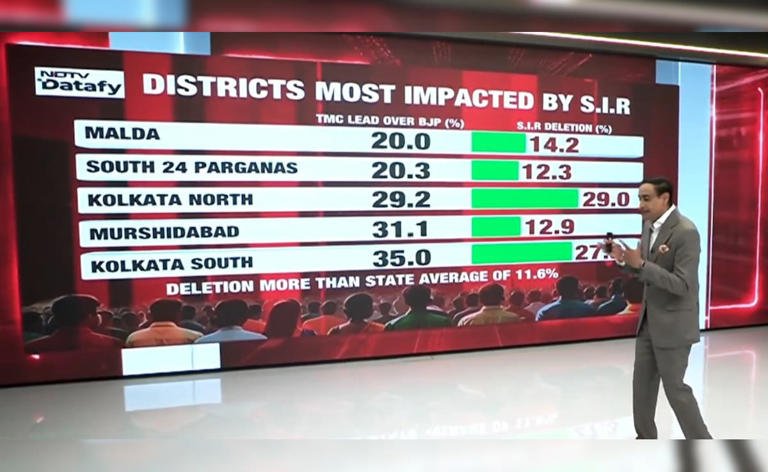
The debate around the impact of SIR on elections in West Bengal has gained momentum, with political analysts closely examining how the numbers could influence upcoming polls. The discussion, highlighted in “The Numbers Game” with Rahul Kanwal, has brought focus to voter patterns, demographic shifts, and electoral strategies.
The SIR impact Bengal polls conversation revolves around how revisions in electoral rolls and voter identification processes may affect voting trends. Experts believe that even minor numerical changes can significantly alter outcomes in closely contested constituencies. Therefore, the issue has become central to political calculations in the state.
As parties prepare for elections, understanding the implications of SIR has become crucial. The analysis suggests that the numbers game could play a decisive role in shaping results.
Read More: Sikkim CM Prem Singh Tamang greets civil servants, praises role
Understanding SIR and its electoral relevance
SIR, or Special Intensive Revision, refers to the process of updating electoral rolls to ensure accuracy and eliminate discrepancies. In West Bengal, this exercise has drawn attention due to its potential impact on voter composition.
The SIR impact Bengal polls debate highlights how additions and deletions in voter lists can influence electoral outcomes. Accurate rolls are essential for fair elections. However, changes in numbers can shift the balance in key constituencies.
Experts note that the revision process aims to include eligible voters while removing duplicates or ineligible entries. As a result, it can lead to a more transparent electoral system. Nevertheless, political parties closely monitor these changes to assess their implications.
The discussion led by Rahul Kanwal emphasizes that numbers alone do not tell the full story. Instead, understanding voter behavior and demographics is equally important.
Numbers game in key constituencies
The SIR impact Bengal polls analysis focuses on how numerical shifts can affect specific constituencies. In closely contested seats, even a small change in voter numbers can influence results.
Political strategists analyze data to identify trends. They examine areas where voter additions or deletions are significant. Consequently, parties adjust their campaign strategies accordingly.
In urban constituencies, higher mobility often leads to frequent changes in voter lists. Meanwhile, rural areas may experience different patterns. Therefore, the impact of SIR varies across regions.
The numbers game also involves understanding turnout trends. Higher participation in certain areas can amplify the effect of changes in voter lists. As a result, parties focus on mobilizing supporters effectively.
Political reactions and strategies
The SIR impact Bengal polls debate has triggered varied reactions from political parties. Some leaders have welcomed the revision process, stating that it ensures fairness and transparency. Others have raised concerns about potential discrepancies.
Parties have intensified their efforts to verify voter lists. They are conducting ground-level checks to ensure that their supporters remain registered. Moreover, they are engaging with voters to address concerns related to the revision process.
The discussion featuring Rahul Kanwal highlights how political strategies evolve in response to data. Campaigns increasingly rely on analytics to target specific voter groups. Therefore, the numbers game has become more sophisticated.
In addition, parties are focusing on awareness campaigns. They encourage voters to check their registration status and participate in the electoral process. This approach aims to maximize turnout and strengthen support bases.
Role of demographics and voter behavior
The SIR impact Bengal polls analysis goes beyond numbers to examine demographics and voter behavior. Factors such as age, gender, and socio-economic status influence voting patterns.
Young voters, for instance, represent a significant segment. Their inclusion in electoral rolls can shift dynamics in many constituencies. Therefore, parties focus on engaging this group through targeted campaigns.
Similarly, migration patterns affect voter distribution. Movement of people between urban and rural areas can lead to changes in electoral composition. As a result, understanding these trends becomes essential.
The insights shared in “The Numbers Game” with Rahul Kanwal emphasize the importance of combining data analysis with ground realities. Numbers provide a framework, but human behavior ultimately shapes outcomes.
Challenges in the revision process
While the SIR process aims to improve accuracy, it also faces challenges. Ensuring that all eligible voters are included requires extensive effort. Therefore, authorities must maintain transparency and efficiency.
Errors in voter lists can lead to disputes. Political parties often scrutinize the process to identify inconsistencies. Consequently, the revision exercise becomes a subject of debate.
In West Bengal, the scale of the electorate adds complexity. Managing large datasets and verifying information requires coordination among multiple agencies.
Experts suggest that technology can play a key role in addressing these challenges. Digital tools can streamline processes and reduce errors. However, implementation must be careful to ensure inclusivity.
Broader implications for Bengal politics
The SIR impact Bengal polls discussion reflects broader trends in electoral politics. Data-driven strategies are becoming increasingly important. Parties rely on analytics to understand voter behavior and plan campaigns.
The numbers game also highlights the competitive nature of elections in West Bengal. With closely fought contests, every vote counts. Therefore, even small changes can have significant consequences.
The analysis featuring Rahul Kanwal underscores the importance of transparency in electoral processes. Trust in the system is essential for maintaining democratic integrity.
Moreover, the discussion has sparked public interest in electoral procedures. Citizens are becoming more aware of the importance of voter registration and participation.
Conclusion
The SIR impact Bengal polls debate, as explored in “The Numbers Game” with Rahul Kanwal, highlights the critical role of data in shaping electoral outcomes. From voter list revisions to demographic shifts, multiple factors contribute to the numbers game.
As elections approach in West Bengal, political parties will continue to analyze data and refine strategies. However, the ultimate outcome will depend on voter participation and behavior.
The discussion underscores that while numbers provide valuable insights, the essence of democracy lies in the choices made by citizens.
Read More: Arunachal Congress Forms Panels to Probe Mining, Highway Issues