


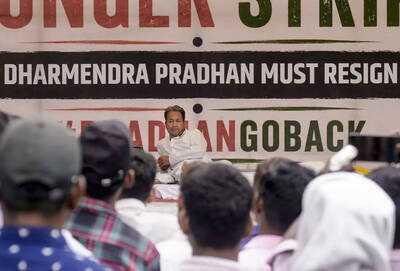
Concerns over the health of climate activist and education reform advocate Sonam Wangchuk have intensified as his indefinite hunger strike at New Delhi’s Jantar Mantar continues. Supporters and organisers have said that Wangchuk’s health has shown signs of deterioration after several days without food, prompting renewed appeals for authorities to engage in dialogue and address the issues raised through the protest.
Wangchuk began the hunger strike as part of an ongoing protest at Jantar Mantar, describing it as a peaceful democratic effort to draw attention to issues he considers matters of national importance. The protest has attracted students, social activists, civil society members and supporters from different parts of the country, who have gathered at the site to express solidarity.
As the fast enters another phase, medical concerns have increasingly become the focus, alongside the demands being raised by the protesters.
Reports indicate decline in health
According to organisers, Wangchuk has experienced a noticeable decline in his physical condition since beginning the indefinite fast. Updates shared by those associated with the protest indicate that he has lost weight during the hunger strike, while his blood sugar levels have reportedly fallen, raising concerns about potential health complications if the fast continues.
Supporters stated that his condition is being monitored regularly, but they emphasised that prolonged fasting poses increasing health risks.
Medical experts generally note that extended hunger strikes can lead to dehydration, weakness, electrolyte imbalance and other complications, making continuous health monitoring essential.
Protest continues at Jantar Mantar
The hunger strike forms part of a broader demonstration at Jantar Mantar that has witnessed participation from students, activists and members of civil society.
Before commencing his fast, Wangchuk paid tribute to Mahatma Gandhi at Rajghat, describing the protest as a peaceful and democratic expression inspired by Gandhian principles of non-violent resistance.
Throughout the protest, supporters have continued organising peaceful gatherings while appealing for constructive dialogue with the government.
The demonstration has remained focused on raising awareness regarding the issues highlighted by Wangchuk and other participants.
Wangchuk appeals for wider public support
As the hunger strike entered its subsequent days, Wangchuk appealed to people across the country to support the movement through peaceful democratic participation.
He encouraged citizens who were unable to travel to Delhi to observe symbolic one-day fasts or organise peaceful programmes in their own localities to express solidarity with the causes being highlighted during the protest.
Supporters said the campaign seeks to broaden public awareness while maintaining its commitment to non-violent methods of protest.
The appeal has generated responses from various groups, particularly among youth and environmental supporters.
Basic facilities become part of controversy
The protest has also witnessed allegations regarding the availability of basic facilities at the demonstration site.
Organisers claimed that sanitation and water facilities at Jantar Mantar were inadequate after the hunger strike began, allegations that have added another dimension to the ongoing protest. They argued that such facilities are essential, particularly considering Wangchuk’s age and the physical demands of an indefinite fast.
The issue has drawn attention from supporters, who have called for basic humanitarian arrangements for peaceful demonstrators.
Wangchuk reiterates commitment to peaceful protest
Despite growing concerns regarding his health, Wangchuk has reiterated his determination to continue the hunger strike.
He has stated that he hopes the issues raised during the protest receive meaningful attention and maintained that the movement is intended to encourage dialogue rather than confrontation.
Supporters have continued urging authorities to initiate discussions while expressing concern about the physical toll the indefinite fast is taking on the activist.
The protest organisers have also appealed for a peaceful atmosphere at the demonstration site.
Public attention grows as health updates emerge
Daily health updates regarding Wangchuk have increasingly become a focal point of public discussion as the protest progresses.
Reports indicating weight loss and declining blood sugar levels have intensified concern among supporters, who continue to monitor his condition closely while appealing for medical supervision throughout the fast.
Observers note that prolonged hunger strikes often shift public attention from the political demands themselves to the humanitarian concerns surrounding the health of the individual undertaking the fast.
As a result, the latest developments have generated renewed public interest in the ongoing protest.
Authorities continue monitoring developments
While the protest continues peacefully at Jantar Mantar, developments surrounding Wangchuk’s health remain under close watch.
Officials continue to monitor the situation as supporters maintain their presence at the protest venue and organisers provide periodic updates regarding his physical condition.
The demonstration remains one of the prominent public protests currently underway in the national capital, with attention focused both on the issues being raised and on the activist’s well-being.
Focus remains on dialogue and health
As Sonam Wangchuk’s indefinite hunger strike continues at Jantar Mantar, concern over his health has become increasingly prominent alongside the demands of the protest. Reports of weight loss and declining blood sugar levels have heightened calls for continued medical monitoring and peaceful dialogue to address the issues raised by the demonstrators.
With supporters continuing to gather in solidarity and Wangchuk reaffirming his commitment to non-violent protest, attention remains fixed on both his deteriorating health and the broader issues that prompted the hunger strike. The coming days are expected to be crucial as developments unfold and authorities continue to monitor the situation closely.