

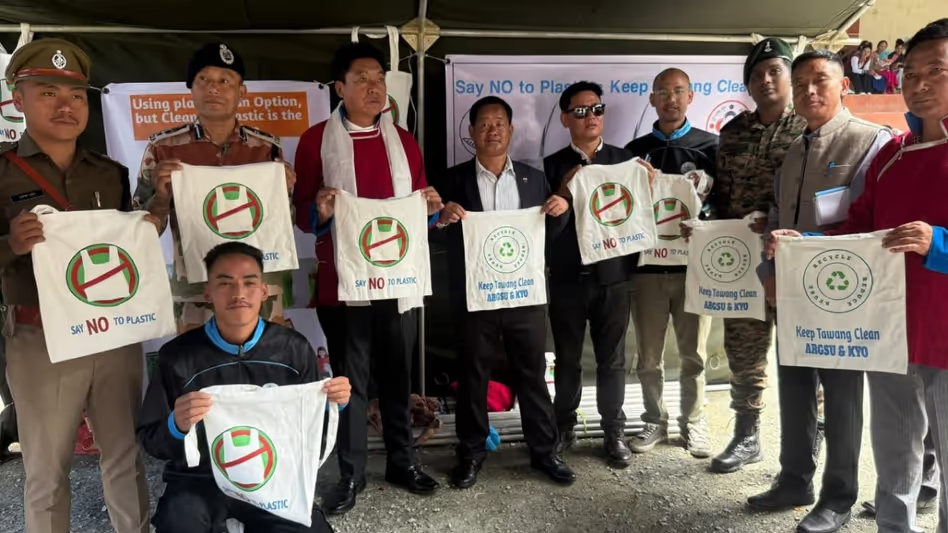
Tawang students launch biodegradable bag drive in Arunachal to combat plastic waste, inspiring eco-friendly change and community participation.
Tawang Students Launch Biodegradable Bag Drive to Power Plastic-Free Future in Arunachal
In a heartening display of youthful activism, Tawang students launch biodegradable bag drive to address one of today’s most pressing environmental challenges — plastic waste. This initiative, led by school and college students in the scenic town of Tawang, Arunachal Pradesh, is not just about replacing plastic bags but about sparking a broader movement towards sustainability.
The program aims to provide residents and local businesses with biodegradable alternatives, while raising awareness about the dangers of single-use plastics. With the majestic mountains of Tawang as their backdrop, these young changemakers are proving that big transformations often start with small, determined steps.
Plastic Pollution: A Growing Threat to Tawang’s Beauty
The picturesque district of Tawang is known for its monasteries, pristine lakes, and snow-capped peaks. But like many parts of the world, it faces the creeping menace of plastic waste. Single-use plastics, from shopping bags to packaging, have been polluting streams, clogging drains, and harming wildlife.
By stepping up with this initiative, Tawang students launch biodegradable bag drive not only to address a local problem but also to contribute to the global fight against plastic pollution.
The Vision Behind the Biodegradable Bag Drive
The students’ mission is straightforward yet powerful: reduce dependence on single-use plastic by offering affordable, biodegradable alternatives. The bags, made from natural materials such as jute, cotton, and cornstarch-based polymers, decompose naturally without leaving toxic residue.
Under the Tawang students launch biodegradable bag drive, volunteers are distributing these eco-friendly bags to households, shops, and markets. In return, they request people to commit to reusing them instead of opting for plastic.
Student Leadership at the Forefront
This campaign is entirely student-driven. From designing the bags and fundraising to conducting awareness workshops, the youth are taking ownership of every aspect. Schools and colleges have turned this into a community service project, and students are even going door-to-door to spread the message.
Their motto is simple: “If we can change one habit today, we can change our planet’s future.” By embedding the idea of sustainability in daily life, the Tawang students launch biodegradable bag drive aims for long-term impact.
Workshops and Community Engagement
The project is not limited to distributing bags — it’s also an education campaign. Interactive workshops are being held in markets, schools, and community centers to explain:
- The environmental damage caused by plastic bags
- How biodegradable materials work
- The importance of reuse and waste segregation
These sessions, conducted in both English and local dialects, are part of the broader Tawang students launch biodegradable bag drive mission to involve every generation in the fight against plastic.
The Economic and Social Angle
Interestingly, the campaign also has an economic dimension. Local artisans and self-help groups are being encouraged to produce these biodegradable bags. This not only supplies the campaign with materials but also creates livelihood opportunities within the community.
By linking environmental action with economic benefit, the Tawang students launch biodegradable bag drive strengthens its appeal and sustainability.
Support from Authorities and Monasteries
The campaign has received support from the Tawang district administration, which is exploring policies to limit plastic use in government offices and public events. Several monasteries, central to the region’s cultural life, have also pledged to replace all plastic bags used in their facilities with biodegradable alternatives.
This alignment between youth activism, governance, and religious institutions adds momentum to the Tawang students launch biodegradable bag drive.
Why Biodegradable Bags Are a Game-Changer
Unlike plastic bags, which can take hundreds of years to decompose, biodegradable bags break down in a matter of months under natural conditions. They are safe for soil and water, and their production generates less pollution.
By making these bags accessible and affordable, the Tawang students launch biodegradable bag drive is dismantling one of the main barriers to sustainable consumer behavior — convenience.
Measuring the Early Impact
Though still in its early stages, the campaign has already distributed over 5,000 biodegradable bags across Tawang’s markets and neighborhoods. Local vendors report a noticeable drop in plastic bag usage, and residents are starting to carry their own reusable bags for shopping.
Social media buzz around the Tawang students launch biodegradable bag drive has also helped spread the message to neighboring districts, with some schools expressing interest in replicating the model.
Challenges on the Road to a Plastic-Free Tawang
Like any grassroots movement, this one faces obstacles. Some residents are reluctant to change their habits, citing the cost of biodegradable bags. Others are unaware of the long-term damage caused by plastic waste.
To tackle these challenges, the Tawang students launch biodegradable bag drive team is working on securing subsidies for bag production and expanding awareness campaigns to rural areas.
Youth Power as a Catalyst for Change
What makes this campaign remarkable is the leadership shown by students. In an era where climate anxiety is common among young people, the Tawang students launch biodegradable bag drive turns that anxiety into action. These youth are showing that local action can contribute to global solutions.
A Model for Other Communities
If successful, the initiative could serve as a blueprint for other towns and districts. The model is simple: combine environmental education with practical alternatives and community-driven production.
The Tawang students launch biodegradable bag drive is proof that with vision, organization, and persistence, even small towns can lead in the fight against climate change.
Read More: Assam Targets Zero Child Marriage by 2026 – CM Sarma’s