


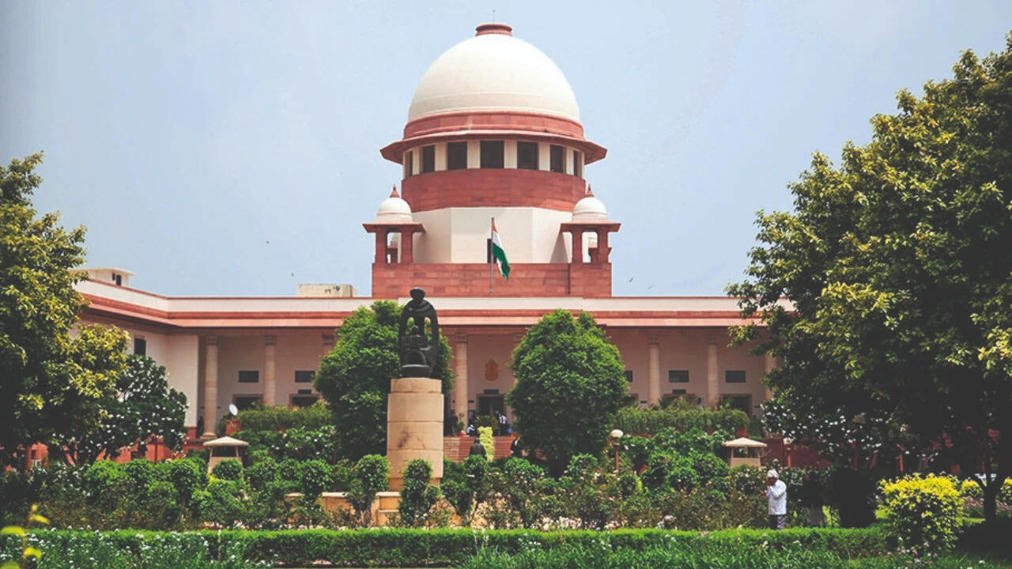
The Supreme Court registry has clarified that two petitions concerning the deputation of Indian Police Service (IPS) officers to Central Armed Police Forces (CAPFs) were clubbed only after the Chief Justice of India (CJI) consulted the presiding judges of the respective benches.
The clarification follows questions raised after a contempt petition was removed from the notified cause list on September 30 and subsequently listed before a special bench comprising Justices Manoj Misra and Ujjal Bhuyan.
The two matters concern the implementation of an earlier Supreme Court judgment and the validity of a subsequent law permitting IPS officers’ deputation to CAPFs.
Two Petitions Before Separate Benches
One petition seeks contempt proceedings over the alleged violation of the Supreme Court’s May 23, 2025, judgment. The judgment had directed the gradual reduction and eventual phasing out of IPS officers’ deputation to CAPFs.
The contempt petition was pending before a bench headed by Justice Ujjal Bhuyan.
The second petition challenges the constitutional validity of the new CAPF Act, which permits such deputation. It was listed before a bench headed by Justice Manoj Misra.
The two matters became linked because the Union government relied on the new law in response to the contempt allegations.
ASG Requested That Both Matters Be Heard Together
Additional Solicitor General Aishwarya Bhati reportedly requested that the two petitions be placed before either of the benches hearing the matters.
The request was based on the connection between the new law and the contempt proceedings. The government’s position was that hearing both matters together would allow the court to examine the related legal questions.
Following the request, the CJI consulted Justices Misra and Bhuyan before constituting the special bench.
The registry’s explanation indicated that the decision to club the matters followed this consultation.
Senior Advocates Raise Concerns Over Cause List
The removal of the contempt petition from the notified list led to objections during the proceedings before the special bench.
Senior advocate Shyam Divan questioned the removal of a listed matter, pointing out that lawyers and litigants make travel arrangements based on the Supreme Court’s cause list.
He argued that once a cause list is notified, a matter should not be removed during the course of the day without proper procedure.
Senior advocate Guru Krishna Kumar also echoed the concern.
The objections focused on transparency and the handling of listed cases rather than the substantive merits of the petitions.
Justice Misra Questions ASG Over Lack of Notice
Justice Manoj Misra reportedly questioned the Additional Solicitor General for not informing the opposing side before approaching the CJI with the request to club the cases.
The issue contributed to the confusion surrounding the sudden change in listing arrangements.
The CJI was abroad at the time and could not be contacted for comment.
The Supreme Court registry subsequently submitted a report explaining the process followed in combining the matters.
Registry Report Accepted by Supreme Court Bench
The bench of Justices Manoj Misra and Ujjal Bhuyan considered the registry’s explanation.
In its order, the bench stated that the explanation tendered by the registry was accepted and taken on record. It also directed that the report be kept in a sealed cover by the concerned section.
The court scheduled both the contempt petition and the writ petition for hearing together on October 15.
CAPF Deputation Issue Remains Before the Court
The central issue in the two petitions concerns the role of IPS officers in the leadership and deputation structure of CAPFs.
The earlier Supreme Court judgment had called for a gradual reduction and eventual phase-out of such deputation. The subsequent CAPF Act, however, permits the continuation of IPS officers’ deputation, leading to the legal challenge.
The court will now consider the connected matters together.
The registry’s clarification has addressed how the cases were brought before the special bench, while the legal questions concerning the judgment and the new law remain pending for consideration.