


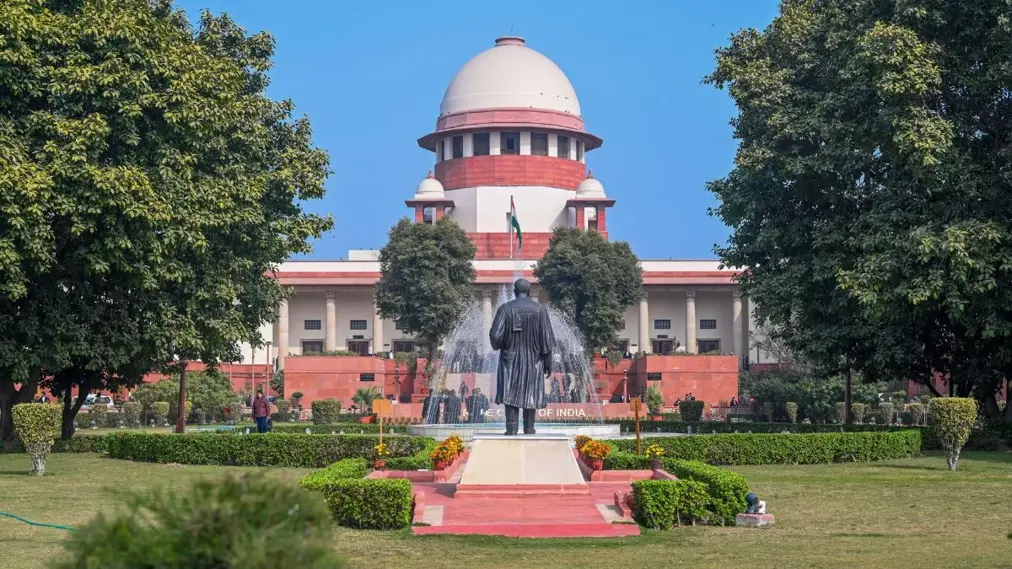
The Supreme Court has given the Centre a “last opportunity” to file a counter affidavit and action-taken report on measures taken to enforce its directions on the mandatory reporting of Child Sexual Exploitation and Abuse Material (CSEAM) by social media intermediaries.
A Bench of Justices J.B. Pardiwala and K. Vinod Chandran passed the direction on September 24 while hearing a matter concerning the implementation of the court’s 2024 judgment in Just Rights for Children Alliance v. S. Harish. The court noted that the Ministry of Electronics and Information Technology (MeitY) and the Ministry of Law and Justice had not yet filed the response sought in its August 14 order.
Supreme Court seeks report from two ministries
The court expressed concern over the delay in filing the required reports. It said the issue was “extremely serious” and granted the two ministries one final opportunity to submit their responses.
The report must explain the steps taken by the Centre to give meaningful effect to the Supreme Court’s 2024 directions. It must also detail the measures being taken to curb the circulation of CSEAM through social media platforms.
The Bench also directed the Centre to explain what precautions it plans to introduce in the future to prevent lapses by social media intermediaries.
The matter will next come up for hearing on October 15, 2026.
Centre says it is taking the matter seriously
Additional Solicitor General K.M. Nataraj appeared for the Centre during the hearing. He told the Bench that the government was taking the issue seriously.
Nataraj also informed the court that authorities had already issued a notice to one company and initiated proceedings against it. The Centre is expected to place details of these actions before the court in its response.
The court has now asked the government to provide a clear account of enforcement measures as well as future safeguards.
Case linked to 2024 Supreme Court judgment
The proceedings arise from the Supreme Court’s September 23, 2024 judgment in Just Rights for Children Alliance v. S. Harish. In that judgment, the court examined the legal responsibilities of online intermediaries when they encounter CSEAM.
The Supreme Court held that intermediaries must comply with statutory reporting obligations under Sections 19 and 20 of the Protection of Children from Sexual Offences (POCSO) Act and Rule 11 of the POCSO Rules. The court also considered these obligations alongside the due-diligence requirements under the Information Technology Act.
The judgment made clear that intermediaries cannot rely on safe-harbour protection under the IT Act without complying with the applicable legal obligations. These include reporting such material to the authorities specified under the POCSO framework.
Petition seeks stronger enforcement mechanism
The latest proceedings follow an application filed by the Just Rights for Children Alliance (JRCA). The organisation has sought effective implementation of the Supreme Court’s directions and stronger action against intermediaries that fail to meet their legal reporting responsibilities.
The petition also seeks a uniform Standard Operating Procedure (SOP) for dealing with CSEAM. The proposed mechanism would cover detection, reporting, preservation of electronic evidence and coordination between social media platforms and law-enforcement agencies.
The petition further seeks timely action by law-enforcement authorities after receiving reports from intermediaries. It has also called for measures concerning the National Database of Sexual Offenders and a centralised mechanism for reporting CSEAM.
Concerns over compliance by social media platforms
The proceedings gained urgency after a media report alleged that Instagram had carried paid advertisements promoting CSEAM. The JRCA cited the report while raising questions about compliance by social media intermediaries with statutory duties and the Supreme Court’s earlier directions.
The application has therefore placed the focus not only on the existence of legal obligations but also on their practical enforcement.
The Supreme Court has now asked the Centre to explain what action it has taken and how it plans to prevent similar lapses in the future.
Draft SOP to be shared before next hearing
Apart from the action-taken report, the court has asked the Centre to prepare a draft SOP for dealing with CSEAM cases.
The draft is expected to be shared with the petitioner several days before the October 15 hearing. This will give the JRCA an opportunity to examine the proposed framework and submit its comments and suggestions before the matter comes up again.
The next hearing will therefore focus on the Centre’s compliance report, the proposed safeguards and the framework for implementing the Supreme Court’s directions.
The court’s latest order places renewed emphasis on ensuring that social media intermediaries follow their statutory obligations and that reports involving CSEAM reach law-enforcement authorities without delay.