


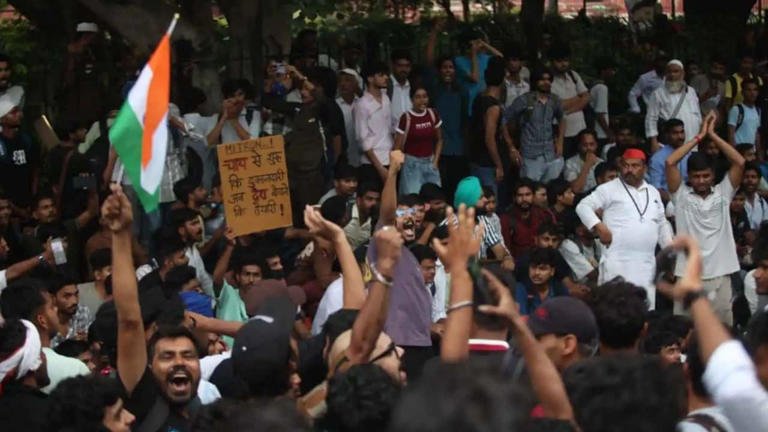
The Supreme Court is set to form a high-powered panel to examine allegations of police excesses during protests led by the Cockroach Janta Party (CJP). The protests involved students demonstrating against alleged examination paper leaks and other concerns related to the education system.
The court’s move comes after petitions raised allegations of excessive police action against students and protesters during demonstrations in Delhi and several other states. The petitions also highlighted allegations of violence against police personnel during the protests.
A three-judge bench headed by Chief Justice of India Surya Kant has indicated that an independent inquiry is necessary to examine the allegations. The court has also directed authorities to preserve important evidence from the protests, including CCTV footage, drone recordings and body-camera footage.
Supreme Court Seeks Independent Inquiry
The Supreme Court indicated that the allegations made by the petitioners prima facie warranted an independent investigation. The court said a high-powered committee could examine the incidents and establish what happened during the protests.
The proposed panel will look into allegations concerning police action against students. It will also examine claims involving violence against police personnel.
The court has stressed that accountability should apply to everyone involved. If police personnel used excessive force, the responsible officials should face appropriate action. Similarly, protesters who committed violence or took the law into their own hands should also face legal consequences.
The court’s approach seeks to maintain a balance between protecting peaceful protests and ensuring public order. Justice Joymalya Bagchi also cautioned against allowing violence to discredit peaceful demonstrations.
Panel to Examine July 20 Parliament March
The proposed inquiry will focus on incidents surrounding the July 20 Parliament march organised by CJP. Thousands of students participated in protests demanding action over alleged examination paper leaks and reforms in the National Testing Agency.
The march in Delhi led to clashes between protesters and security personnel. Visuals from the protests showed police using force to control the demonstrators.
CJP and other petitioners alleged that authorities used excessive force against students. On the other hand, the government told the court that many police personnel suffered injuries during the unrest.
The Supreme Court wants the proposed panel to examine both sides rather than rely only on one version of events. This could help establish an independent account of what happened during the protests.
Court Orders Preservation of Evidence
The Supreme Court has also taken steps to protect evidence connected with the protests. It directed authorities to preserve CCTV footage, drone footage and body-worn camera recordings.
The order also covers wireless communication records and PCR logs from the period surrounding the demonstrations. Authorities must preserve these records so that investigators can examine them later.
The court has also directed authorities to protect the personal information and digital data of protesters captured through surveillance systems. The information should not enter the public domain for the time being.
These directions could become important for the proposed inquiry. Video recordings and communication records can help establish the sequence of events and determine how authorities responded to the protests.
Protection for Student Protesters
Alongside the proposed inquiry, the Supreme Court issued interim protection for students involved in the protests. The court directed authorities not to take coercive action against protesting students while the matter remains under consideration.
The court also ordered the release of students below the age of 18 who had been arrested or detained during the protests and had no criminal antecedents.
The directions covered Delhi and several states, including Assam, Bihar, West Bengal, Uttar Pradesh, Maharashtra, Madhya Pradesh and Kerala.
The order aims to prevent students from facing immediate pressure while the court examines the wider issues surrounding the protests.
Court Distinguishes Peaceful Protest From Violence
The Supreme Court has repeatedly stressed the importance of protecting peaceful demonstrations. At the same time, it has made clear that constitutional protection does not cover acts of violence.
The court’s proposed inquiry will therefore examine allegations from both sides. It will look at claims of police excesses while also considering allegations that protesters attacked police personnel or damaged public property.
This distinction is important because the protests involved a large number of students. The court wants authorities to distinguish between peaceful participants and individuals who may have committed serious offences.
The approach could also help establish clearer standards for police action during large demonstrations. Authorities need to maintain public order, but they must also use force in a proportionate manner.
Centre Defends Police Response
The Centre has defended the actions of the security forces while expressing support for an independent investigation. During the Supreme Court proceedings, Solicitor General Tushar Mehta said that students who suffered during the protests should not be ignored.
The government also highlighted injuries suffered by police personnel during the unrest. According to submissions made before the court, around 250 police officers were injured during the protests.
The government’s position has therefore focused on examining the conduct of both protesters and security personnel. The proposed panel could provide an independent mechanism to assess these competing claims.
FIRs Against Students Also Under Scrutiny
The protests resulted in FIRs being registered against students and other participants in several states. The Supreme Court has separately examined how authorities should handle these cases.
On August 3, the court clarified that states can close or withdraw FIRs against students if they follow the procedure prescribed by law. It also clarified that the term “criminal antecedents” refers to grave and heinous offences in the context of its earlier directions.
The issue of FIRs has become a major concern for students and their families. CJP has repeatedly demanded that cases against peaceful protesters should not continue.
The Supreme Court’s intervention could therefore have wider implications for students who became involved in the demonstrations.
Possible Guidelines on Use of Force
The proposed high-powered panel may also examine how police should respond to large-scale protests in the future. Reports indicate that the committee could help frame guidelines for the graded use of force during situations involving public disorder.
Such guidelines could help police decide what level of force is appropriate in different situations. They may also provide greater clarity on how authorities should deal with large student demonstrations.
The need for such guidelines has gained importance after allegations of baton charges and other forceful measures during the protests.
A clear framework could help protect peaceful demonstrators while allowing police to respond effectively when genuine violence occurs.
CJP Welcomes Court Intervention
The Supreme Court’s intervention has provided a significant development for CJP and the students involved in the protests. The organisation had raised concerns about police action and the criminal cases filed against protesters.
The proposed inquiry could give students an opportunity to present their allegations before an independent body. At the same time, it can provide police and government authorities with an opportunity to present their side.
This balanced approach could help establish accountability without prejudging the outcome of the investigation.
Supreme Court Move Could Set Wider Precedent
The proposed high-powered panel could have implications beyond the current CJP protests. Student demonstrations are common across India, particularly over examinations, recruitment and education policy.
The court’s approach could help establish broader principles for handling such protests. It could reinforce the right to peaceful assembly while making clear that violence will not receive legal protection.
The preservation of digital evidence could also become increasingly important. Police now use CCTV networks, drones, body cameras and other technologies during large public gatherings. Clear rules on collecting and using such data can protect both protesters and law-enforcement personnel.
What Happens Next
The Supreme Court is expected to finalise the structure and composition of the high-powered panel after considering responses from the Centre and the states involved. The committee will then examine the allegations and evidence connected with the protests.
For now, authorities must preserve all relevant records and follow the court’s interim directions. The release of eligible minors and the restriction on coercive action against protesting students remain important parts of the court’s interim framework.
The proposed inquiry represents a significant step towards establishing an independent account of the events surrounding the CJP-led protests. Its findings could determine whether police officials or protesters committed excesses and whether further action is necessary.
The Supreme Court’s intervention also underlines a broader principle: peaceful protest remains protected, but violence on either side must face scrutiny. As the high-powered panel takes shape, its findings could influence how India handles student protests and police action in similar situations in the future.