


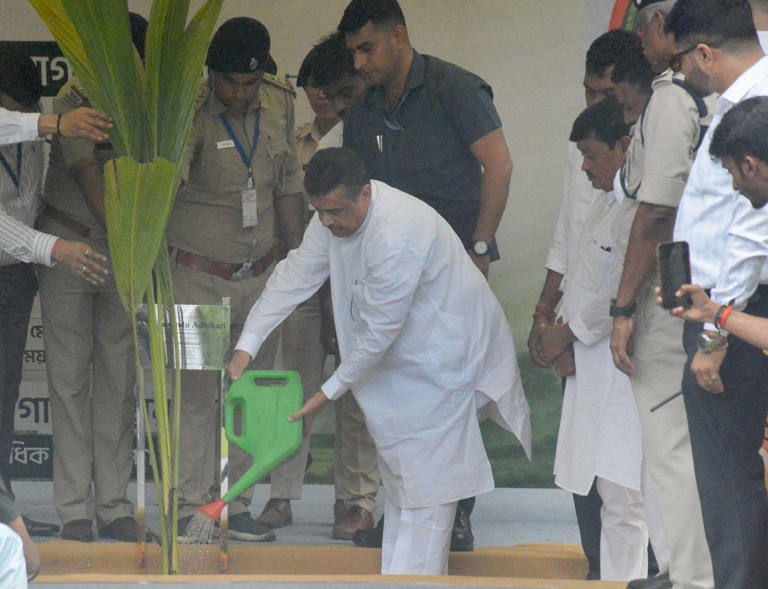
West Bengal Chief Minister Suvendu Adhikari has set an ambitious target of planting 10 crore saplings across the state by May 2027 under the government’s Sabuj Swadhinata initiative. The campaign aims to expand green cover, promote environmental awareness and encourage people to take part in tree plantation activities.
The initiative places environmental conservation at the centre of the state government’s development agenda. The government plans to involve local communities, educational institutions, government departments and other organisations in the plantation drive.
The target of 10 crore saplings reflects the scale of the campaign. However, the government will also need to ensure that the planted saplings survive and grow into mature trees. Therefore, monitoring and post-plantation care will remain important parts of the initiative.
Government Sets 10 Crore Sapling Target
Chief Minister Suvendu Adhikari announced the target under Sabuj Swadhinata as part of a wider effort to increase greenery across West Bengal. The government wants to complete the plantation of 10 crore saplings by May 2027.
The initiative will focus on planting trees across different parts of the state. Government agencies will coordinate the campaign while local communities can participate in plantation activities.
The government also wants to create greater public awareness about the importance of trees. The campaign will encourage citizens to view tree plantation as a long-term responsibility rather than a one-day activity.
Moreover, the target provides a clear deadline for government departments and participating organisations. This can help officials plan plantation drives and monitor progress over the coming months.
Sabuj Swadhinata Focuses on Green Bengal
Sabuj Swadhinata seeks to connect environmental protection with a broader public movement. The campaign encourages people to contribute to a greener West Bengal through tree plantation.
The initiative comes at a time when cities and towns across the state face growing environmental challenges. Rapid urbanisation can reduce open spaces and increase pressure on existing green areas.
Trees can help address several of these challenges. They provide shade, absorb carbon dioxide and improve local air quality. They also support biodiversity and help regulate temperatures.
Therefore, increasing the number of trees can provide both environmental and social benefits. The government hopes the Sabuj Swadhinata campaign will encourage more people to participate in these efforts.
Focus on Long-Term Environmental Benefits
Planting 10 crore saplings represents a significant environmental target. However, the real impact will depend on how many saplings survive and grow over time.
Newly planted saplings require regular watering, protection and maintenance. Without proper care, many young plants may fail to survive. Therefore, the government will need to create an effective monitoring system alongside the plantation campaign.
Local authorities can play an important role in this process. They can identify suitable plantation sites and ensure that saplings receive adequate care after planting.
Schools, colleges and community organisations can also help. Students and local residents can monitor trees planted in their areas and report problems to the relevant authorities.
Such community participation can turn the campaign into a long-term environmental movement.
Communities to Play Important Role
The success of Sabuj Swadhinata will depend heavily on public participation. The government can provide saplings and organise plantation drives, but communities will have to help protect the trees.
Local residents can take responsibility for trees planted near their homes and neighbourhoods. Educational institutions can also create small green spaces and involve students in plantation activities.
Furthermore, local clubs and voluntary organisations can organise regular plantation and awareness programmes. These activities can make environmental protection part of everyday community life.
The involvement of young people could prove especially valuable. Students can learn about climate change, biodiversity and conservation while taking part in practical environmental activities.
As a result, Sabuj Swadhinata could become both a plantation campaign and an environmental education initiative.
Trees Can Help Address Climate Challenges
The plantation target also comes against the backdrop of growing concerns over climate change. West Bengal experiences several climate-related challenges, including extreme heat, heavy rainfall, flooding and coastal vulnerability.
Trees can help improve local environmental conditions. Urban trees can reduce heat by providing shade and releasing moisture into the atmosphere. Forests can also help protect soil and regulate water systems.
In coastal areas, mangroves provide an additional layer of protection. They can reduce the impact of storms and help stabilise shorelines.
Therefore, the state’s green initiatives need to consider local environmental conditions. Different species and plantation methods may be suitable for different regions.
The government can maximise the benefits of the campaign by selecting appropriate native species and planting them in locations where they can survive naturally.
Urban Areas Need More Green Spaces
West Bengal’s urban centres also require greater attention to green cover. Kolkata and other cities have experienced rapid development over the years.
As built-up areas expand, maintaining parks, roadside trees and other green spaces becomes increasingly important. Urban tree cover can improve the quality of life for residents and create more pleasant public spaces.
The Sabuj Swadhinata campaign can support these efforts by encouraging plantation in suitable urban locations. Authorities can identify vacant public spaces, institutional areas and roadside stretches where trees can grow safely.
However, urban plantation requires careful planning. Authorities must consider underground utilities, roads, drainage systems and pedestrian movement before selecting plantation sites.
Importance of Tree Survival
The 10 crore target will attract attention because of its scale. Yet, the government will have to measure success through tree survival rather than only the number of saplings planted.
A sapling that survives for several years can contribute much more to the environment than one that dies shortly after plantation.
Therefore, authorities may need to maintain records of plantation sites and conduct periodic inspections. Technology can also help officials track plantation activities and monitor the health of trees.
Community participation can make this process easier. Local groups can help officials identify areas where trees need additional care.
Green Target Could Strengthen Environmental Awareness
The Sabuj Swadhinata campaign could also help make environmental awareness more widespread in West Bengal. Tree plantation provides a simple way for people to participate in climate and conservation efforts.
The campaign can encourage families, schools, offices and community groups to make tree plantation part of their regular activities. It can also help young people understand the importance of protecting natural resources.
The government can further strengthen the initiative through awareness programmes and educational campaigns. These efforts can explain why native trees are important and how people can care for them.
West Bengal Sets Major Green Goal
Chief Minister Suvendu Adhikari’s target of planting 10 crore saplings by May 2027 gives West Bengal a major environmental goal. The Sabuj Swadhinata initiative aims to expand greenery while encouraging greater public participation in conservation.
The scale of the target will require careful planning and coordination. Government departments, local bodies, communities and institutions will all have a role to play.
Most importantly, the campaign will need to focus on the long-term survival of the saplings. Regular monitoring, adequate maintenance and community involvement can determine whether the initiative produces lasting results.
If the government achieves its target and ensures that a large share of the saplings survive, Sabuj Swadhinata could significantly strengthen West Bengal’s green cover. It could also encourage a wider culture of environmental responsibility across the state.
The May 2027 deadline now gives the campaign a clear objective. The focus will remain on turning the ambitious plantation target into a lasting green legacy for West Bengal.