


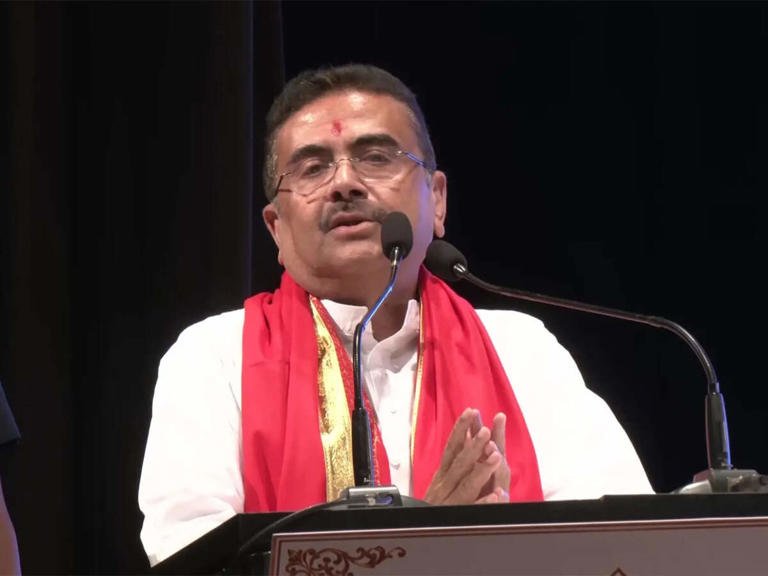
A fresh political buzz has emerged in West Bengal after Trinamool Congress (TMC) MPs Dev and Maliah attended an administrative meeting led by senior BJP leader Suvendu Adhikari. The development has attracted significant attention within political circles, particularly because both MPs have recently been described by observers as being among the party’s dissident voices.
The participation of the two parliamentarians in the meeting has sparked speculation regarding internal dynamics within the TMC and the evolving political landscape in West Bengal. Political observers noted that interactions between leaders from rival political camps often attract attention, especially during periods of heightened political activity.
The meeting, which focused on administrative and developmental matters, was attended by various public representatives and officials. However, the presence of the two TMC MPs alongside Adhikari became the primary talking point after details of the gathering emerged.
The development comes at a time when discussions surrounding political alignments, party discipline, and opposition strategies continue to shape political discourse in the state.
Dev and Maliah Attend Key Administrative Meeting
The attendance of TMC MPs Dev and Maliah at the administrative meeting drew considerable interest from political observers. Both leaders have been in the spotlight in recent months due to reports of differences within sections of the party.
The meeting reportedly focused on administrative issues and developmental matters concerning the region. Public representatives from different political backgrounds often participate in such discussions to address local concerns and review development initiatives.
However, the participation of the two MPs alongside Suvendu Adhikari led to political interpretations beyond the administrative agenda. Observers noted that interactions involving leaders from competing political formations frequently generate speculation about future political developments.
Neither of the MPs publicly indicated any change in political affiliation. Nevertheless, their presence at the meeting became a topic of discussion among party workers and political commentators.
The event highlighted how routine administrative engagements can acquire political significance in a highly competitive political environment.
Suvendu Adhikari Remains a Key Political Figure
Suvendu Adhikari continues to play a prominent role in West Bengal politics as one of the BJP’s most influential leaders in the state. Since joining the BJP after leaving the Trinamool Congress, he has remained a central figure in political debates and organizational activities.
Adhikari’s political journey has often attracted attention because of his previous association with the TMC and his subsequent emergence as a leading opposition figure. His interactions with leaders from different parties are therefore closely watched by political observers.
The administrative meeting provided another opportunity for Adhikari to engage with public representatives on governance and development-related issues. Such meetings often serve as platforms for discussing local concerns and reviewing project implementation.
Political analysts noted that Adhikari’s continued influence makes any event involving him particularly noteworthy within the state’s political landscape.
His role in opposition politics remains an important factor shaping political discussions in West Bengal.
Political Speculation Intensifies
The presence of Dev and Maliah at the meeting quickly fueled speculation regarding the state of internal politics within the Trinamool Congress. Political observers suggested that the development may be interpreted in different ways by supporters and critics alike.
Some analysts argued that participation in administrative meetings should not necessarily be viewed through a political lens. Public representatives often attend such gatherings to address issues affecting their constituencies.
Others, however, noted that political symbolism plays an important role in public life. Therefore, interactions involving leaders from opposing camps often attract scrutiny and generate debate.
The incident has prompted renewed discussion about the relationship between governance responsibilities and political affiliations. It has also highlighted the challenges political parties face in managing internal perceptions and public messaging.
The reactions demonstrate the sensitivity surrounding political developments in West Bengal.
Administrative Meetings and Public Representation
Administrative meetings are generally intended to facilitate discussions on governance, development projects, and public welfare initiatives. Elected representatives often participate regardless of party affiliation when issues affecting their constituencies are involved.
Supporters of such engagements argue that development should remain above partisan considerations. They believe that cooperation among leaders can help address local concerns more effectively.
Political experts note that interactions across party lines are not uncommon in democratic systems. Public representatives frequently work together on administrative matters even while maintaining political differences.
The attendance of Dev and Maliah can therefore be viewed within the broader context of governance and constituency representation. However, the political environment often influences how such actions are perceived.
As a result, administrative engagements sometimes generate political interpretations that extend beyond their stated purpose.
TMC Faces Continued Political Scrutiny
The Trinamool Congress remains under close observation as political developments unfold in West Bengal. Internal dynamics within major political parties often become subjects of public discussion, particularly when prominent leaders attract attention for their actions or statements.
Political analysts believe that large parties frequently encounter differing viewpoints among members. Managing such diversity requires strong organizational communication and leadership.
The participation of the two MPs in the meeting has added another layer to ongoing discussions regarding party dynamics. While no official indication of political realignment has emerged, the development continues to attract attention.
TMC leaders have consistently emphasized party unity and organizational discipline. Observers will therefore continue to monitor reactions from within the party.
The incident illustrates how individual actions by political leaders can influence broader political narratives.
Opposition Politics in West Bengal
West Bengal remains one of India’s most politically active states. Competition between major parties continues to shape public discourse and influence political developments.
Interactions between leaders from rival parties often receive significant media attention because of their potential implications. Political observers closely analyze such events for clues regarding future strategies and alignments.
The meeting involving Adhikari, Dev, and Maliah has therefore generated interest beyond its immediate administrative agenda. Analysts believe it reflects the dynamic nature of political engagement in the state.
Opposition leaders continue to focus on governance issues while simultaneously preparing for future political contests. This combination of administrative responsibilities and political competition often creates complex situations.
The latest development has become part of this broader political narrative.
Reactions from Political Circles
Political reactions to the meeting have varied. Some leaders emphasized the importance of focusing on development and public welfare rather than political speculation. They argued that elected representatives should participate in discussions that benefit their constituencies.
Others viewed the development as politically significant and suggested that it could indicate changing dynamics within the state’s political landscape. Such interpretations have contributed to ongoing debates among party workers and supporters.
Observers noted that perceptions often play a crucial role in politics. Even routine engagements can acquire symbolic importance depending on the broader political context.
The differing reactions underscore the highly competitive nature of West Bengal politics and the attention given to interactions among prominent leaders.
As discussions continue, the meeting remains a subject of considerable interest.
Looking Ahead
The attendance of TMC MPs Dev and Maliah at an administrative meeting led by Suvendu Adhikari has sparked fresh political discussions in West Bengal. While the gathering focused on governance and development-related matters, the presence of leaders from different political camps attracted significant attention.
The development comes amid ongoing debates regarding party dynamics, opposition politics, and political cooperation. Observers continue to assess its implications while emphasizing the importance of distinguishing administrative engagement from political speculation.
For now, no official indication suggests any major political shift. However, the incident highlights how interactions among prominent leaders can influence public perceptions and political narratives.
As West Bengal’s political landscape continues to evolve, events such as this are likely to remain under close scrutiny. The coming weeks may provide greater clarity regarding the significance of the meeting and its impact on the state’s political discourse.