


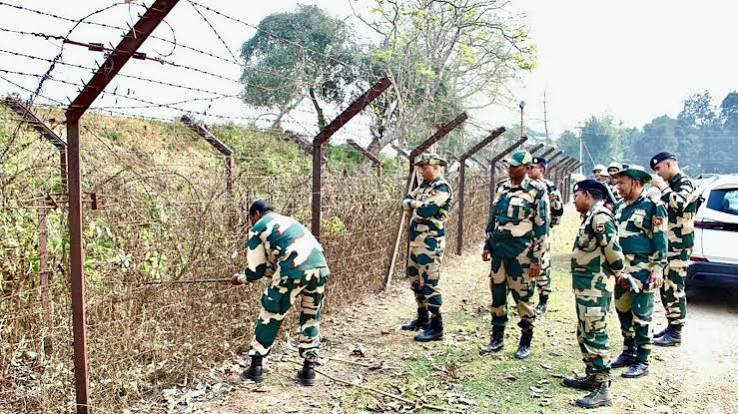
Tripura BSF festival vigilance has gained importance as the state prepares for the upcoming festive season and large public gatherings. The Border Security Force continues to coordinate with local communities and state authorities along the India-Bangladesh frontier.
Recent security reviews have also placed greater emphasis on surveillance, information sharing and action against cross-border criminal activity.
Meanwhile, Tripura is strengthening arrangements for Durga Puja and other major public events across the state.
The combined approach aims to maintain border security while allowing residents to celebrate the festival season safely.
Arunachal Hosts First-Ever Official Coffee Workshop to Map Cash Crop Potential
Tripura BSF Festival Vigilance Gains Importance Along Border
Tripura shares an 856-km international border with Bangladesh. Therefore, border management remains an important part of the state’s overall security planning, particularly when public activity increases during major festivals. The frontier also requires coordination between the BSF, state police, district administration and residents of border villages.
A recent BSF village coordination meeting in Rishyamukh highlighted the importance of community participation in border security. The BSF’s 121 Battalion organised the meeting at Jaipur High School on September 30. BSF Tripura Frontier Inspector General Princee Rani and other senior officials attended the programme alongside local representatives and village heads.
During the meeting, BSF officials urged residents to remain alert and report suspicious activities. Commandant Sunil Kumar Mishra also asked villagers to support efforts against smuggling and drug abuse. Such community engagement can provide security agencies with timely local information, especially in areas located close to the international boundary.
Moreover, the BSF used the programme to strengthen its relationship with border communities. The force inaugurated a computer laboratory at Jaipur High School and distributed educational and sports materials to four border schools. Although the programme also had a civic-development component, the security message remained central to the interaction with residents.
Border Surveillance Remains a Statewide Security Priority
Tripura’s border security framework received renewed attention during a meeting chaired by Union Home Minister Amit Shah in June 2026. The meeting brought together the Chief Minister, Chief Secretary, DGP, district magistrates and police superintendents from the state’s eight border districts.
Shah called for a comprehensive security grid involving the BSF, local administration, police and modern technology. He stressed that border security should extend beyond fencing and include stronger territorial coordination. Furthermore, he directed authorities to organise camps for border residents to address threats linked to narcotics and arms trafficking.
Technology also featured prominently in the Centre’s border-management plans. The Home Ministry proposed implementing its CCTV model in Tripura first and connecting BSF cameras with district administration systems. Consequently, surveillance could become more closely integrated with local administrative and policing structures.
The June meeting also called for frequent operations against drug and arms trafficking. Authorities were asked to examine the wider networks involved in such activities rather than focusing only on individual cases. Additionally, the Centre called for closer scrutiny of financial transactions and certain property-related activities in border districts.
These measures provide a broader context for Tripura BSF festival vigilance. However, they represent a continuing border-management strategy rather than a festival-specific security order. The immediate festival arrangements involve several agencies working together.
Festival Preparations Expand Beyond the International Border
Durga Puja remains one of Tripura’s largest annual public celebrations. Therefore, security preparations cover not only the international frontier but also crowded markets, roads, puja venues and major public gatherings.
The state has already begun preparations for the Mayer Gomon programme, which is scheduled for October 23, 2026. Chief Minister Manik Saha reviewed arrangements with senior officials and representatives of puja committees. During the meeting, he called for adequate security and better coordination among departments.
Officials also discussed traffic management, emergency access, safe pandals, lighting and crowd-related arrangements. Saha specifically asked authorities to ensure that ambulances could move without obstruction during the Puja period. Meanwhile, Inspector General of Police (Law and Order) Manchak Ipper urged organisers to follow traffic rules and avoid forced collection of donations.
Traffic management has also become a significant part of this year’s preparations. Tripura Traffic Police reported nearly 16 lakh pending e-challans and unpaid fines estimated at around ₹160 crore in September. The department said vehicles with outstanding traffic fines would not receive passes for designated no-entry zones during the Puja period.
The Traffic Police also planned no-entry restrictions from 5 pm to 1 am between October 17 and 20 in identified areas. Additional terminal points, drop gates and CCTV cameras were included in the traffic-management plan. Emergency routes and parking arrangements were also under preparation.
At the same time, the Tripura State Electricity Corporation Limited reviewed contingency arrangements for uninterrupted power supply during Durga Puja. The corporation planned round-the-clock monitoring, additional field teams and emergency response arrangements in areas expected to attract large crowds.
Coordination Between BSF and Border Communities
Effective Tripura BSF festival vigilance depends partly on coordination between security personnel and people living near the border. Border residents often remain among the first people to notice unusual movement or activity in their surroundings. Therefore, authorities continue to emphasise public cooperation alongside formal surveillance.
The September 30 Rishyamukh meeting reflected this approach. BSF officials did not limit the programme to security discussions. Instead, they combined community outreach with a direct appeal for residents to remain vigilant and report suspicious activity.
Earlier in 2026, the Centre also emphasised stronger cooperation between the BSF and local administration. The June meeting called for district-level officials, police, village representatives and BSF personnel to form part of a wider security framework. Furthermore, authorities were asked to strengthen information-sharing mechanisms and technological surveillance.
Such coordination becomes particularly relevant during festival periods because movement increases across towns, villages and transport routes. Large gatherings can also place additional demands on police, traffic personnel and emergency services. Consequently, agencies need to maintain communication between border-security operations and wider public-safety arrangements.
The focus on community participation also has a longer-term dimension. Border security cannot depend entirely on physical infrastructure. Local awareness, timely reporting and cooperation with enforcement agencies can complement fencing and surveillance systems. At the same time, security measures must operate within established laws and administrative procedures.
Conclusion
Tripura BSF festival vigilance forms part of a wider security and public-safety effort as the state enters a busy festival period. The BSF continues to engage with border communities while the Centre pushes for stronger surveillance, technology and coordination across the international frontier.
Meanwhile, state agencies are preparing for crowded celebrations through traffic controls, emergency planning, power-supply monitoring and coordination with puja committees. Together, these measures show that festival preparedness extends beyond individual venues to roads, border areas and public spaces across Tripura.
FAQs
What is Tripura BSF festival vigilance?
Tripura BSF festival vigilance refers to heightened attention to border security and coordination with local authorities and communities during periods of increased public activity.
Why is border security important during the festival season?
Festival periods can increase movement and activity across towns and border communities. Therefore, security agencies maintain coordination and surveillance to address potential risks.
What did the BSF discuss with border residents recently?
At a September 30 meeting in Rishyamukh, BSF officials urged residents to remain vigilant, report suspicious activities and support efforts against smuggling and drug abuse.
What wider border measures were discussed in 2026?
A June meeting chaired by Amit Shah discussed a comprehensive security grid involving the BSF, police, district administration, village representatives and modern surveillance technology.
How is Tripura preparing for Durga Puja?
The state is preparing traffic restrictions, emergency routes, power-supply arrangements, crowd management and security measures for major festival gatherings.