


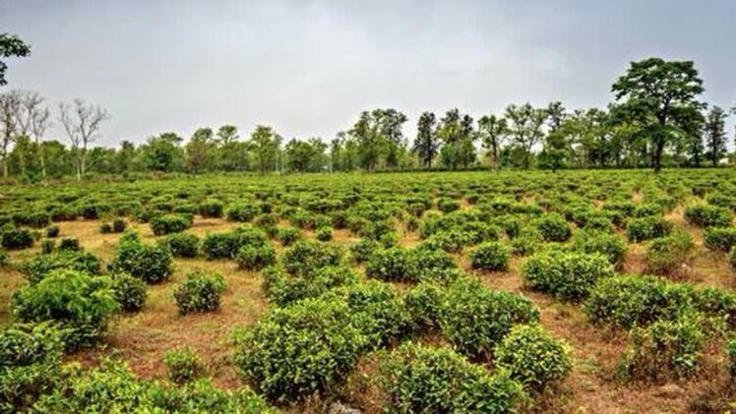
The Tripura government is exploring the possibility of offering unused land belonging to tea estates to investors, as the state faces growing difficulties in finding suitable land for industries and major development projects.
The proposal is aimed at making better use of land that is currently lying unused while creating additional opportunities for investment and economic activity in the northeastern state.
Government Looks at Unused Tea Estate Land
Tripura has a significant tea-growing sector, with numerous tea estates spread across the state. However, parts of several estates are reportedly not being used for active tea cultivation.
The government is now considering whether such unused portions could be made available for investment, particularly for projects that require substantial land.
The move could allow the state to utilise existing land resources without relying entirely on acquiring new private or agricultural land for development.
Land Shortage Hampers Investment Projects
The initiative comes against the backdrop of a growing shortage of suitable land for industrial and infrastructure projects in Tripura.
Officials have been looking for ways to make more land available to investors as the state attempts to attract new industries and expand its economic base.
Finding large, contiguous plots can be particularly challenging in a densely settled state, where land is already being used for agriculture, residential areas and existing economic activities.
Unused tea estate land could therefore provide an alternative source of land for selected projects.
Investors Could Get Access to Large Plots
Tea estates generally cover large areas, making them potentially suitable for projects that require significant land.
The government could examine individual estates to identify portions that are not currently being used for cultivation and assess whether they can be offered to investors.
Any such allocation would need to take into account existing land laws, ownership arrangements, environmental considerations and the interests of tea workers and estate communities.
The government is expected to examine these factors before finalising the framework.
Focus on Industries and Development
The proposed land policy is linked to Tripura’s broader efforts to attract investment.
The state has been seeking investment in sectors such as manufacturing, tourism, food processing, logistics and other industries that can generate employment and strengthen the local economy.
Availability of land is an important consideration for investors when deciding where to establish large projects.
By identifying unused land within existing tea estates, the government hopes to reduce one of the obstacles facing potential investors.
Tea Industry Interests Also Need Protection
While unused estate land could provide new opportunities, the proposal also raises questions about the future of Tripura’s tea industry.
Tea estates employ a large number of workers and contribute to the state’s agricultural economy. Any decision to divert land from tea estates would therefore need to distinguish between genuinely unused areas and land that could potentially be brought back under cultivation.
Stakeholders may also seek clarity on how workers and estate communities would be affected by any change in land use.
A transparent process could be important in balancing investment needs with the interests of the tea sector.
Tourism Could Be Another Opportunity
Apart from industrial projects, some unused tea estate areas could potentially be considered for tourism-related developments.
Tea tourism has emerged as an opportunity in several parts of India, with plantations offering possibilities for resorts, visitor centres, cultural experiences and other tourism infrastructure.
Tripura’s tea gardens, combined with the state’s natural and cultural attractions, could potentially support similar initiatives where appropriate.
However, the suitability of individual locations would depend on infrastructure, environmental conditions and existing land-use arrangements.
Government Seeks Better Use of Land Resources
The proposal reflects Tripura’s attempt to make more efficient use of its limited land resources while attracting investment.
Instead of leaving potentially usable portions of tea estates idle, the government is considering whether they can contribute to economic development.
The challenge will be to ensure that any land allocation is legally sound, economically viable and sensitive to the needs of tea workers and the environment.
If implemented carefully, the initiative could provide investors with additional land options while helping Tripura address one of the practical challenges associated with attracting large-scale projects.