


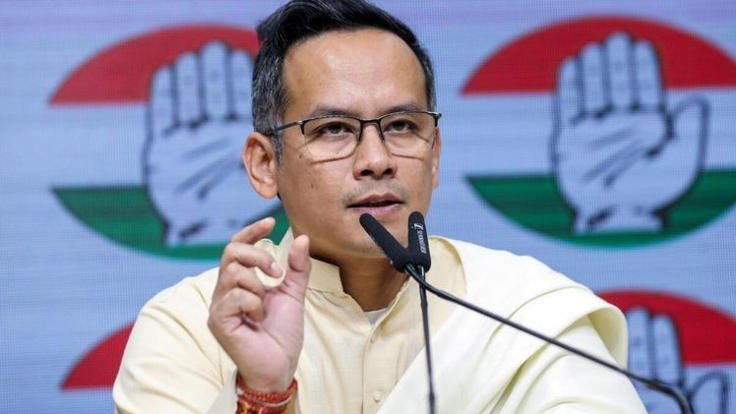
Congress MP Gaurav Gogoi has criticised Chief Election Commissioner Gyanesh Kumar amid a growing political dispute over the functioning of the Election Commission of India.
Gogoi made the remarks on September 23. His comments came after reports of objections raised by two Election Commissioners over decisions linked to the Special Intensive Revision (SIR) of electoral rolls.
The Congress leader alleged that the developments had damaged public confidence in the poll panel.
“The trust that the entire nation had in the Election Commission being impartial—that trust has been completely blown to shreds,” Gogoi said, according to reports.
His remarks have added to the opposition’s criticism of the Election Commission and its handling of electoral-roll revisions.
Gogoi Questions CEC’s Impartiality
Gogoi also made allegations about Kumar’s relationship with senior BJP leaders.
He alleged that the CEC had shown “immense loyalty” towards Union Home Minister Amit Shah and Prime Minister Narendra Modi. Gogoi further suggested that Kumar could consider entering electoral politics after completing his tenure.
These statements represent Gogoi’s political allegations. The reports do not establish them as facts.
The Election Commission has continued to defend its decision-making process amid the controversy. Sources within the poll panel said decisions relating to SIR were taken with the approval of all three Election Commissioners.
Controversy Follows Reports of Internal Objections
The latest political dispute follows a report by The Indian Express about objections reportedly raised by Election Commissioners Sukhbir Singh Sandhu and Vivek Joshi.
According to the report, the two Election Commissioners recorded objections on at least 14 occasions over 10 months regarding decisions and orders connected with electoral-roll revision.
The reported concerns included voter additions and deletions, changes to Form 6, control of electoral databases and the functioning of software used in the electoral-roll process.
The report triggered fresh questions from opposition parties about how decisions are taken within the three-member constitutional body.
Election Commission Rejects Suggestions of a Split
The Election Commission has rejected suggestions that the reported objections indicate a formal internal split.
Sources within the poll panel said decisions, including those related to SIR, were taken unanimously with the approval of the Chief Election Commissioner and the two Election Commissioners.
The Commission also indicated that expressing different views during internal deliberations is part of the normal functioning of a multi-member institution.
According to the Election Commission’s position, differences during deliberations do not necessarily mean that the institution is divided. Decisions can also be taken according to the applicable decision-making process when disagreements arise.
SIR Becomes Centre of Political Debate
The Special Intensive Revision of electoral rolls has become a major political issue.
The process involves reviewing electoral rolls and checking voter details. It has drawn attention from political parties over questions concerning voter additions, deletions and verification procedures.
Opposition parties have raised concerns about the possibility of eligible voters being excluded from electoral rolls. They have also sought greater clarity on the use of technology and the management of electoral databases.
The Election Commission has maintained that electoral-roll revision is part of its constitutional responsibilities.
The competing claims have intensified the political debate around the SIR process.
Congress Questions Legal Protection for CEC
Gogoi also criticised the legal framework governing the Chief Election Commissioner.
He demanded that the 2023 law providing protection to the Chief Election Commissioner from certain legal proceedings be declared unconstitutional.
Gogoi also called for a pending Rajya Sabha motion seeking Kumar’s removal to be taken up.
The demand comes amid a broader opposition campaign questioning the functioning of the Election Commission.
However, parliamentary proceedings concerning the removal of a Chief Election Commissioner follow constitutional and statutory procedures. The existence of an opposition demand does not itself establish wrongdoing by the office-holder.
Opposition Seeks Further Action
Other opposition leaders have also raised concerns about the reported objections within the Election Commission.
CPI(M) Rajya Sabha MP John Brittas separately wrote to President Droupadi Murmu. He sought what he described as urgent intervention over concerns surrounding electoral rolls and the functioning of the Election Commission.
Brittas raised questions about Form 6, access to electoral databases and the authorisation of appeals by the poll panel. He also sought safeguards against the possible exclusion of eligible voters.
His intervention has added another dimension to the political dispute.
Previous Removal Efforts Against Gyanesh Kumar
The controversy has also brought earlier efforts to seek Kumar’s removal back into focus.
According to reports, a fresh notice was submitted in the Rajya Sabha in April 2026. It was signed by 73 opposition MPs and cited alleged “proved misbehaviour” as the basis for seeking action against the CEC.
A similar notice in the Lok Sabha was rejected by Speaker Om Birla. The Rajya Sabha motion was also rejected by Chairman C. P. Radhakrishnan, according to reports.
The latest controversy has therefore revived an issue that opposition parties had already raised in Parliament.
Debate Over Multi-Member Election Commission
The dispute has also raised broader questions about how India’s Election Commission functions as a multi-member constitutional body.
The Commission consists of the Chief Election Commissioner and other Election Commissioners. Its decisions involve internal deliberations among the members.
The reported objections have led opposition parties to question whether all members were involved equally in certain decisions.
The Election Commission’s position is that the decisions were ultimately taken with the approval of all three members.
The difference between the reported objections and the Commission’s response remains part of the ongoing public debate.
Electoral Rolls Remain a Key Issue
Electoral rolls form the foundation of elections because they determine who can participate as a voter.
Changes to voter lists therefore attract close attention from political parties, civil society groups and voters.
The SIR process has brought these issues into sharper focus. Questions about voter verification, additions and deletions have become central to the political discussion.
The Election Commission has continued to oversee the process, while opposition parties have demanded greater transparency.
Political Row Continues
Gaurav Gogoi’s latest comments have intensified the political confrontation over the Election Commission.
The Congress leader has questioned the credibility of the poll panel and directly criticised CEC Gyanesh Kumar. Other opposition leaders have also sought greater scrutiny of the SIR process.
At the same time, the Election Commission has rejected suggestions of an internal split and said its decisions were taken unanimously.
The dispute now centres on questions about electoral-roll revision, institutional decision-making and the legal framework governing the CEC.
As the debate continues, further parliamentary discussions, legal proceedings and statements from the Election Commission could provide additional clarity on the issues raised by the opposition.