


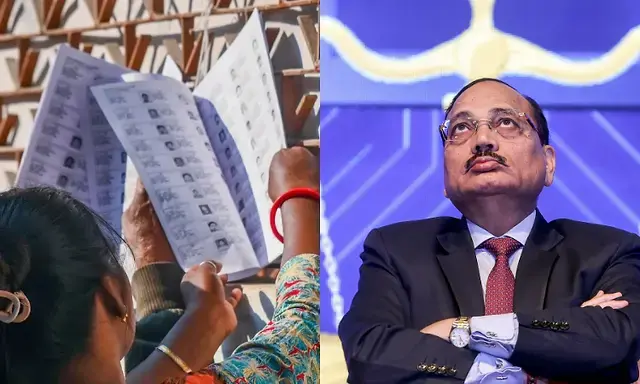
Twenty-three political parties, along with an Independent Member of Parliament, have jointly written to Chief Justice of India Surya Kant, expressing concerns over the Election Commission’s Special Intensive Revision (SIR) process and broader election-related issues. The move marks a coordinated push by Opposition parties seeking judicial attention to what they describe as concerns regarding the implementation of the electoral roll revision exercise and the functioning of the Election Commission of India (ECI).
The joint letter, sent on Tuesday, was announced by Congress general secretary Jairam Ramesh, who said the decision to approach the Chief Justice had been taken during an INDIA Janbandhan meeting held on June 8. According to him, the signatories have sought judicial consideration of issues relating to the SIR process and the role of the Election Commission in conducting elections.
The development comes amid continuing political debate over the Election Commission’s ongoing Special Intensive Revision of electoral rolls in various parts of the country.
Joint Letter Sent to the Chief Justice
According to Opposition leaders, the joint letter raises concerns regarding the implementation of the Special Intensive Revision and several election-related matters.
The signatories include representatives from 23 political parties as well as an Independent MP, reflecting a broad coalition of Opposition voices on the issue. The letter has reportedly been addressed to Chief Justice Surya Kant with the objective of drawing judicial attention to concerns surrounding the electoral process.
The parties have requested that the judiciary examine issues connected with the SIR exercise and the role played by the Election Commission, arguing that these matters have wider implications for India’s democratic process.
Decision Taken at INDIA Janbandhan Meeting
Congress leader Jairam Ramesh stated that the decision to write to the Chief Justice was taken during the INDIA Janbandhan meeting held on June 8.
According to him, 21 political parties and one Independent MP had participated in that meeting, where it was resolved that a joint representation would be sent to the Chief Justice regarding the SIR process and other election-related issues.
He later announced that the letter, now signed by 23 political parties along with one Independent MP, had been formally submitted.
The announcement was also shared through social media, where Ramesh said the Opposition parties remain united under the slogan “SURE” — Solidarity, Unity and Resistance.
Broad Opposition Participation
According to sources, the signatories include several prominent leaders from major Opposition parties.
Those reported to have signed the letter include Congress president Mallikarjun Kharge, Leader of Opposition in the Lok Sabha Rahul Gandhi, Mamata Banerjee, Tejashwi Yadav, Akhilesh Yadav, Hemant Soren, Omar Abdullah and Independent MP Kapil Sibal, among others.
The participation of leaders from multiple political parties reflects a coordinated approach towards raising concerns about the electoral revision process.
AAP and DMK Also Sign the Letter
Trinamool Congress leader Derek O’Brien stated that both the Aam Aadmi Party and the Dravida Munnetra Kazhagam (DMK) had also signed the joint representation.
Although both parties have maintained some political distance from the INDIA alliance in recent months, their inclusion in the letter was viewed by Opposition leaders as an indication of wider political consensus on the issues raised.
O’Brien described the initiative as a collective effort involving all participating parties.
Concerns Over the SIR Process
The central issue highlighted in the joint letter is the Election Commission’s ongoing Special Intensive Revision of electoral rolls.
Opposition parties have been questioning various aspects of the exercise, expressing concerns regarding its implementation and possible impact on voters in different states.
According to sources familiar with the contents of the letter, the representation cites examples from several states where the parties claim the SIR process has affected voters and raises broader questions regarding the functioning of the Election Commission during the exercise.
The Election Commission has maintained that electoral roll revisions are conducted in accordance with established legal procedures and are intended to ensure accurate and updated voter lists.
Appeal to the Judiciary
According to Opposition leaders familiar with the developments, the letter is based on the belief that the judiciary plays a vital constitutional role in safeguarding democratic institutions.
One senior Opposition leader reportedly stated that the representation appeals to the “conscience of the judiciary” and reflects the view that constitutional institutions should address concerns relating to the electoral process when raised through lawful means.
The parties have requested judicial attention rather than making any specific legal demands public at this stage.
Officials indicated that the representation focuses on election-related issues and institutional functioning rather than individual electoral disputes.
Continuing Political Debate
The Special Intensive Revision has remained a subject of political discussion over recent weeks, with several Opposition parties repeatedly raising concerns regarding its implementation.
Government authorities and the Election Commission have maintained that electoral roll revision exercises are routine administrative processes intended to ensure accurate and updated voter databases before elections.
The differing viewpoints have contributed to continuing political debate regarding electoral procedures and voter verification mechanisms.
The latest joint letter represents the Opposition’s decision to seek judicial attention while continuing to raise the issue through constitutional channels.
Constitutional Institutions Under Focus
The development has once again brought attention to the roles played by constitutional institutions in India’s democratic framework. The Election Commission remains responsible for conducting elections and maintaining electoral rolls, while the judiciary functions as the constitutional authority empowered to interpret legal questions and adjudicate disputes brought before it.
Political observers note that electoral reforms and voter list revisions frequently become subjects of public and political discussion, particularly in the period preceding elections.
Any future developments regarding the representation will depend on the response of the judiciary and subsequent legal proceedings, if any.
Awaiting Further Developments
The joint letter submitted by 23 political parties and an Independent MP marks a significant political development in the ongoing debate surrounding the Election Commission’s Special Intensive Revision process. By approaching Chief Justice Surya Kant, the Opposition has sought judicial attention to concerns relating to electoral roll revision and the functioning of the Election Commission.
At present, no official response from the Chief Justice or the Election Commission has been reported regarding the representation. The matter is expected to remain under close political and legal scrutiny as discussions over electoral processes and institutional functioning continue in the lead-up to future elections.