


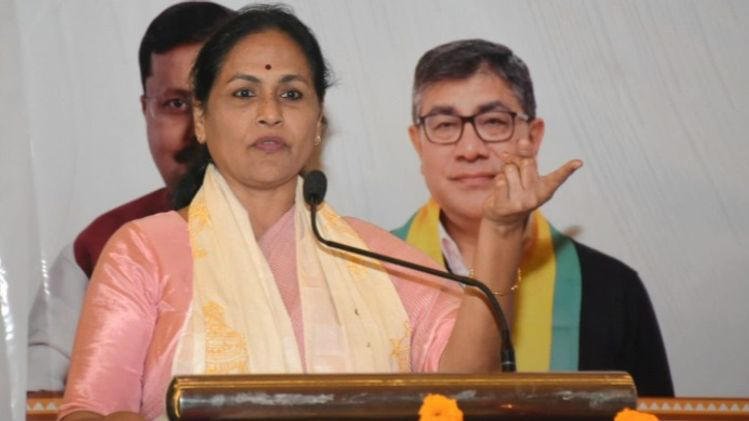
A Union minister has praised Sikkim’s flagship environmental programme, ‘Mero Rukh, Mero Santati’ (My Tree, My Child), describing it as a visionary initiative that successfully combines environmental conservation with social responsibility. The minister also called for wider adoption of the model across other states, highlighting its potential to strengthen ecological sustainability and community participation.
The scheme has attracted national attention for its unique approach to tree conservation. Under the initiative, families plant trees in the name of newborn children, creating a symbolic and long-term connection between environmental stewardship and family values.
Speaking about the programme, the minister said the initiative demonstrates how innovative policies can encourage citizens to actively participate in environmental protection. By linking tree plantation with important milestones in people’s lives, the scheme promotes a deeper sense of responsibility toward nature.
The minister noted that climate change and environmental degradation remain significant challenges. Therefore, community-driven programmes such as ‘Mero Rukh, Mero Santati’ can play a vital role in promoting sustainable development.
A Unique Blend of Conservation and Social Commitment
The ‘Mero Rukh, Mero Santati’ scheme stands out because it connects environmental protection with social and emotional values. Instead of treating tree plantation as a one-time activity, the initiative encourages families to nurture and protect trees as they would care for their children.
This innovative concept has helped create a stronger bond between citizens and environmental conservation efforts. Families develop a personal stake in the growth and well-being of the trees planted under the programme.
The Union minister highlighted that such emotional connections often produce better long-term outcomes than conventional awareness campaigns. When people feel personally invested in conservation efforts, they are more likely to remain committed over time.
Moreover, the programme promotes environmental awareness among younger generations. Children grow up understanding the importance of protecting natural resources and preserving ecological balance.
The minister described the initiative as an excellent example of how environmental policies can engage communities in meaningful and sustainable ways.
Strengthening Sikkim’s Green Development Vision
Sikkim has earned recognition for its commitment to environmental sustainability and green development. The state has implemented several initiatives aimed at preserving biodiversity, promoting organic agriculture, and protecting natural resources.
The Union minister said the ‘Mero Rukh, Mero Santati’ programme aligns perfectly with Sikkim’s broader environmental vision. It reinforces the state’s reputation as a leader in sustainable development and ecological conservation.
The scheme contributes to increasing green cover while encouraging public participation in environmental protection. Such initiatives demonstrate how governments and citizens can work together to achieve common environmental goals.
According to the minister, Sikkim’s experience offers valuable lessons for other regions seeking innovative approaches to conservation. The state’s success highlights the importance of integrating environmental objectives with community engagement.
Furthermore, the programme reflects a long-term perspective on sustainability by encouraging families to care for trees over many years.
Community Participation at the Core of Success
One of the key strengths of the scheme is its emphasis on community participation. The minister observed that successful environmental programmes often depend on active public involvement rather than government action alone.
The ‘Mero Rukh, Mero Santati’ initiative encourages families, local communities, and institutions to take ownership of conservation efforts. This approach strengthens accountability and increases the likelihood of long-term success.
Community-driven programmes also help create awareness at the grassroots level. As more families participate, environmental values spread throughout society and become part of everyday life.
The minister noted that local participation helps ensure that conservation efforts remain sustainable and effective. When communities actively protect natural resources, environmental outcomes tend to improve significantly.
The programme therefore serves as an example of how citizen engagement can strengthen conservation initiatives and support broader sustainability goals.
Environmental Benefits Beyond Tree Plantation
While tree plantation remains a central feature of the scheme, its benefits extend far beyond increasing green cover. Trees play a critical role in maintaining ecological balance and supporting environmental health.
The Union minister highlighted the importance of trees in combating climate change, improving air quality, conserving soil, and supporting biodiversity. Large-scale plantation initiatives can contribute significantly to environmental resilience.
The scheme also encourages long-term care and maintenance of trees. As a result, planted saplings have a greater chance of survival and growth compared to conventional plantation drives.
Moreover, healthy tree cover supports water conservation and helps reduce the impact of extreme weather events. These benefits become increasingly important as communities face environmental challenges linked to climate change.
The minister emphasized that initiatives like ‘Mero Rukh, Mero Santati’ can contribute to both local and national environmental objectives.
Inspiring Other States to Follow the Model
During his remarks, the Union minister urged other states to study and adopt similar models suited to their local conditions. He said innovative programmes often provide valuable insights that can be adapted and replicated elsewhere.
The success of the scheme demonstrates that environmental conservation can become more effective when linked to social and cultural values. Such approaches encourage broader public participation and create lasting behavioural change.
The minister stressed that every state faces environmental challenges. Therefore, sharing successful practices can help accelerate progress toward sustainability goals across the country.
While each region may require customized solutions, the underlying principle of community engagement remains universally relevant. Policymakers can draw inspiration from Sikkim’s experience while designing their own environmental programmes.
According to the minister, scaling up successful initiatives can strengthen national efforts to promote environmental sustainability.
Supporting National Climate and Sustainability Goals
India has placed increasing emphasis on climate action, environmental protection, and sustainable development. Programmes like ‘Mero Rukh, Mero Santati’ contribute directly to these national priorities.
The Union minister noted that increasing tree cover remains an important component of climate mitigation strategies. Trees absorb carbon dioxide, support biodiversity, and improve ecological stability.
Community-based initiatives can complement larger government programmes by encouraging widespread public participation. Together, these efforts can generate meaningful environmental benefits.
The minister also highlighted the role of local innovation in achieving national sustainability targets. States that develop successful conservation models contribute to broader environmental progress across the country.
The scheme therefore represents not only a state-level success story but also a valuable contribution to India’s environmental agenda.
Promoting Environmental Awareness Among Future Generations
Another important aspect of the programme is its educational value. By linking tree plantation with the birth of a child, the scheme creates opportunities to instill environmental awareness from an early age.
Children who grow up alongside trees planted in their name often develop a stronger connection to nature. This relationship can foster environmental responsibility and encourage sustainable habits throughout their lives.
The minister said nurturing environmental consciousness among young people remains essential for long-term conservation success. Future generations will play a crucial role in addressing environmental challenges and protecting natural resources.
Initiatives that engage children and families can therefore have lasting positive impacts on society. They help create a culture of environmental stewardship that extends beyond individual programmes.
A Model for Sustainable Community-Led Conservation
The Union minister concluded by describing ‘Mero Rukh, Mero Santati’ as a model for community-led conservation and sustainable development. The initiative demonstrates how innovative ideas can transform environmental protection into a shared social responsibility.
Its success lies in its ability to combine ecological objectives with emotional and cultural values. By encouraging families to care for trees as part of their personal journeys, the programme creates lasting commitments to conservation.
The minister expressed hope that similar initiatives would emerge across the country. Such efforts can strengthen environmental awareness, increase green cover, and support climate resilience.
As Sikkim continues to receive recognition for its sustainability initiatives, the ‘Mero Rukh, Mero Santati’ scheme stands out as a powerful example of how communities and governments can work together to protect the environment while building a greener future for generations to come.