


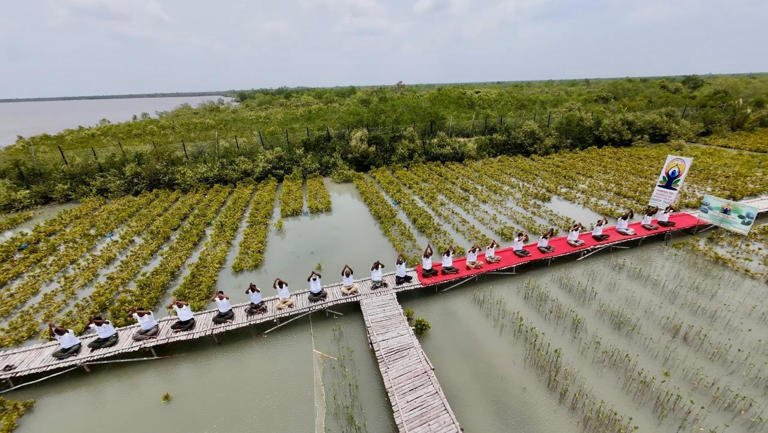
The West Bengal Forest Department has taken yoga beyond conventional venues and into some of the state’s most ecologically significant landscapes, organizing special yoga sessions in the Sundarbans and the hill regions as part of a broader effort to promote wellness, environmental awareness, and community participation. The initiative brought together forest officials, local residents, students, environmental workers, and visitors in locations surrounded by forests, rivers, mangroves, and mountains.
The programme highlighted the growing connection between physical well-being and environmental conservation. By conducting yoga sessions in natural settings, the department aimed to encourage participants to appreciate the importance of healthy lifestyles while also fostering greater awareness about the need to protect natural ecosystems.
Officials noted that yoga has long been recognized as a practice that promotes balance, mindfulness, and overall health. Organizing sessions in biodiversity-rich environments such as the Sundarbans and the Himalayan foothills added a unique dimension to the initiative and reinforced the message that human well-being is closely linked to environmental health.
The events attracted participation from different age groups and communities, reflecting the widespread appeal of yoga and growing public interest in wellness-oriented activities.
Yoga Amid the Unique Ecosystem of the Sundarbans
One of the most notable aspects of the initiative was the organization of yoga programmes in the Sundarbans, one of the world’s largest mangrove ecosystems and a globally recognized ecological treasure. The region is known for its rich biodiversity, intricate network of rivers and creeks, and its role as the habitat of the Royal Bengal Tiger.
Forest officials stated that conducting yoga sessions in the Sundarbans provided participants with an opportunity to experience the calming influence of nature while learning about the ecological importance of the region. The tranquil surroundings of the mangrove forests created a unique setting for practicing mindfulness and physical exercises.
Participants reportedly welcomed the initiative, noting that the natural environment enhanced the experience and encouraged a deeper sense of connection with nature. Officials emphasized that such programmes can help strengthen public appreciation for conservation efforts and environmental stewardship.
The Sundarbans continue to play a vital role in protecting coastal communities, preserving biodiversity, and maintaining ecological balance, making them an ideal location for awareness-building activities.
Hill Regions Host Yoga Sessions in Scenic Settings
In addition to the Sundarbans, the Forest Department organized yoga events in the hill districts of northern West Bengal. The state’s hill regions, known for their scenic beauty, forests, and mountainous landscapes, provided another distinctive backdrop for the programme.
Officials highlighted that yoga sessions conducted in these areas offered participants an opportunity to engage in physical activity while enjoying the benefits of clean air and natural surroundings. The serene environment of the hills complemented the principles of yoga, which emphasize harmony between mind, body, and nature.
The hill-based events attracted students, local residents, forest personnel, and community organizations. Many participants described the experience as both refreshing and inspiring, noting that the setting enhanced the overall impact of the programme.
By extending the initiative to both coastal and mountainous regions, the department sought to showcase the state’s ecological diversity while promoting wellness across different communities.
Promoting Wellness Through Nature-Based Activities
The Forest Department’s initiative reflects a growing emphasis on integrating health and wellness activities with environmental education. Officials noted that nature-based programmes can provide multiple benefits by encouraging physical fitness, mental well-being, and environmental awareness at the same time.
Yoga is widely recognized for its positive effects on physical health, stress management, flexibility, and overall well-being. Conducting sessions in natural settings can further enhance these benefits by creating a peaceful atmosphere and reducing exposure to urban stressors.
The department believes that such activities can encourage individuals to spend more time in nature and develop a stronger appreciation for environmental conservation. Increased public engagement with natural spaces often contributes to greater awareness of ecological challenges and the importance of sustainable practices.
Officials emphasized that promoting wellness and environmental responsibility are complementary goals that can be pursued together through innovative community initiatives.
Strengthening Environmental Awareness
Beyond promoting health, the yoga sessions served as a platform for environmental education and awareness. Forest officials used the opportunity to highlight the ecological significance of the Sundarbans, forests, wildlife habitats, and protected areas across the state.
Participants received information about biodiversity conservation, climate change, forest protection, and the role of local communities in safeguarding natural resources. Officials noted that awareness programmes become more effective when they are combined with engaging activities that encourage active participation.
The initiative aimed to foster a sense of responsibility toward environmental protection while demonstrating how healthy ecosystems contribute to human well-being. Many participants expressed interest in learning more about conservation efforts and supporting sustainable practices within their communities.
The Forest Department views public awareness as a key component of long-term conservation success.
Community Participation at the Heart of the Programme
A significant feature of the initiative was the involvement of local communities. Residents from villages near forest areas, students from educational institutions, self-help groups, and environmental volunteers participated in the yoga sessions and related activities.
Officials emphasized that community participation is essential for both wellness promotion and conservation efforts. Local residents often serve as important partners in protecting forests and wildlife while also benefiting directly from healthy ecosystems.
By involving community members in the programme, the department sought to strengthen local engagement and create opportunities for dialogue on environmental issues. The initiative also encouraged intergenerational participation, with people from different age groups taking part in the activities.
The strong response from communities highlighted the growing interest in programmes that combine health, education, and environmental awareness.
Forest Personnel Also Join the Initiative
Forest department personnel actively participated in the yoga sessions alongside community members. Officials noted that wellness programmes are important not only for the public but also for employees who work in demanding environments and often face challenging conditions in the field.
Forest personnel play a crucial role in wildlife protection, forest management, disaster response, and conservation activities. Maintaining physical fitness and mental resilience is therefore important for carrying out these responsibilities effectively.
The yoga sessions provided an opportunity for staff members to engage in wellness activities while strengthening their connection with local communities. Officials described the initiative as a positive step toward promoting holistic well-being within the department.
Participation by forest staff also underscored the department’s commitment to leading by example in promoting healthy lifestyles.
Highlighting the Link Between Conservation and Well-Being
The initiative reinforced the idea that environmental conservation and human well-being are closely interconnected. Healthy ecosystems provide clean air, water, climate regulation, and numerous other benefits that support public health and quality of life.
Officials stressed that protecting forests and natural habitats contributes not only to biodiversity conservation but also to the well-being of communities that depend on these resources. Programmes such as yoga sessions in natural settings help illustrate this connection in a tangible and accessible manner.
The department hopes that participants will carry forward the lessons learned during the events and become advocates for both wellness and environmental stewardship within their communities.
Experts have increasingly emphasized the value of integrating health and environmental objectives to achieve sustainable development outcomes.
Encouraging Sustainable Lifestyles
The Forest Department also used the programme to promote sustainable living practices. Participants were encouraged to adopt habits that support both personal health and environmental sustainability, including regular physical activity, responsible resource use, and greater engagement with nature.
Officials noted that simple lifestyle choices can have a positive impact on both individual well-being and environmental conservation. Encouraging people to spend time in natural settings can help foster appreciation for ecosystems and inspire more environmentally responsible behavior.
The initiative aligns with broader efforts to promote sustainability, public health, and environmental awareness across the state.
A Creative Approach to Public Engagement
The West Bengal Forest Department’s decision to bring yoga to the Sundarbans and hill regions represents an innovative approach to public engagement. By combining wellness activities with environmental education, the initiative successfully highlighted the connection between healthy lifestyles and healthy ecosystems.
The programme showcased the natural beauty and ecological importance of some of the state’s most iconic landscapes while encouraging greater community participation in conservation efforts. It also demonstrated how nature-based activities can serve as effective platforms for promoting awareness and fostering positive social outcomes.
As interest in wellness and environmental sustainability continues to grow, initiatives like this may become increasingly important in building stronger connections between people and nature. The success of the programme suggests that combining health, education, and conservation can create meaningful experiences that benefit both communities and the environment.