

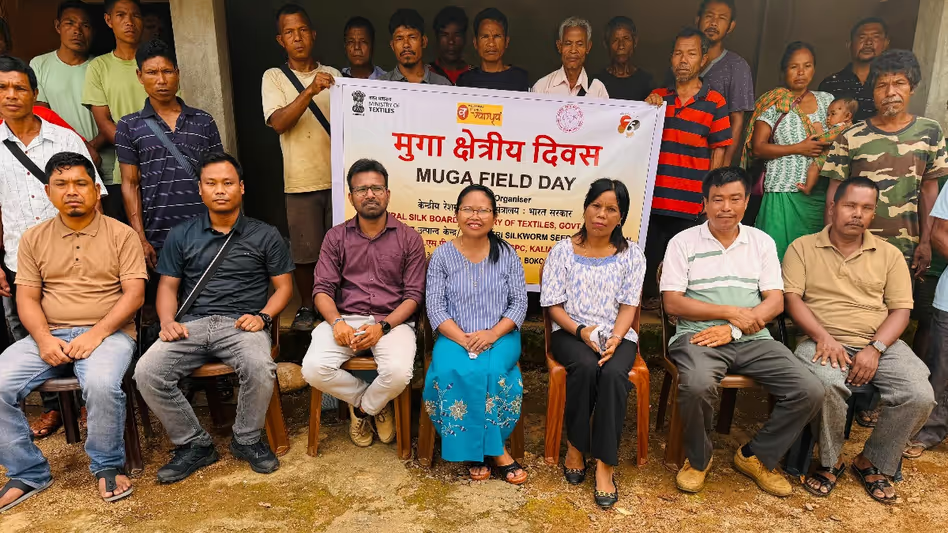
“Williamnagar Muga field day in Meghalaya promotes sustainable silk farming, empowering local farmers with eco-friendly sericulture techniques and boosting rural livelihoods.”
Williamnagar Muga Field Day Empowers Farmers for Sustainable Silk Growth
The scenic town of Williamnagar in Meghalaya recently hosted a one-day Williamnagar Muga field day, bringing together silk farmers, agricultural experts, and community leaders to promote sustainable Muga silk farming. The event, organized by the state’s sericulture department, aimed to equip local farmers with advanced techniques while preserving the heritage of one of India’s most prized silks.
Williamnagar Muga Field Day Showcases Innovation and Tradition
The Williamnagar Muga field day was more than a training session—it was a celebration of Muga silk, known for its natural golden hue and durability. Participants learned modern sericulture methods designed to improve yield without harming the environment.
Officials highlighted how Muga silk production has deep cultural and economic roots in the Northeast. In his welcome address, a senior sericulture officer said, “This Williamnagar Muga field day is not just about teaching techniques. It’s about passing on a tradition in a way that sustains both livelihoods and nature.”
Focus on Sustainable Silk Farming
One of the central themes of the Williamnagar Muga field day was sustainability. Experts discussed:
- Organic methods for pest control in Muga rearing.
- The importance of maintaining natural host plants like Som and Soalu trees.
- Water conservation techniques for silk farms.
By prioritizing eco-friendly practices, the event aligned with Meghalaya’s broader push for green agriculture.
Skill Development for Local Farmers
Farmers from across the East Garo Hills attended the Williamnagar Muga field day to learn hands-on skills, including:
- Identifying and nurturing healthy Muga larvae.
- Managing disease outbreaks in silkworm populations.
- Harvesting silk cocoons without compromising quality.
For many farmers, this was their first exposure to such structured training. One participant, 32-year-old farmer Rekha Sangma, said, “Before, we learned only from our parents. Today at the Williamnagar Muga field day, we learned techniques that will help us earn more while protecting our trees.”
Boosting Rural Livelihoods
Muga silk farming has the potential to significantly improve incomes in rural Meghalaya. At the Williamnagar Muga field day, government representatives announced schemes offering financial support for expanding Muga plantations.
They also encouraged farmer cooperatives, explaining that collective marketing can help secure better prices. The event reinforced the idea that Muga silk can be a sustainable source of income, particularly for women and young entrepreneurs.
Preserving a Golden Heritage
Muga silk, often referred to as the “Golden Silk of Assam and Meghalaya,” has been woven into the cultural identity of the region for centuries. The Williamnagar Muga field day served as a reminder of this heritage, showcasing traditional Muga shawls and sarees alongside contemporary designs.
Local artisans displayed how Muga yarn could be integrated into modern fashion while still maintaining its classic appeal. Visitors saw firsthand how traditional weaving looms operate, creating a bridge between old craftsmanship and new market opportunities.
Experts Stress Climate-Resilient Farming
Given the changing climate patterns in the Northeast, the Williamnagar Muga field day also addressed environmental challenges. Experts warned that erratic rainfall, rising temperatures, and deforestation pose risks to Muga silk production.
Sessions on climate adaptation included:
- Choosing resilient varieties of host plants.
- Shading plantations to regulate temperature.
- Community-based forest management to preserve Muga habitats.
Youth Engagement a Key Highlight
The Williamnagar Muga field day saw active participation from local students, many of whom expressed interest in silk farming as a career. The sericulture department hopes this enthusiasm will help secure the future of Muga farming in Meghalaya.
“We need young blood in sericulture,” said a sericulture development officer. “Events like the Williamnagar Muga field day are planting the seeds of interest among our youth.”
Women as Drivers of Change
A large number of attendees were women farmers, reflecting the growing role of women in Meghalaya’s agricultural economy. At the Williamnagar Muga field day, several women’s self-help groups (SHGs) shared success stories of using Muga silk farming to become financially independent.
One SHG leader, Merinda Marak, noted, “Muga silk has given us dignity and income. The Williamnagar Muga field day gave us more tools to improve our work and train others in our community.”
Government Support and Future Plans
During the closing ceremony of the Williamnagar Muga field day, government officials reiterated their commitment to boosting Muga silk production through:
- Subsidized seedlings for host plants.
- Low-interest loans for small-scale silk producers.
- Expanding training programs to other districts.
The state plans to hold similar Muga field days in other parts of Meghalaya to spread awareness and skills.
A Step Toward Self-Reliance
The Williamnagar Muga field day was not just a one-day event—it marked a step toward self-reliance for rural communities. By blending traditional knowledge with modern science, Meghalaya aims to make Muga silk farming a model for sustainable, profitable agriculture.
For the participants, the event was a source of inspiration. As one farmer put it, “We came here with questions and left with confidence. Now we know how to grow Muga better, sell it better, and protect the land that gives it to us.”
Read More: Arunachal CM Housing Upgrade Brings Hope to Hundreds of Families