


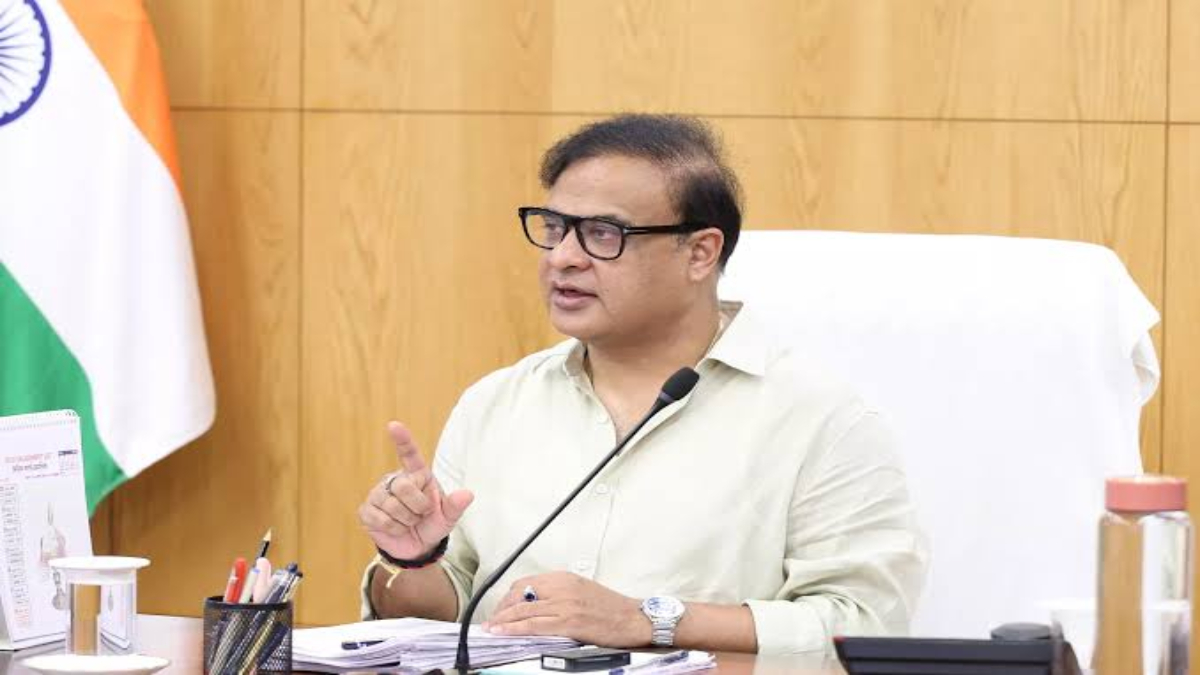
Assam salary deduction measures are set to become a stronger tool for enforcing family responsibilities among government employees, with Chief Minister Himanta Biswa Sarma announcing a proposal to deduct 20 per cent of an employee’s salary if he abandons his first wife without obtaining a divorce.
The proposed action is part of Assam’s broader push against polygamy and abandonment of spouses. The government has increasingly linked service rules and public benefits with marital conduct, arguing that government employees must uphold legal and social responsibilities. The latest move could add a direct financial consequence for employees who leave their first wives without legally ending the marriage.
Assam salary deduction to target abandonment
Under the proposed measure, a government employee who leaves his first wife without divorce could face a deduction of 20 per cent from his salary. The stated objective is to ensure that abandoned wives are not left without financial support while the husband continues his employment and income.
The proposal comes amid Assam’s wider efforts to tighten rules surrounding second marriages. In October 2023, the state government reiterated that employees cannot enter into a second marriage while their existing spouse is alive without prior government permission. The rule applies regardless of whether an employee’s personal law permits a second marriage.
The existing provision is based on Rule 26 of the Assam Civil Services (Conduct) Rules, 1965. The government warned that violations could result in departmental proceedings and major penalties, including compulsory retirement, besides possible legal action.
Stronger action against polygamy
The proposed Assam salary deduction comes against the backdrop of a wider policy campaign by the Sarma government to discourage polygamy.
In November 2025, the Assam Cabinet approved the Assam Prohibition of Polygamy Bill, 2025. The proposed law seeks to prohibit marriage when a person already has a living spouse, including situations where the earlier marriage has not been legally dissolved through divorce. The proposal also envisaged compensation for women affected by polygamy and penalties of up to seven years’ rigorous imprisonment upon conviction.
The state has continued to signal a tougher approach in 2026. In the 2026-27 Budget, the Assam government proposed that government employees found practising polygamy could be dismissed from service. The Budget also proposed denying government welfare benefits to men found guilty of practising polygamy.
Focus on women’s financial security
The salary deduction proposal is significant because it moves beyond simply preventing a second marriage. It focuses on the financial consequences faced by a first wife when a husband abandons her without legally ending the marriage.
Assam has previously taken steps to address financial disputes involving families of government employees. In 2024, Sarma announced that compassionate grants for deceased government employees would be divided in an 80:20 ratio, with 80 per cent going to spouses and 20 per cent to parents. The government said the change was intended to provide greater financial protection to parents while supporting spouses.
Family pension disputes involving multiple wives have also been a longstanding legal issue in Assam. Courts have dealt with cases concerning the rights of first and subsequent wives of deceased government employees, highlighting the complicated financial consequences of multiple or disputed marriages. A 2026 Gauhati High Court case, for example, involved a dispute over family pension between the first wife and another claimant.
Assam’s service rules carry wider consequences
The government’s approach reflects an effort to make public employment carry responsibilities beyond workplace conduct. The 1965 service rules already restrict government servants from contracting another marriage while a spouse is living without government permission. The rules also apply to female government employees who seek to marry a person whose spouse is alive.
Sarma had earlier explained that the rules were being enforced partly because disputes between surviving wives could complicate pension payments after an employee’s death. The government argued that conflicting claims can leave families struggling to access benefits.
The proposed deduction could therefore represent another step in connecting an employee’s salary with responsibilities toward dependants and spouses.
For affected employees, however, the exact procedure, duration of the deduction and authority responsible for imposing it will be important. Clear rules would be needed to establish how complaints are verified, what evidence must be produced and whether an employee gets an opportunity to respond before any deduction is ordered.
Assam’s latest move fits into a broader policy direction that combines legal restrictions, departmental penalties and financial consequences to discourage polygamy and abandonment. As the government works to strengthen its position on marital responsibility, the proposed 20 per cent Assam salary deduction could become a significant measure aimed at protecting abandoned wives and reinforcing accountability among government employees.
Lovlina Borgohain Wins PM Modi’s Strong Praise for Glasgow Map Stand