


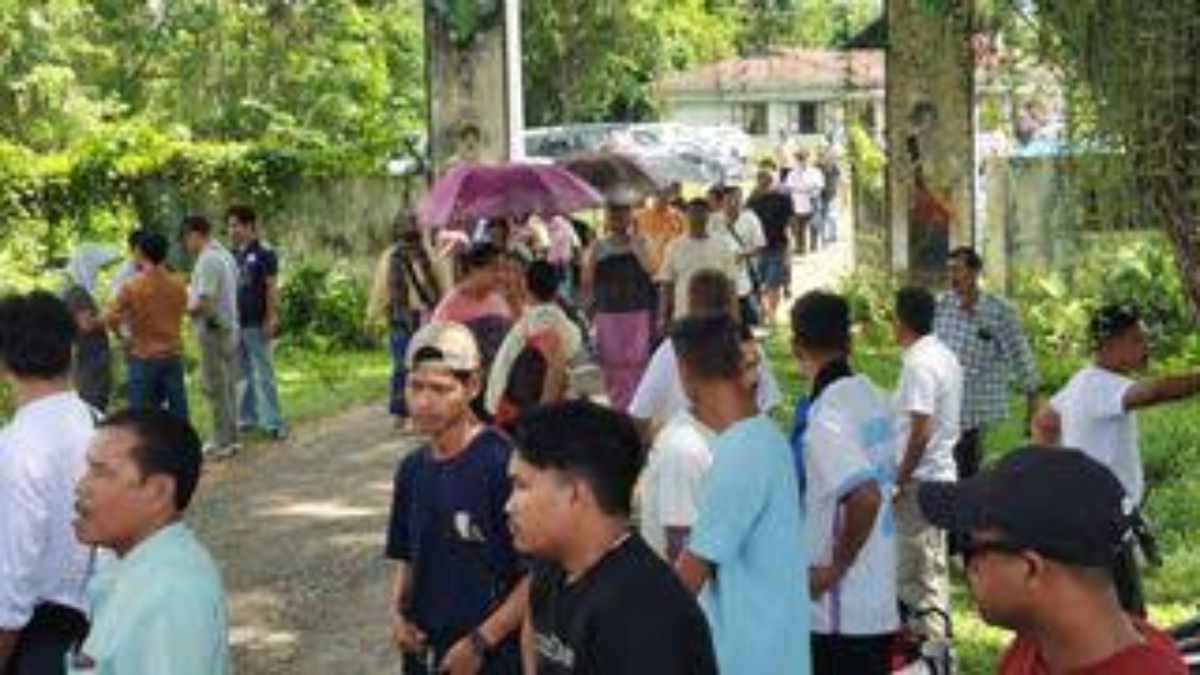
Bordumsa SIR hearing in Arunachal Pradesh’s Changlang district turned violent on Friday, September 4, after protests over the inclusion of Chakma and Hajong voters in the ongoing Special Intensive Revision (SIR) of electoral rolls escalated into clashes, stone-pelting and allegations of firing. The incident prompted the local administration to impose prohibitory restrictions and deploy additional security forces in the area.
Bordumsa SIR hearing disrupted amid protests
The controversy centres on the verification of electoral rolls in the Bijoypur area. According to Bordumsa Additional Deputy Commissioner (ADC) Sabadam Tayang, the hearing was first held at the panchayat hall on September 3 to deal with claims and objections submitted through Forms 6 and 7.
The proceedings were disrupted by some youths and subsequently adjourned. Authorities rescheduled the hearing for September 4 at the ADC office.
When the Bordumsa SIR hearing resumed, protesters associated with the All Arunachal Pradesh Students’ Union (AAPSU) reportedly demanded the deletion of Chakma and Hajong voters whom they alleged had been enrolled after 2006. Officials said protesters broke through the office gate, entered the premises and disrupted the proceedings.
Violence breaks out at ADC office
The situation deteriorated rapidly at the ADC office. Tayang alleged that protesters vandalised the premises and manhandled him. He also said stones were thrown at Chakma and Hajong community members who had gathered for the hearing.
Counter stone-pelting followed, with an AAPSU volunteer sustaining a head injury, according to the official account. Other reports said an AAPSU leader was injured in an alleged machete attack during the confrontation. The precise sequence of events remains disputed.
Reports also emerged of firing during the unrest. However, there were conflicting accounts over who opened fire and how the incident began. Police intervened as tensions escalated, while security forces were mobilised across Bordumsa and nearby areas to prevent further violence.
Why the SIR process has become contentious
The dispute reflects wider concerns surrounding the electoral status of Chakma and Hajong residents in Arunachal Pradesh. AAPSU and other local organisations have opposed the inclusion of people they allege entered the state after 2006 and have raised questions about their eligibility to remain on electoral rolls.
AAPSU president Meje Taku said the organisation wants the SIR exercise suspended in Chakma-Hajong-inhabited areas and places where Chakma-Hajong voters are involved. The students’ body also called for the arrest of those it holds responsible for the violence and said no FIR should be registered against its members.
AAPSU has also announced an emergency extended meeting in Itanagar on September 12. Indigenous apex bodies, community organisations, student groups and political parties have been invited to discuss the Bordumsa incident and decide the organisation’s next course of action.
Chakma group seeks human rights intervention
The violence has also triggered concern among Chakma representatives. The Chakma Development Foundation of India (CDFI) approached the National Human Rights Commission (NHRC), seeking intervention over the participation and protection of Chakma and Hajong voters during the SIR process.
CDFI alleged that Chakma electors were prevented from appearing at the hearing and referred to the 1996 Supreme Court judgment concerning the protection of Chakma residents in Arunachal Pradesh. The organisation has sought safeguards for their life and personal liberty during forthcoming SIR hearings.
The dispute had already affected the electoral revision process before Friday’s violence. On Thursday, officials reportedly heard 222 of 252 Form 6 applications and 150 of 303 Form 7 applications before the proceedings were disrupted. The hearing was subsequently postponed.
Restrictions imposed as tensions remain
Following the violence, the administration imposed prohibitory orders under Section 163 of the Bharatiya Nagarik Suraksha Sanhita. Heavy police deployment was also maintained in Bordumsa to prevent further gatherings and restore normalcy.
Authorities now face the challenge of ensuring that the electoral revision continues without compromising public order or the rights of eligible voters. The competing claims from AAPSU and Chakma representatives also make a transparent investigation into the violence crucial.
The Bordumsa SIR hearing has therefore become more than a local electoral dispute. With allegations of violence, competing claims over voter eligibility and demands for institutional intervention, the focus will remain on how authorities handle the pending hearings and maintain peace while ensuring due process for concerned.
HYBE India Audition Expands to Northeast in Major Talent Drive