


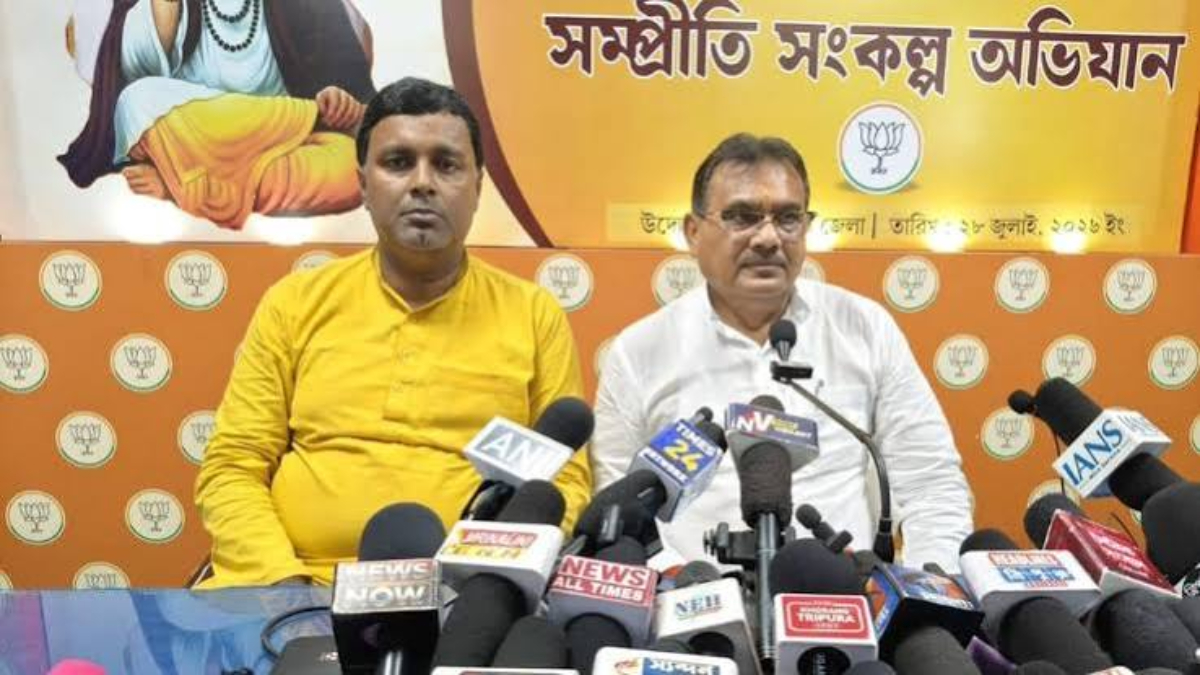
Tripura jute mill redevelopment has emerged as a major focus of the state government’s industrial strategy after Finance Minister Pranajit Singha Roy blamed the previous Left Front government for the prolonged crisis surrounding the defunct jute mill. The minister said decades of alleged administrative neglect and poor policy decisions left the once-prominent industrial unit in a deteriorated condition. He also announced that the state government is preparing a comprehensive redevelopment plan aimed at transforming the site into a hub for economic growth, investment, and employment generation.
The announcement marks a significant step in the government’s broader efforts to revive industrial infrastructure and attract fresh investments into Tripura. The proposed redevelopment is expected to create new business opportunities while making productive use of land that has remained underutilized for years.
Tripura jute mill redevelopment becomes government priority
Addressing the issue, Finance Minister Pranajit Singha Roy said the previous Left government failed to protect one of Tripura’s important industrial assets. According to him, years of financial mismanagement, inadequate modernization, and lack of long-term planning contributed to the closure and present condition of the jute mill.
The minister stated that the current government inherited the problem and has been exploring viable options to revive economic activity on the land. Instead of allowing the property to remain idle, authorities are now working on a redevelopment proposal that will generate employment while supporting the state’s industrial expansion.
He maintained that the redevelopment initiative is designed to benefit local communities and improve the state’s investment climate.
Historic significance of the jute mill
The jute mill once served as an important industrial establishment in Tripura, providing employment to hundreds of workers directly and indirectly. Its operations also supported transport services, local businesses, and families dependent on industrial employment.
However, over time, the unit suffered from operational challenges, financial losses, and declining production. Eventually, operations ceased, leaving valuable industrial infrastructure unused for several years.
The Finance Minister argued that earlier administrations did not take effective measures to modernize the facility or introduce alternative industrial projects after production stopped.
Redevelopment plans for the site
The government intends to redevelop the jute mill property into a productive economic zone capable of attracting investment across multiple sectors. While detailed project plans are yet to be officially released, the minister indicated that the redevelopment would prioritize employment generation and industrial growth.
Officials are expected to evaluate various development models, including industrial parks, commercial establishments, and infrastructure projects that align with Tripura’s long-term economic objectives.
The redevelopment plan is also expected to encourage private sector participation while ensuring compliance with environmental and legal requirements.
Focus on employment and investment
One of the key objectives of the proposed Tripura jute mill redevelopment project is creating new employment opportunities for local residents. Industrial redevelopment can stimulate economic activity by attracting businesses, supporting small enterprises, and improving infrastructure.
The government believes that transforming unused industrial land into an active business destination could strengthen Tripura’s manufacturing and service sectors while encouraging entrepreneurs to invest in the state.
The initiative also aligns with broader efforts to improve ease of doing business and promote balanced regional development.
Political debate over responsibility
The Finance Minister’s remarks have added a political dimension to the redevelopment announcement. He directly blamed the former Left Front government for allowing the industrial unit to decline, alleging that timely interventions could have prevented the present situation.
The opposition, however, is expected to contest these claims and argue that multiple economic factors contributed to the closure of the mill. Political discussions over responsibility for the industrial decline are likely to continue as redevelopment plans move forward.
Despite the political differences, there appears to be broad agreement that the unused property should be developed in a manner that benefits Tripura’s economy and creates sustainable employment.
Industrial revival remains a key goal
The state government has repeatedly emphasized industrial growth as an important component of Tripura’s development strategy. Along with infrastructure expansion, improved connectivity, and investment promotion, redevelopment of abandoned industrial assets has become part of this broader vision.
Officials believe that utilizing dormant industrial land can reduce project costs while accelerating economic development. Redeveloping existing sites also minimizes the need for acquiring fresh land, making such projects more practical and efficient.
If implemented successfully, the jute mill project could become a model for reviving other inactive industrial properties across the state.
What lies ahead
The government is expected to finalize detailed redevelopment proposals after completing necessary administrative and technical assessments. Future announcements may include project timelines, investment models, and implementation strategies.
Stakeholders, including former employees, local residents, and business groups, will closely watch the project’s progress. Successful execution could significantly improve the economic landscape of the surrounding region while demonstrating the government’s commitment to industrial modernization.
As Tripura seeks to expand its industrial base, the redevelopment of the defunct jute mill represents an important opportunity to transform a long-neglected property into a productive asset capable of generating employment, attracting investment, and supporting sustainable economic growth.
Major Assam Police Seize Yaba Tablets Worth Over Rs 3 Crore, Drug Trafficker Arrested in Bongaigaon