


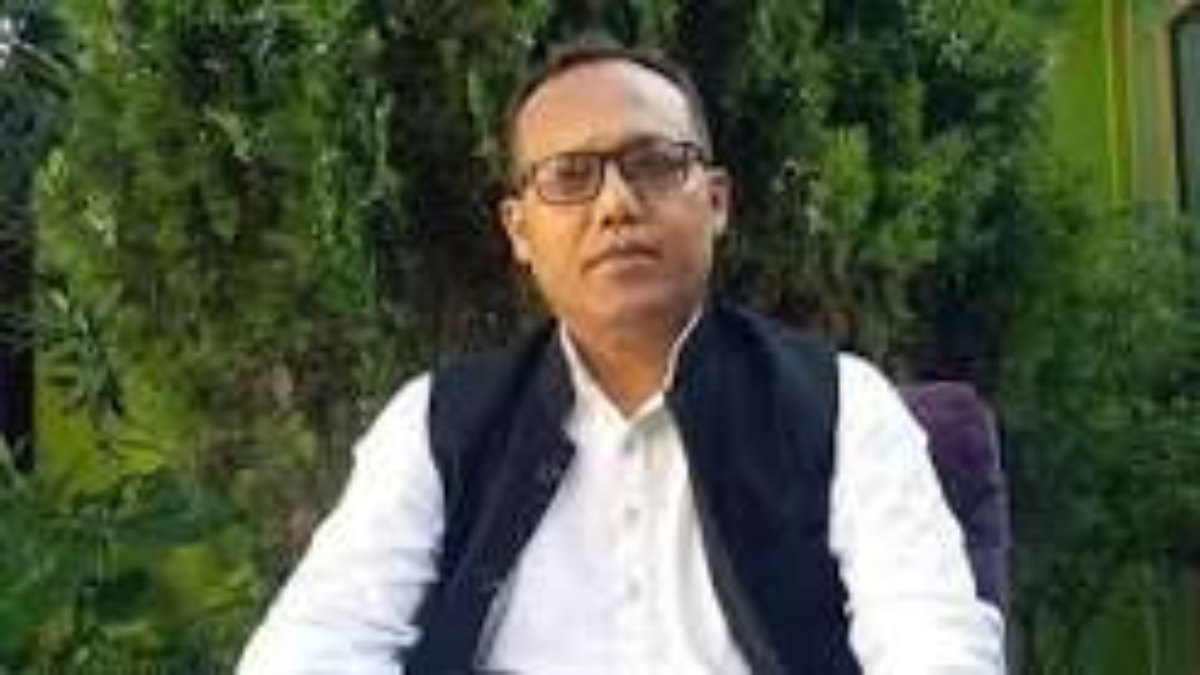
Manipur peace roadmap has come under renewed scrutiny after Congress Legislature Party (CLP) leader Keisham Meghachandra questioned the BJP-led state government over its efforts to restore normalcy in the violence-hit state. Speaking during the ongoing Manipur Assembly session, Meghachandra asked the government to explain where and with whom peace dialogues were being held and called for a clear plan to achieve lasting peace.
His remarks came as Manipur continues to deal with the consequences of ethnic violence that began on May 3, 2023. According to figures presented in the Assembly, 306 people have been killed and 49 remain missing in the conflict as of August 31, 2026.
Meghachandra questions the government’s peace efforts
During the Assembly discussion, Meghachandra challenged the government’s claim that efforts were underway to restore peace. He asked where the reported peace dialogues were taking place and who was participating in them.
The Congress leader argued that the government needs to provide a concrete and transparent Manipur peace roadmap instead of making broad assurances. He also suggested convening another Assembly session specifically to discuss the law-and-order situation with all elected representatives present.
Meghachandra further alleged that differences within the BJP-led government were affecting coordination. He referred to a dispute involving two Deputy Chief Ministers and questioned whether the administration could effectively address the crisis without greater internal cohesion.
Government says peace efforts are continuing
Chief Minister Yumnam Khemchand Singh has maintained that the government is working towards restoring peace and normalcy. During the Assembly session, he said collective efforts and cooperation among elected representatives and different sections of society were necessary to move the state forward.
The Chief Minister also highlighted the progress made in resettling internally displaced people. He informed the Assembly that around 36,000 of the estimated 60,000 people displaced by the crisis had been resettled. However, about 24,000 remained in relief camps, while financial assistance was still being provided to around 59,000 displaced persons.
The figures indicate that rehabilitation remains a major component of any future Manipur peace roadmap, particularly as thousands of displaced families continue to seek safe and sustainable returns.
Congress raises questions over rehabilitation funds
Meghachandra also raised questions about the utilisation of funds allocated for internally displaced persons. He said the government had sanctioned Rs 949.63 crore for IDPs and asked whether the money had been used effectively.
The Congress leader referred to an RTI-related disclosure concerning expenditure on relief camps and used it to question financial management. He also raised broader concerns over the state’s debt and the alleged return of funds from some centrally sponsored schemes because of under-utilisation.
Such concerns have added an economic dimension to the debate over the government’s approach to the crisis. For displaced families, however, the immediate priority remains security, rehabilitation and the ability to return home without fear.
Fresh security concerns add pressure
The debate over peace has also intensified following a bomb blast near Meghachandra’s residence in Bishnunaha, Yairipok, in Thoubal district, on Thursday evening. No casualties were reported, and no organisation had claimed responsibility at the time of reporting. The Congress party condemned the incident and demanded a credible investigation.
A sit-in protest was also held outside Meghachandra’s residence, with protesters demanding that those responsible be identified and arrested.
The incident has raised fresh concerns about political security at a time when elected representatives are debating the restoration of peace inside the Assembly.
Political trust remains a key challenge
Meghachandra has previously demanded a time-bound plan covering peace, rehabilitation, justice, security and reconciliation. In June, he said people who had faced years of displacement and uncertainty deserved clarity about when normal life could return.
More recently, he argued that Manipur needs a government capable of standing above community interests and ensuring equal accountability. He has said that perceived political bias can undermine public confidence in the administration and make a lasting settlement more difficult.
The latest Assembly debate therefore reflects a wider challenge facing the government. A credible Manipur peace roadmap would need to address security, political dialogue, rehabilitation, justice and confidence-building across communities.
With the conflict having entered its fourth year, demands for visible progress are likely to remain central to political debate. The government’s ability to translate assurances into measurable improvements in security, resettlement and reconciliation will be crucial to determining whether Manipur can move from temporary calm towards lasting peace.