

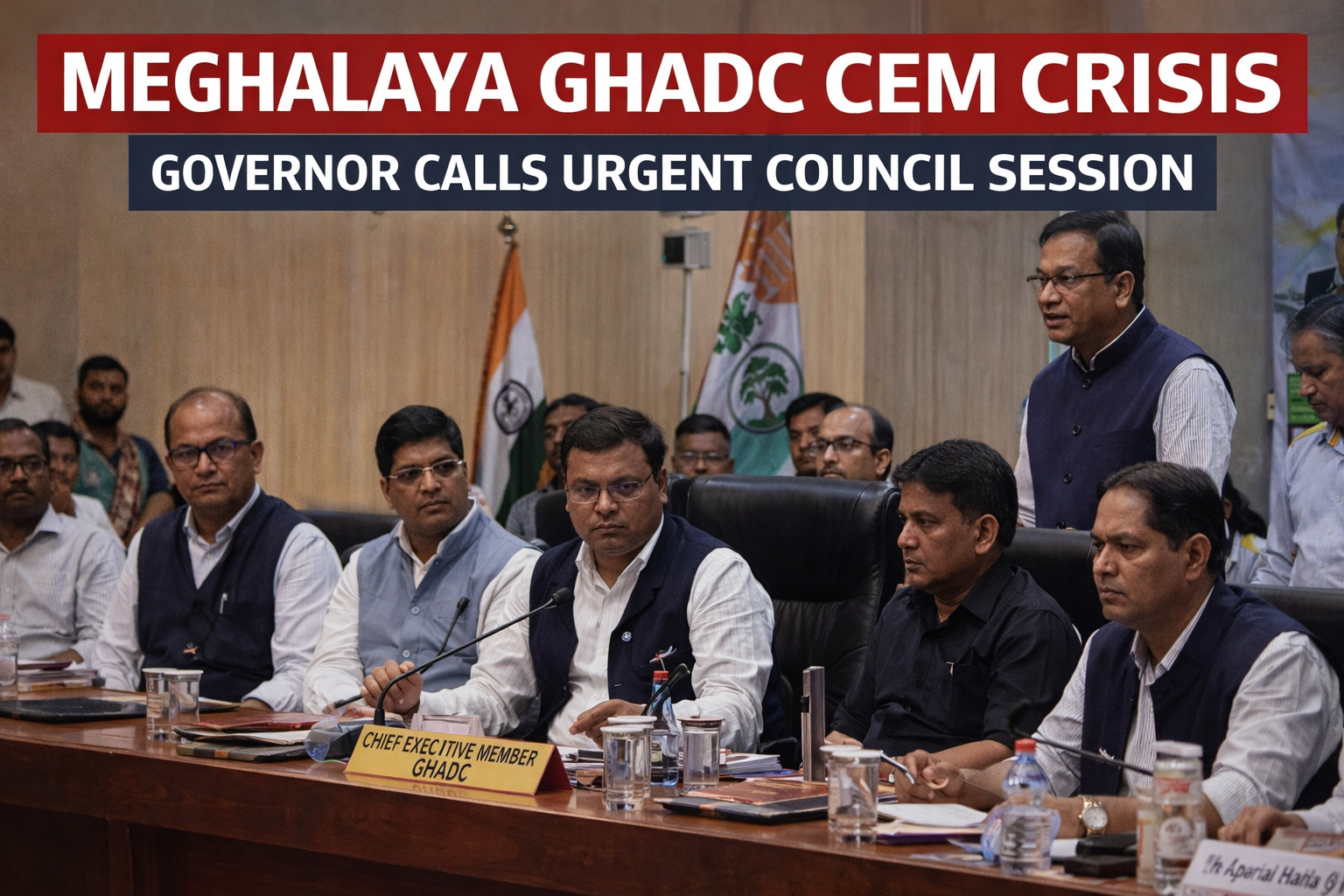
The Meghalaya GHADC CEM crisis escalated as the Governor called an urgent session of the Garo Hills Autonomous District Council (GHADC). Political parties are closely monitoring the situation amid questions over the Chief Executive Member’s (CEM) confidence, making the session crucial for regional stability and governance.
Key Facts
- State: Meghalaya
- Event: Emergency GHADC session
- Reason: Chief Executive Member (CEM) confidence crisis
- Authority: Meghalaya Governor
- Importance: Determine council stability and public administration
Central Silk Board Holds Sericulture Training in Meghalaya
Governor Summons Emergency GHADC Session
In response to the ongoing Meghalaya GHADC CEM crisis, the Governor has summoned an urgent session of the council. The move comes after political leaders raised concerns about the stability of the council’s administration.
Officials said the session is aimed at resolving the confidence crisis quickly to ensure governance in the Garo Hills region is not disrupted. Political analysts noted that the Governor’s intervention highlights the seriousness of the situation.
Background of GHADC and Political Importance
The Garo Hills Autonomous District Council (GHADC) administers local governance, development projects, and public welfare in the Garo Hills region. Decisions made in the council affect healthcare, education, infrastructure, and social programs.
The Meghalaya GHADC CEM crisis is seen as significant because the CEM leads council policymaking. Any instability can affect the region’s development agenda and ongoing public projects. Experts note that maintaining council confidence is critical for smooth administration.
Political Reactions and Tensions
Political parties have expressed concern over the CEM confidence crisis, warning that prolonged instability could disrupt governance. Opposition leaders called for transparency during the emergency session, demanding a clear roadmap for leadership in the council.
Furthermore, some council members stressed that development projects and welfare schemes must continue uninterrupted, regardless of political developments. They argued that administrative priorities should remain unaffected by leadership disputes.
Big Election Update: Nagaland, Tripura Bypolls Set for April 9 in ECI Plan
Potential Outcomes of the Session
The urgent GHADC session could result in several outcomes. If the CEM retains the council’s confidence, administration and ongoing projects will continue without disruption. However, a vote of no-confidence or leadership changes could reshuffle council priorities.
Experts said that the Meghalaya GHADC CEM crisis demonstrates the delicate balance of regional politics. Decisions made in the session will likely influence not only governance in Garo Hills but also party dynamics in the state assembly.
Public and Administrative Impact
Citizens are closely watching developments as the CEM confidence crisis could affect infrastructure projects, healthcare initiatives, and educational programs. Local officials assured residents that essential services will continue, emphasizing the urgency of resolving the council leadership issues.
Moreover, political stability is crucial for attracting investment and executing welfare schemes efficiently. A resolution in the emergency session would provide clarity for both the administration and residents in the Garo Hills region.
Importance of Resolving the Crisis
The Meghalaya GHADC CEM crisis highlights the need for strong leadership in regional councils. A swift resolution ensures uninterrupted governance and reinforces public confidence in local administration. Political analysts emphasize that effective leadership directly impacts development outcomes in the Garo Hills.