

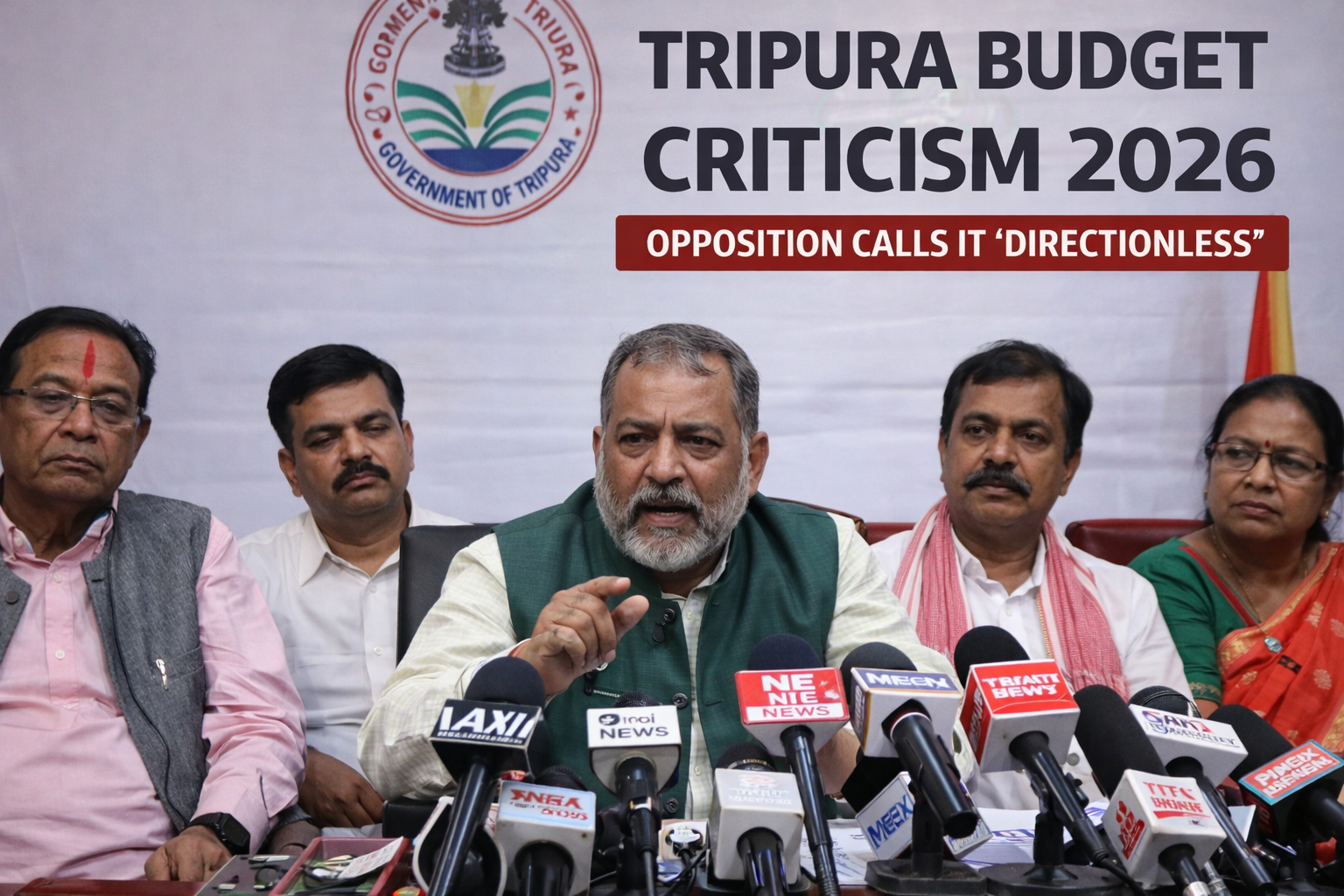
Tripura budget criticism 2026 has intensified as opposition leaders slammed the state government’s 2026–27 budget. They called it “directionless” and argued that rising expenditure figures alone do not make the budget pro-people.
Key Facts
- State: Tripura
- Budget Year: 2026–27
- Government: Tripura State Government
- Criticism By: Opposition parties in Tripura
- Claim: Budget is “directionless” and not pro-people
Opposition Voices Concerns
The opposition in Tripura slammed the state budget, describing it as “directionless” and lacking clear priorities. They pointed out that rising figures for revenue and expenditure do not automatically translate into benefits for citizens.
Moreover, the leaders argued that key sectors such as healthcare, education, and rural development did not receive adequate attention in the new budget. According to them, the proposals are largely symbolic rather than practical.
Rising Figures Don’t Guarantee Welfare
Opposition parties stressed that increasing allocations in numbers alone cannot make a budget pro-people. They argued that without effective implementation, citizens may not feel any tangible improvements in their lives.
Furthermore, critics highlighted that certain promises made in previous budgets remain unfulfilled. They said this year’s plan does not address those gaps, leaving fundamental public issues unresolved.
Government Response
Government officials defended the budget, stating that allocations have increased across several departments. They claimed that the state continues to focus on economic growth and infrastructure development.
However, the opposition remains unconvinced, insisting that higher spending figures do not necessarily indicate welfare for the population. They called for more transparency and detailed action plans in implementing the budget proposals.
Amit Shah to Address Yuva Shakti Samaroh in Guwahati
Importance of Budget in Tripura
The Tripura budget is crucial for setting priorities in governance, public welfare, and development. As a northeastern state, effective planning can significantly impact healthcare, education, and rural livelihoods.
The debate over the budget highlights the need for balanced allocation that directly benefits citizens, beyond just increasing numbers on paper.
Opposition Voices Concerns
Opposition parties in Tripura criticized the Tripura budget criticism 2026, claiming it lacks clear priorities for public welfare. They noted that essential sectors like healthcare, education, and rural development did not get sufficient attention.
Moreover, the leaders emphasized that symbolic increases in numbers cannot replace effective policy implementation. They said many promises from previous budgets remain unfulfilled, leaving citizens with minimal benefits.
Rising Figures Don’t Guarantee Welfare
Critics highlighted that while the budget shows rising expenditure figures, it does not automatically improve the lives of citizens. Tripura budget criticism 2026 points out that real change requires targeted planning and transparent execution.
The opposition also raised concerns about allocation for social programs, stating that rural populations and marginalized communities might not feel any benefit without specific schemes.
Government Response
Government officials defended the budget, saying that the allocations reflect a strong focus on economic growth and infrastructure. However, opposition leaders argue that numbers alone are insufficient to ensure citizen welfare. They demanded detailed action plans for implementation and called for accountability in public spending.
Importance of Budget in Tripura
The state budget plays a crucial role in determining development priorities for Tripura. Effective allocation can impact public health, education, and rural livelihoods significantly.
Tripura budget criticism 2026 has sparked a debate on whether rising expenditure figures are enough, or if detailed policy execution matters more.
Public and Expert Opinions
Several economists and policy experts weighed in on Tripura budget criticism 2026, suggesting that the government should focus on improving sector-wise outcomes rather than just increasing totals. Citizens also expressed concern over the lack of clarity on how the funds will be used at the grassroots level.