


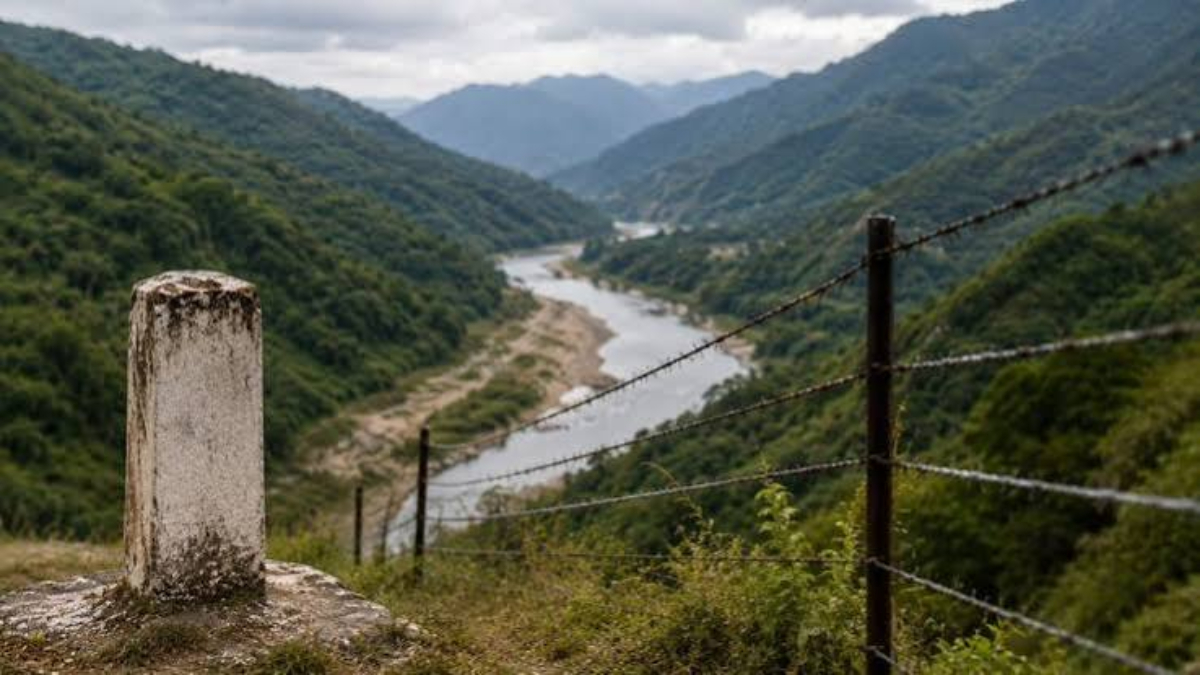
Assam land under occupation has emerged as a major issue after the Assam government informed the state assembly that nearly 83,000 hectares of the state’s land are currently under the occupation of four neighbouring states. The disclosure has once again brought the long-pending inter-state boundary disputes into focus, highlighting the challenges faced by Assam in resolving territorial disagreements with its neighbours. The government said it continues to pursue constitutional and peaceful mechanisms to address the issue while engaging in regular dialogue with the concerned states.
Assam Land Under Occupation: Government Shares Latest Data
The Assam government informed the Assembly that approximately 82,951 hectares of land are under the occupation of Arunachal Pradesh, Meghalaya, Mizoram, and Nagaland. The information was shared in response to a question raised during the ongoing Assembly session.
According to the government, the disputed areas have remained unresolved for decades due to historical boundary issues dating back to the colonial period and the reorganisation of states in the Northeast. The administration reiterated that these disputes require mutual discussions and legal processes rather than unilateral action.
The latest figures underline the scale of the territorial disagreements and the need for long-term solutions acceptable to all stakeholders.
Breakdown of Boundary Disputes
The largest share of the Assam land under occupation relates to disputes with Nagaland, followed by Arunachal Pradesh, Mizoram, and Meghalaya. Each of these interstate boundaries has its own historical background and legal complexities.
The government explained that:
- Boundary disputes with Nagaland have existed since the state’s formation in 1963.
- The Arunachal Pradesh dispute stems from differing interpretations of historical boundary notifications.
- The Mizoram border has witnessed periodic tensions, particularly in areas where administrative claims overlap.
- The Meghalaya boundary issue has seen significant progress through negotiations, although some sectors remain unresolved.
Officials noted that every disputed stretch is being handled separately based on historical records, administrative claims, and mutual consultations.
Steps Taken to Resolve the Assam Land Under Occupation Issue
The Assam government highlighted that it has adopted a dialogue-based approach to settle interstate boundary disputes. Several rounds of meetings have been held with neighbouring states over the past few years under the guidance of the Union government.
In recent years, Assam has signed agreements with Meghalaya to resolve disputes in several identified sectors. Negotiations are also continuing with Arunachal Pradesh and Mizoram, while discussions with Nagaland remain ongoing.
The government stated that expert committees, regional committees, and joint verification exercises have been formed to examine disputed territories and recommend practical solutions.
These initiatives aim to reduce tensions, improve coordination between border administrations, and ensure peace among residents living in affected areas.
Impact on Border Communities
Residents living along disputed boundaries often face uncertainty regarding land ownership, development projects, and administrative services. In many villages, people depend on either state’s authorities for basic facilities such as roads, healthcare, schools, and welfare schemes.
The unresolved Assam land under occupation issue has also affected infrastructure development in some areas, as administrative disputes can delay government projects and investment.
Despite these challenges, both Assam and neighbouring states have repeatedly stressed the importance of maintaining law and order while avoiding confrontation in sensitive border regions.
Political and Administrative Response
Chief Minister Himanta Biswa Sarma has consistently maintained that interstate boundary disputes should be resolved through dialogue rather than conflict. The Assam government has prioritised negotiations while strengthening administrative coordination in border areas.
Officials informed the Assembly that regular communication is being maintained with neighbouring state governments and the Centre to facilitate mutually acceptable settlements.
The government also clarified that historical documents, constitutional provisions, and Supreme Court proceedings continue to play an important role in determining future resolutions wherever required.
Why the Issue Remains Complex
Resolving interstate boundary disputes in Northeast India involves multiple historical and legal factors. Different states rely on separate maps, colonial-era notifications, and administrative records to support their territorial claims.
Several disputes date back more than six decades, making negotiations both sensitive and time-consuming. Experts believe that any lasting settlement must balance historical evidence with the interests of local communities living in border regions.
The Centre has encouraged states to resolve differences through discussions, and several successful agreements in recent years have demonstrated that negotiated settlements remain possible.
Way Forward for Assam
The disclosure that nearly 83,000 hectares remain under occupation by neighbouring states has once again highlighted the importance of sustained dialogue and cooperative federalism. While some interstate disputes have shown encouraging progress, others continue to require detailed negotiations and legal examination.
The Assam government has reaffirmed its commitment to protecting the state’s territorial interests while pursuing peaceful and constitutional solutions. As discussions continue with neighbouring states, residents along the border will be hoping for permanent settlements that promote stability, development, and lasting harmony across the Northeast.
Strong Push: Manipur IDP Issue Set To Reach Parliament As MP Bimol Raises Buffer Zone Concerns