


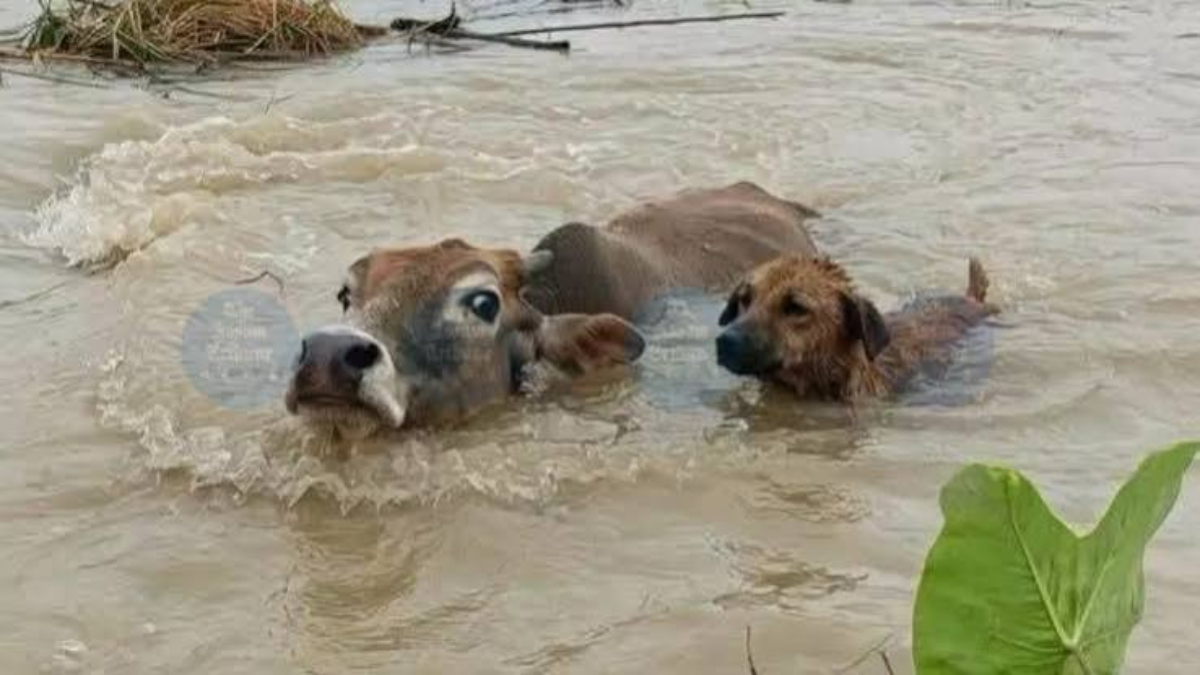
Assam floods livestock have suffered massive losses as the devastating floods continue to wreak havoc across the state. Chief Minister Himanta Biswa Sarma has revealed that the disaster has affected more than 10 lakh livestock, while hundreds of wild animals have been swept away by floodwaters. The prolonged flooding has severely impacted rural livelihoods, wildlife habitats, and the state’s agricultural economy, prompting authorities to intensify relief and rehabilitation efforts.
Assam floods livestock losses mount across the state
The scale of destruction caused by the floods has become increasingly evident with fresh assessments from the Assam government. According to Chief Minister Himanta Biswa Sarma, over 10 lakh livestock, including cattle, goats, buffaloes, pigs, poultry, and other domestic animals, have been affected by the floods.
Many farmers have struggled to protect their animals as rising waters submerged villages, grazing fields, and animal shelters. Thousands of livestock remain stranded in flood-hit districts, while shortages of fodder and clean drinking water continue to worsen conditions.
The state government has deployed veterinary teams to provide emergency treatment, vaccination, and medical support to affected animals. Relief camps are also supplying cattle feed and essential medicines wherever access is possible.
Hundreds of wild animals swept away by floodwaters
Apart from domestic animals, the floods have caused significant damage to Assam’s rich biodiversity. Chief Minister Sarma said that hundreds of wild animals have been swept away as overflowing rivers inundated forests and protected habitats.
Wildlife officials have been monitoring several protected areas, where floodwaters have forced animals to move towards higher ground. Rescue teams have been working round the clock to save stranded wildlife whenever possible.
Several species have faced displacement due to submerged habitats, while authorities continue assessing the full ecological impact of the floods.
Floods continue to affect thousands of families
The ongoing flood situation has disrupted normal life across several districts of Assam. Heavy rainfall and overflowing rivers have inundated villages, roads, agricultural land, and public infrastructure.
Thousands of people remain in relief camps or have taken shelter in safer locations. Government agencies, disaster response teams, and local volunteers continue distributing food, drinking water, medicines, and other essential supplies.
Authorities have also been restoring damaged roads, bridges, and communication networks to improve access to affected regions.
Livestock play a crucial role in rural economy
The impact on Assam floods livestock extends beyond immediate animal losses. Livestock serve as a major source of income for rural households across Assam. Dairy farming, poultry, piggery, and animal husbandry contribute significantly to family earnings, especially in flood-prone districts.
With animals either lost, injured, or displaced, thousands of farming families now face economic uncertainty. Veterinary experts warn that disease outbreaks among surviving livestock could further increase losses if preventive measures are not maintained.
The government has appealed to livestock owners to report sick or stranded animals so veterinary teams can provide timely assistance.
Government steps up rescue and rehabilitation
The Assam government has intensified flood relief operations by coordinating efforts among district administrations, disaster management authorities, veterinary departments, and wildlife officials.
Chief Minister Himanta Biswa Sarma has stated that rescue operations remain the top priority while relief measures are being expanded for both affected families and livestock. Veterinary camps have been established in several flood-hit areas to provide treatment, vaccination, and emergency healthcare for domestic animals.
Officials are also working to ensure adequate fodder supplies, drinking water, and temporary shelters for rescued livestock.
Meanwhile, wildlife authorities continue monitoring protected forests and national parks to rescue stranded animals wherever conditions permit.
Agriculture sector faces another major setback
The widespread impact on Assam floods livestock has added to the growing concerns over agricultural losses. Large areas of cropland have been submerged, damaging standing crops and reducing fodder availability for animals.
Experts believe the combined loss of crops and livestock could have long-term consequences for rural livelihoods unless rehabilitation measures are implemented quickly.
The state government is expected to conduct detailed damage assessments before announcing additional compensation and recovery packages for affected farmers.
Relief efforts continue amid challenging conditions
Floodwaters remain a serious challenge in several parts of Assam despite gradual improvements in some districts. Rescue teams continue assisting stranded residents while officials closely monitor river levels and weather conditions.
The government has urged people living in vulnerable areas to remain alert and follow evacuation advisories issued by district administrations. Relief operations are expected to continue until floodwaters fully recede and normalcy returns.
The massive losses reported by the Chief Minister underline the widespread humanitarian, economic, and ecological impact of this year’s floods. With more than 10 lakh livestock affected and hundreds of wild animals lost, the disaster has highlighted the urgent need for stronger flood preparedness, wildlife protection, and long-term rehabilitation strategies to safeguard Assam’s people, animals, and environment.
Powerful Tripura Anti-Drug Crackdown: CM Orders Stronger Policing Across State