


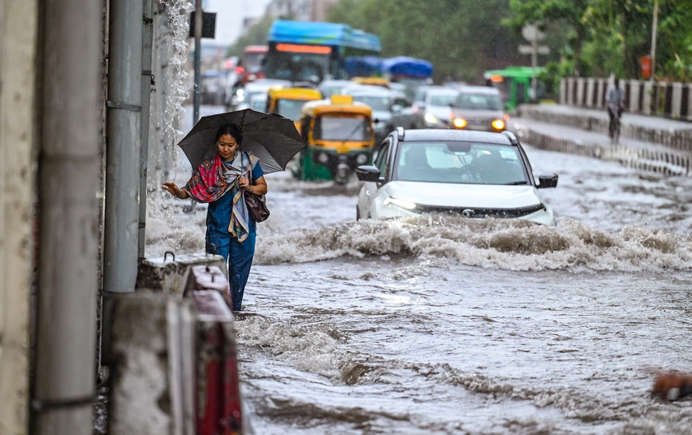
Delhi has surpassed its annual normal rainfall with nearly four months still remaining in 2026, following a fresh spell of intense showers that marked one of the strongest surges of the monsoon season in the national capital.
Heavy rainfall lashed several parts of Delhi and the National Capital Region on September 4, causing widespread waterlogging, traffic disruptions and flight diversions. The India Meteorological Department also issued weather alerts as the city experienced another intense spell of rain during the final phase of the southwest monsoon.
The development is significant because Delhi has already crossed its normal annual rainfall mark despite the year still having several months remaining. The fresh downpour has highlighted the uneven nature of the 2026 monsoon, with intense localised rain spells pushing the capital’s cumulative rainfall above the annual normal.
Delhi Crosses Its Annual Normal Rainfall Mark
Delhi surpassed its annual normal rainfall quota on September 4, according to weather reports. The milestone came with almost four months still left in the calendar year.
The achievement followed repeated spells of monsoon rain across the capital during the season. Delhi experienced particularly intense showers during the latest weather system.
The rainfall pushed the city’s cumulative total beyond the normal annual figure.
The development underlines how a few intense rainfall episodes can significantly affect seasonal totals. Rainfall distribution does not always remain uniform throughout the monsoon.
A city may experience long dry spells followed by short periods of extremely heavy rainfall.
This pattern has become particularly noticeable during the current monsoon season.
While several parts of India have experienced rainfall deficits, Delhi has received enough intense showers to surpass its annual normal rainfall total.
Heavy Rain Disrupts Life Across Delhi-NCR
The latest spell of rain affected normal life across Delhi-NCR.
Several roads witnessed waterlogging after intense showers. Motorists faced traffic congestion, while commuters experienced delays in different parts of the capital.
Heavy rain also affected operations at Indira Gandhi International Airport.
Eleven flights were diverted during the period of intense weather. The diversions included flights redirected to Jaipur, Lucknow, Ahmedabad and Chandigarh.
Weather conditions affected visibility and airport operations.
Water accumulation was also reported near important locations, including areas around Terminal 3 and the Vasant Kunj underpass.
The disruptions highlighted the challenges Delhi faces during intense rainfall events.
Even short periods of heavy rain can overwhelm drainage systems and lead to water accumulation on major roads.
Palam Records the Highest Rainfall During Latest Spell
Different parts of Delhi received varying amounts of rainfall during the latest weather event.
Palam recorded 75.6 mm of rain during the intense spell, according to reported weather observations.
Naraina received 54 mm of rainfall.
Janakpuri recorded 48.5 mm.
Lodhi Road received 34.6 mm, while Safdarjung recorded 32.6 mm during the reported period.
The differences in rainfall totals show the highly localised nature of thunderstorms and heavy monsoon showers.
One area can receive intense rain while another location only a few kilometres away receives significantly less precipitation.
Parts of the wider NCR also witnessed varying rainfall.
Gurgaon received significant showers, while some other locations recorded much lower rainfall totals.
IMD Issues Weather Alerts for Delhi
The India Meteorological Department issued alerts as intense rain and thunderstorms affected the capital.
The weather department issued a red alert across Delhi’s districts during the severe spell on September 4.
The warning covered the possibility of moderate to heavy rainfall, thunderstorms and strong winds.
The forecast also included the possibility of cloud-to-ground lightning.
Weather systems during the final phase of the monsoon can still produce intense rainfall events.
Although the southwest monsoon generally begins withdrawing from parts of northwestern India during September, local weather systems can continue to bring significant rain.
The latest spell demonstrated that the closing phase of the monsoon can still create serious disruptions.
The IMD’s alerts urged residents to remain cautious as changing weather conditions continued to affect Delhi and nearby areas.
Monsoon’s Final Surge Pushes Rainfall Higher
The latest downpour is being seen as part of a final surge of monsoon activity over Delhi.
September generally marks the closing stage of the southwest monsoon season in northern India.
However, the intensity of individual rainfall events can remain high.
The recent weather activity pushed Delhi beyond its annual normal rainfall mark.
This is particularly notable because India as a whole has faced an uneven monsoon season.
The IMD has forecast below-normal rainfall for the country during September after August also recorded below-normal precipitation nationally.
Delhi’s experience shows that national rainfall trends and local weather conditions can differ sharply.
A country may record an overall rainfall deficit while individual cities experience periods of surplus or intense rainfall.
This variation can make urban weather planning increasingly challenging.
Waterlogging and Traffic Remain Major Concerns
Heavy rainfall once again exposed Delhi’s vulnerability to waterlogging.
Several roads experienced traffic congestion after water accumulated on important stretches.
Commuters faced delays as vehicles moved slowly through waterlogged areas.
Waterlogging can affect emergency services, public transport and daily business activities.
It can also increase the risk of accidents on roads.
Authorities often face additional pressure during intense rainfall because drainage systems must handle large volumes of water within a short period.
The latest rain spell also affected access to areas near the airport.
Water accumulation around important transport corridors created further inconvenience for travellers.
The impact of heavy rainfall therefore extended beyond residential neighbourhoods and affected major infrastructure as well.
Flight Diversions Highlight Impact of Severe Weather
The impact of the latest rain extended to air travel.
Eleven flights were diverted from Delhi’s Indira Gandhi International Airport because of adverse weather conditions.
Five flights were diverted to Jaipur.
Four were redirected to Lucknow.
One flight each went to Ahmedabad and Chandigarh.
Thunderstorms and heavy rainfall can create operational difficulties for airports.
Reduced visibility, strong winds and lightning can affect flight movements.
Airport authorities and airlines may divert flights when weather conditions make operations unsafe or difficult.
The diversions demonstrated the wider impact of Delhi’s latest monsoon surge.
Severe weather affected not only road transport but also one of India’s busiest aviation hubs.
Uneven Monsoon Pattern Continues Across India
Delhi’s rainfall milestone comes amid an uneven monsoon season across India.
August recorded below-normal rainfall nationally, while the IMD has forecast below-normal rainfall for September as well.
The weather department has linked the broader rainfall outlook to changing climatic conditions, including the influence of El Niño.
Despite the broader national trend, some locations have continued to experience intense rainfall events.
Delhi is among the areas where concentrated spells of heavy rain have significantly increased cumulative rainfall.
This contrast highlights the importance of looking beyond national averages.
Local rainfall can vary dramatically.
Some regions may face dry conditions, while others experience flooding and repeated disruptions.
The 2026 monsoon has therefore continued to demonstrate highly uneven rainfall patterns across the country.
Delhi’s Wet Year Raises Urban Infrastructure Questions
The capital crossing its annual rainfall normal before the end of the year raises important questions about urban preparedness.
Heavy rain can place pressure on drainage infrastructure.
It can disrupt roads, flights and other essential services.
Rapid urbanisation has also increased concerns about the ability of cities to manage intense rainfall events.
Urban areas often have large surfaces covered by concrete and other impermeable materials.
These surfaces can reduce the ability of rainwater to seep into the ground.
As a result, large amounts of water can quickly accumulate on roads and in low-lying areas.
The latest spell again demonstrated the need for efficient drainage and better management of urban flooding.
The issue becomes particularly important when a city experiences intense rainfall within a short period.
Delhi Enters Final Monsoon Phase With Rainfall Surplus
Delhi has now entered the final phase of the monsoon season after crossing its annual normal rainfall mark.
The latest surge brought heavy showers and thunderstorms across the capital and NCR.
It also caused widespread disruptions to road and air travel.
The annual rainfall milestone reflects the cumulative impact of several monsoon spells during 2026.
The latest heavy rain helped push the total beyond the city’s normal annual rainfall quota with months still left in the year.
Weather conditions may continue to change as the monsoon gradually withdraws from northern India.
However, the recent events show that significant rainfall can still occur during September.
For Delhi residents, the final monsoon surge has brought both relief from high temperatures and renewed concerns over waterlogging and infrastructure disruptions.
As the southwest monsoon approaches its withdrawal phase, Delhi’s unusually high cumulative rainfall will remain one of the major weather developments of 2026.