

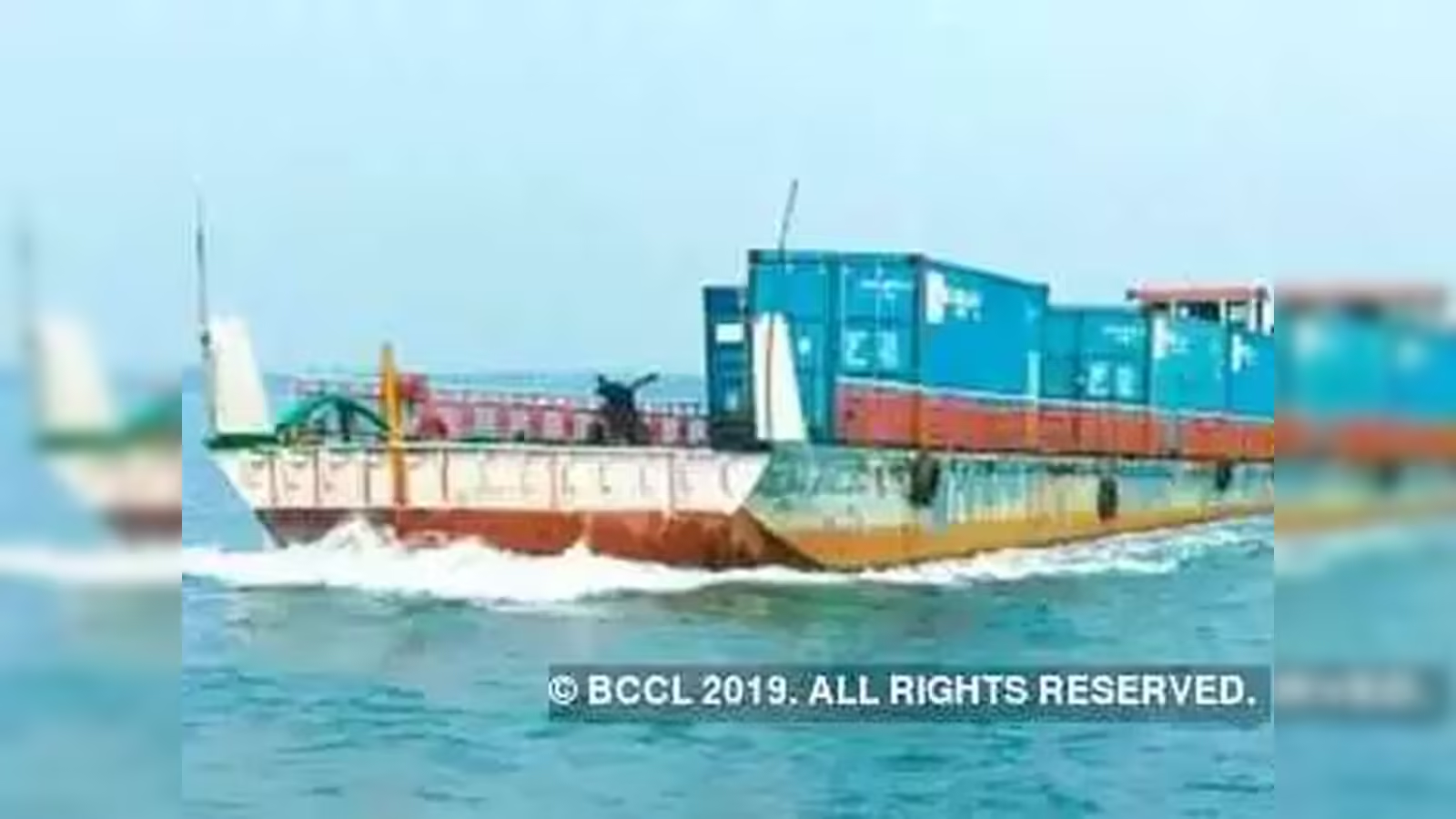
The arrival of Guwahati cargo Indo Bangladesh shipment marks a massive breakthrough in regional connectivity and trade efficiency. A total of 1,500 metric tonnes of high-value cargo has successfully reached Pandu Port in Guwahati via the Indo-Bangladesh protocol route.
Moreover, this development is being hailed as a game-changing step toward reducing logistics costs and improving trade routes in Northeast India. As a result, industries, traders, and policymakers are closely watching its long-term impact.
Tripura Opposition Setback Tipra Motha BJP: Massive Defections Ahead
What is the Indo-Bangladesh Protocol Route?
The Guwahati cargo Indo Bangladesh movement has been made possible through the inland waterways agreement between India and Bangladesh.
This protocol route allows cargo vessels to navigate through designated river channels, primarily using the Brahmaputra and Meghna river systems. Furthermore, it significantly shortens travel distance compared to traditional land routes.
Consequently, transportation becomes faster, more cost-effective, and environmentally friendly. Therefore, the successful movement of this cargo highlights the growing importance of water-based logistics.
Significance of the 1,500 MT Shipment
The Guwahati cargo Indo Bangladesh shipment of 1,500 metric tonnes is not just a routine consignment—it represents a major milestone.
Firstly, it demonstrates the operational efficiency of inland waterways in handling large volumes of cargo. Secondly, it validates government efforts to promote alternative logistics channels.
Moreover, such high-volume shipments indicate increasing trust among traders and businesses in this route. As a result, it is expected to encourage more companies to adopt similar transportation methods.
Mizoram Birth Death Data 2026: Key Figures Show Strong Population Growth Trend
Strategic Role of Pandu Port
The Pandu Port has emerged as a key logistics hub in the Guwahati cargo Indo Bangladesh initiative. Located along the Brahmaputra River, the port plays a vital role in cargo handling and distribution.
Additionally, investments in infrastructure and modernization have enhanced its capacity. Therefore, Pandu Port is well-positioned to handle future increases in cargo traffic.
In the long run, the port could become a central node for trade in Northeast India, connecting multiple regional and international markets.
Economic Impact on Northeast India
The Guwahati cargo Indo Bangladesh development is expected to deliver significant economic benefits.
Firstly, reduced transportation costs will directly improve profit margins for businesses. Secondly, faster delivery times will enhance supply chain efficiency.
Moreover, local industries, including manufacturing and agriculture, will gain better access to markets. Consequently, this could lead to increased production and job creation in Assam and neighboring states.
As a result, the overall economic landscape of Northeast India is likely to witness positive transformation.
Environmental Advantages of Water Transport
One of the most important aspects of the Guwahati cargo Indo Bangladesh route is its environmental impact.
Compared to road and rail transport, inland waterways produce significantly lower carbon emissions. Furthermore, they reduce congestion on highways and minimize fuel consumption.
Therefore, this shift toward water-based logistics aligns with sustainable development goals. In addition, it supports India’s efforts to adopt greener transportation methods.
Boost to Bilateral Trade Relations
The success of the Guwahati cargo Indo Bangladesh shipment also strengthens ties between India and Bangladesh.
Moreover, efficient trade routes encourage greater economic cooperation between the two nations. As a result, both countries benefit from increased trade volumes and improved connectivity.
In addition, this collaboration sets a positive example for regional partnerships in South Asia.
Tripura Agriculture Export Growth: Organic Products Worth ₹8.79 Crore in 3 Years
Challenges and Future Scope
While the Guwahati cargo Indo Bangladesh initiative shows great promise, certain challenges remain.
Infrastructure development along waterways needs continuous investment. Additionally, seasonal water levels and navigation issues can impact operations.
However, with proper planning and technological advancements, these challenges can be addressed. Consequently, the future of inland water transport in the region looks promising.
Furthermore, expanding such routes could unlock new trade opportunities and strengthen the logistics network.
What Lies Ahead
The success of the Guwahati cargo Indo Bangladesh shipment is likely to pave the way for more large-scale cargo movements.
Moreover, policymakers may focus on further improving port infrastructure and connectivity. In addition, increased awareness among businesses will drive adoption of this route.
As a result, Northeast India could emerge as a major logistics hub, connecting domestic and international markets efficiently.
Agartala Urban Upgrade: Online Cab Booking Planned for Airport and Railway Station
Conclusion
The Guwahati cargo Indo Bangladesh shipment of 1,500 MT stands as a massive milestone in transforming trade and connectivity in Northeast India. From reducing costs to promoting sustainability, the benefits are wide-ranging.
Overall, this development not only strengthens regional trade but also highlights the potential of inland waterways as a reliable logistics solution. As momentum builds, the region is set to witness a new era of economic growth and connectivity.
FAQs
1. What is the Guwahati cargo Indo Bangladesh shipment?
It refers to a 1,500 MT cargo transported via inland waterways from Bangladesh to Guwahati.
2. Where did the cargo arrive?
At Pandu Port.
3. Why is this route important?
It reduces transportation costs and improves efficiency.
4. Which countries are involved?
India and Bangladesh.
5. What are the environmental benefits?
Lower emissions and reduced fuel consumption compared to road transport.
6. What is the future of this route?
It is expected to grow and handle more cargo shipments in the future.