

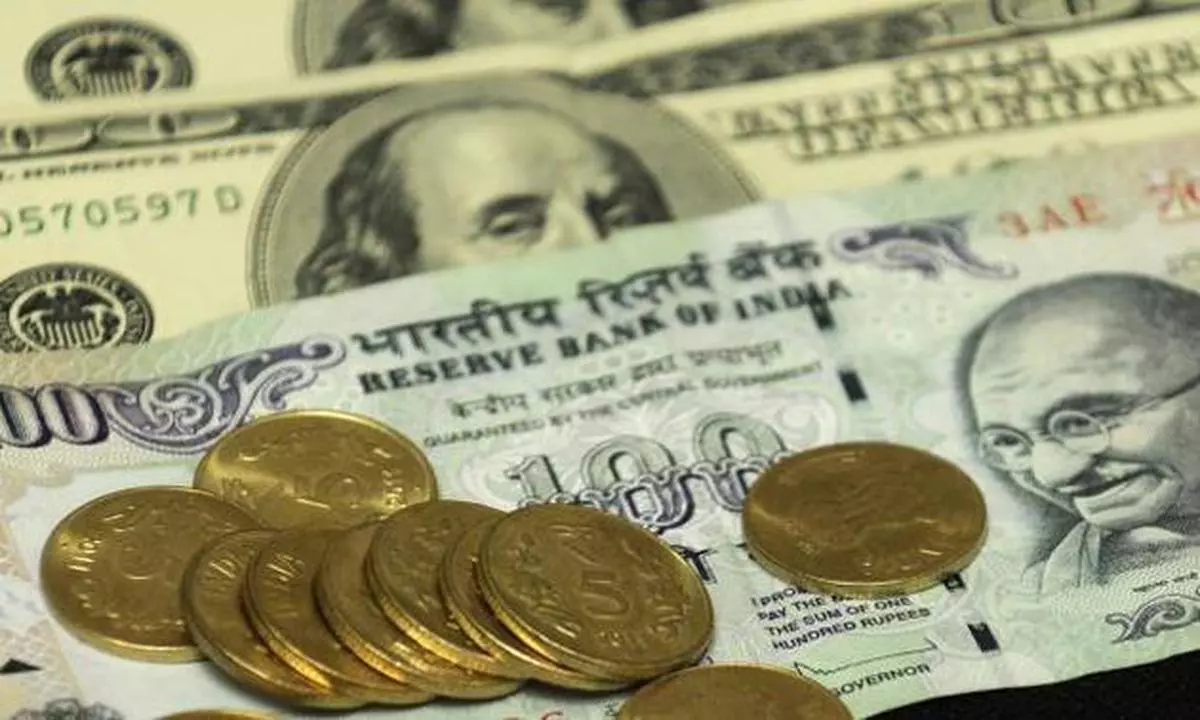
The Indian rupee faced a significant setback on Monday, sinking to an all-time low of 86.62 against the US dollar. This marked a sharp decline of 58 paise, the steepest single-day fall in nearly two years, attributed to a robust US dollar and soaring crude oil prices. Analysts believe the Reserve Bank of India (RBI) has allowed the currency’s decline amidst diminishing forex reserves and a broader weakness in emerging market currencies.
The rupee’s struggle began early in the session at the interbank foreign exchange market, where it opened at 86.12 against the dollar. It briefly touched 86.11 during intraday trading but eventually settled at its lowest-ever level of 86.62 by the close of the day. The fall reflects a 0.67% drop, a sharp movement last seen on February 6, 2023, when the rupee had plunged by 68 paise in a single session.
Over the past two weeks, the rupee has consistently shown signs of distress, losing over one rupee since its December 30 closing level of 85.52. December had already been marked by significant milestones for the currency, with the rupee breaching the 85-per-dollar mark for the first time on December 19, 2024. The ongoing depreciation has sparked concern across financial markets, with stakeholders closely monitoring the broader implications.
Economic analysts attribute this weakening trend to several factors. The US dollar continues to gain strength amid expectations of further interest rate hikes by the Federal Reserve. This makes the dollar an increasingly attractive asset for global investors, creating added pressure on the rupee. Additionally, rising crude oil prices have amplified India’s import bill, further straining the currency. As India imports the majority of its oil needs, higher prices directly impact the demand for foreign currency.
Market experts also point to the RBI’s policy decisions as a contributing factor. While the central bank typically intervenes to curb volatility in the currency market, its recent stance appears more restrained. Some analysts interpret this as a strategic move, allowing the rupee to adjust naturally to global economic conditions. This approach is seen as necessary to preserve dwindling foreign exchange reserves, which serve as a buffer in times of crisis. However, it also exposes the rupee to sharper declines, as witnessed in recent sessions.
The broader landscape of emerging market currencies has not been favorable either. Several currencies have faced downward pressure amid geopolitical uncertainties, sluggish global growth, and the Federal Reserve’s hawkish policies. In this context, the rupee’s fall aligns with a global trend but underscores specific vulnerabilities in the Indian economy.
The currency’s decline has far-reaching implications. Import-dependent industries, particularly those reliant on crude oil and raw materials, are bracing for higher costs. Consumers may also feel the pinch as rising import costs contribute to inflationary pressures. Exporters, on the other hand, could see short-term gains as a weaker rupee makes Indian goods more competitive in global markets.
Economists warn that the continued depreciation of the rupee could create challenges for India’s fiscal and monetary policies. Higher import bills could widen the current account deficit, while the RBI may face additional pressure to manage inflation without stifling economic growth. The central bank’s next monetary policy decisions will be closely scrutinized for signs of its approach to balancing these competing priorities.
Despite the challenges, some experts see opportunities for structural reforms. A weaker rupee could serve as a wake-up call to strengthen India’s export base and reduce reliance on imports. Measures to attract foreign investment, coupled with policies aimed at bolstering domestic manufacturing, could help mitigate the impact of future currency fluctuations.
The rupee’s journey to its historic low reflects a complex interplay of domestic and global factors. As the currency grapples with external pressures and internal vulnerabilities, policymakers and market participants will need to navigate a challenging path ahead. The coming weeks will be critical in determining whether the rupee stabilizes or continues its downward trajectory, shaping the economic outlook for India in 2025.
The rupee’s decline has also raised concerns among policymakers and businesses about India’s ability to maintain economic stability amidst global uncertainty. Experts argue that the government and the Reserve Bank of India (RBI) must adopt a proactive approach to address the dual challenges of a weakening currency and rising inflation. This could include measures to attract foreign direct investment (FDI) and incentivize industries to boost exports. Strengthening trade ties with key global partners may also help reduce the trade deficit and ease pressure on the rupee.
The depreciating rupee has brought attention to the need for greater energy self-reliance in India. The country’s heavy reliance on imported crude oil makes it particularly vulnerable to fluctuations in global oil prices. Analysts suggest accelerating efforts to expand renewable energy capacity and diversify energy sources to shield the economy from volatile import costs. Initiatives like green hydrogen and expanded use of solar and wind energy could play a pivotal role in reducing dependence on oil imports over the long term.
Indian industries dependent on imports for raw materials are already grappling with the fallout. The automotive and electronics sectors, for instance, have reported rising costs, which could eventually be passed on to consumers. Companies are now exploring ways to localize their supply chains and reduce dependence on foreign suppliers. While these adjustments may take time, they highlight the need for a more resilient manufacturing ecosystem in India.
Amid the current challenges, there is also a growing focus on how the currency’s depreciation impacts foreign investors. A weaker rupee makes Indian assets relatively cheaper for international buyers, potentially spurring investment in equities and real estate. However, volatility in the currency markets may deter some institutional investors who prioritize stability. Striking a balance between attracting investments and maintaining currency stability will remain a delicate task for policymakers.
Looking ahead, the government may also need to revisit its fiscal strategy to address the economic strain caused by the rupee’s fall. While measures like higher tariffs on non-essential imports have been used in the past, experts caution against policies that could hurt growth. Instead, targeted support for export-oriented industries and sectors with high growth potential could help offset the trade imbalance and support the currency.
The depreciation of the rupee is not without its lessons. It underscores the interconnectedness of global economic dynamics and the importance of building resilience against external shocks. By investing in strategic sectors, enhancing infrastructure, and fostering innovation, India can better position itself to navigate future economic uncertainties. While the current phase may be challenging, it also offers an opportunity for introspection and long-term planning to strengthen the country’s economic foundations.
As the rupee continues its journey, the focus will remain on how India adapts to the shifting tides of the global economy. The coming months will test the resolve of policymakers, industries, and consumers as they navigate an increasingly complex financial landscape. Whether the rupee stabilizes or faces further declines, its trajectory will shape the narrative of India’s economic journey in 2025 and beyond.