

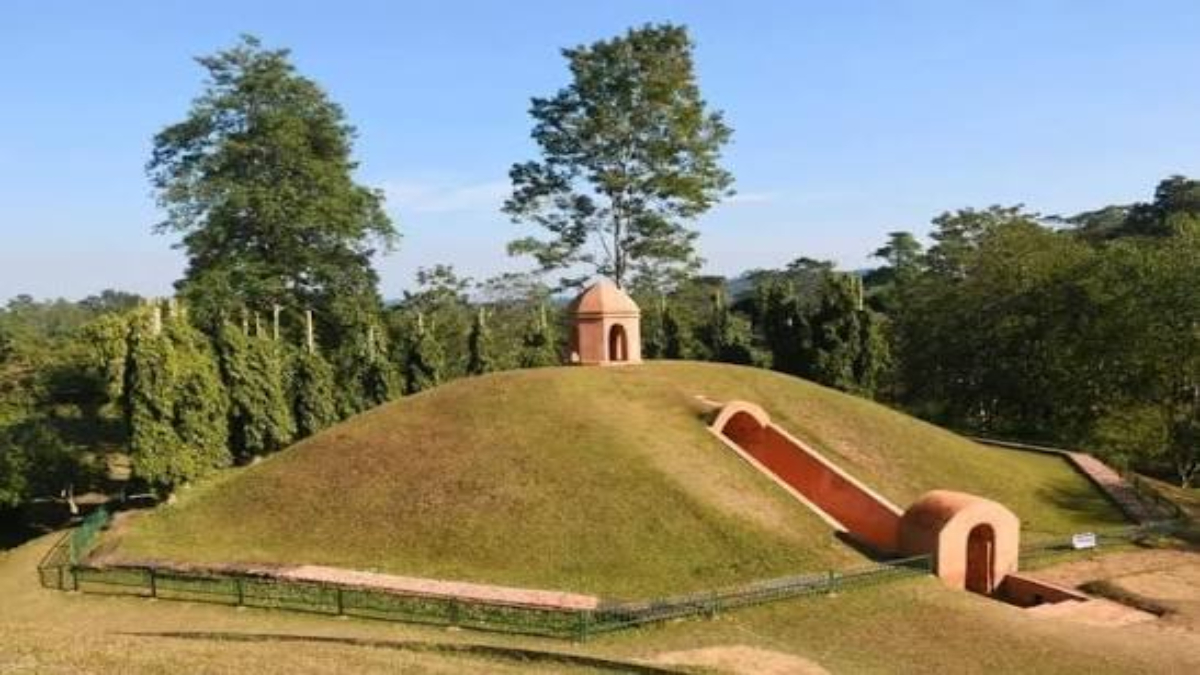
Kaliabor heritage is facing a fresh preservation challenge as two important Ahom-era military monuments, Misa Koth and Samdhara Garh, come under growing pressure from encroachment and construction. The historic structures, located near the National Highway in the Misa and Rangagara areas, are important remnants of Assam’s medieval defence system. Local residents and heritage enthusiasts are now calling for immediate government action to protect the sites.
Ahom military sites face growing pressure
Samdhara Garh, also known as Burha-Burhi Garh, is an Ahom-period mud rampart with circular bastions placed at regular intervals. According to the Directorate of Archaeology, Assam, the monument is located at Samuguri in Kaliabor, Nagaon district. The structure is traditionally associated with the military defence system developed during the Ahom period.
Reports indicate that the fort was constructed during the reign of Ahom king Swargadeo Pratap Singha in 1538 Saka. Today, however, parts of the historic rampart have been affected by encroachment. The four-lane National Highway has divided the fort into two sections, while substantial portions on the northern side, particularly close to the highway, have reportedly faced occupation and alteration.
The loss of vegetation has added to the concern. The site was once covered by thousands of trees, but several have reportedly disappeared. There are also allegations that portions of the historic structure have been cut away and that houses have subsequently been built on the affected areas. Such changes can permanently damage archaeological features that may provide evidence about the construction and use of the fort.
Misa Koth adds to Kaliabor heritage concerns
Misa Koth, another significant Ahom military monument, is also facing encroachment pressure. The Directorate of Archaeology identifies the site as a garrison dating to around the 17th century and records that it was constructed by Swargadeo Pratap Singha.
Recent reports say residential structures have come up on portions of the monument’s premises. Trees within the site have also reportedly been removed. The concerns surrounding Misa Koth underline the wider challenges facing Kaliabor heritage, particularly when historically important sites are located close to expanding roads and settled areas.
For conservationists, the issue goes beyond individual buildings. Ahom military sites such as these represent a wider network of ramparts, garrisons and defensive structures that helped protect the kingdom during a period of repeated military conflicts. Losing sections of such sites can therefore weaken the historical understanding of Assam’s military architecture.
Calls grow for stronger protection
Residents and heritage enthusiasts have urged the government to identify the exact boundaries of the monuments, remove unauthorised occupation and undertake scientific conservation. They have also called for stronger monitoring to prevent further construction or excavation around the sites.
The demands come at a time when heritage protection and encroachment remain concerns across Assam. The state Directorate of Archaeology says its mandate includes protecting and preserving archaeological sites, monuments and remains of historical importance. Assam also has the Assam Heritage (Tangible) Protection, Preservation, Conservation and Maintenance Act, 2020, providing a legal framework for safeguarding tangible heritage.
The broader problem is not limited to state-protected monuments. In August 2026, the Union Ministry of Culture said 414 centrally protected monuments and archaeological sites across India had reported encroachments. Assam accounted for 12 of those sites. The government said boundary surveys, geo-referencing and digitisation are among the measures being used to safeguard protected monument boundaries.
Protecting the region’s historical landscape
The current concerns over Kaliabor heritage also highlight the importance of protecting the landscape surrounding monuments, rather than focusing only on surviving structural remains. Roads, houses and other development can alter the setting of a historic site even when parts of the original structure remain standing.
Assam has gained renewed national and international attention for its Ahom heritage after the Moidams of Charaideo were inscribed on the UNESCO World Heritage List in 2024. The UNESCO framework stresses protection, management and community participation in safeguarding the wider heritage environment.
For Kaliabor heritage, timely intervention could help prevent further loss. A clear demarcation of protected areas, removal of illegal occupation, regular inspections and conservation based on archaeological standards could preserve Misa Koth and Samdhara Garh for future generations.
The growing public concern presents an opportunity for authorities to act before further damage becomes irreversible. Protecting these military monuments would not only preserve physical structures but also safeguard an important chapter of Assam’s Ahom-era history.