

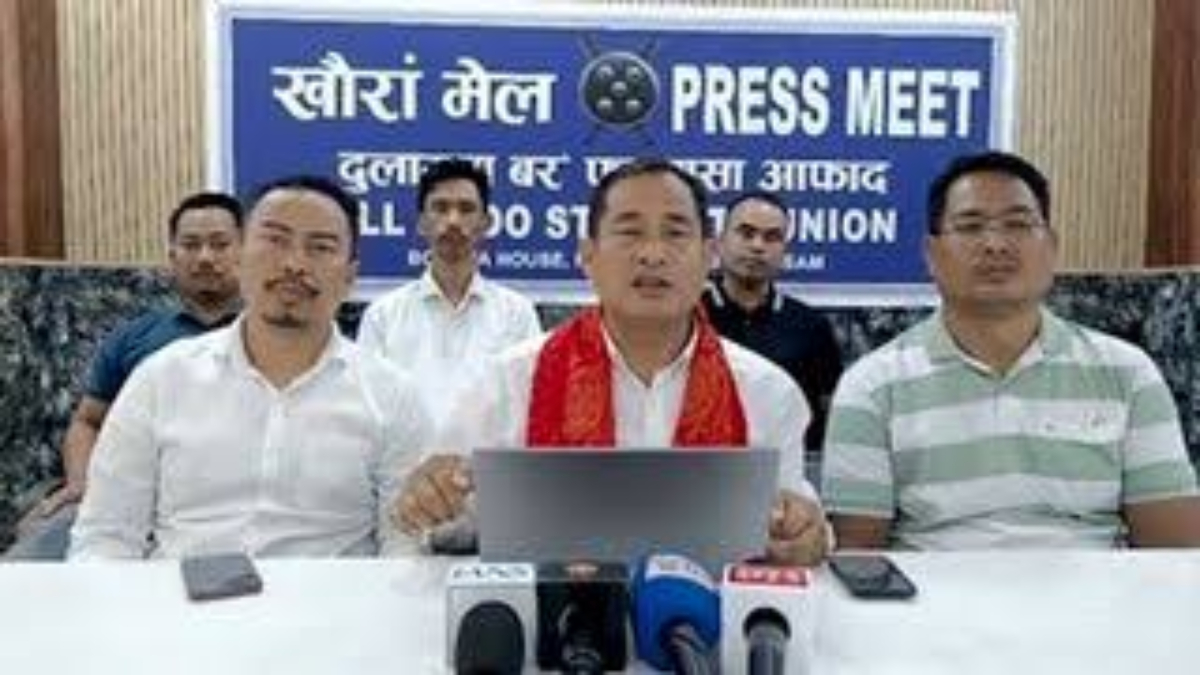
The Bodo language removal controversy in Assam has triggered fresh concerns over linguistic identity, cultural recognition and political representation, with the All Bodo Students Union (ABSU) warning that the reported removal of the Bodo-language display from the Assam Legislative Assembly building could revive the demand for a separate Bodoland state.
In a statement reported on October 16, 2026, ABSU president Kwrwmdao Wary described the development as a serious matter concerning the dignity and constitutional recognition of the Bodo community. He argued that the reported move goes beyond an administrative change and could deepen feelings of exclusion among Bodo people.
The controversy has once again brought questions about language rights, indigenous identity and the relationship between the Bodo community and the Assam government into the spotlight.
ABSU Raises Concern Over Bodo Language Removal
ABSU expressed strong concern over the reported removal of the Bodo-language nameplate from the Assam Legislative Assembly building. The organisation said the display represented more than a written inscription, as it symbolised the community’s identity, history and place in the state’s political and cultural life.
Wary said the reported decision could be interpreted as a denial of recognition, particularly because Bodo is included in the Eighth Schedule of the Indian Constitution.
According to the student organisation, constitutional recognition should translate into meaningful respect for the language in public institutions. It argued that the absence of Bodo-language identification from an important state institution raises questions about whether that recognition is being reflected in practice.
ABSU also warned that developments perceived as discriminatory could renew memories of historical marginalisation and create further dissatisfaction within the community.
Why the Assembly Display Has Become a Major Issue
The Assam Legislative Assembly is one of the state’s most important democratic institutions. For Bodo organisations, the presence of their language on its building carries symbolic significance because it reflects the recognition of a major indigenous community within Assam.
The Bodo language removal issue has therefore become a wider debate about representation rather than simply the placement of words on a building.
Bodo leaders have maintained that linguistic identity deserves equal respect in government offices, official signage and other public spaces. They argue that the visibility of a language in official settings helps reinforce its status and assures speakers that their cultural heritage is valued.
The controversy has also raised concerns about the implementation of constitutional safeguards and the responsibilities of public authorities in protecting linguistic diversity.
However, the circumstances surrounding the reported removal and the official explanation for the change require clarification from the authorities concerned.
Separate Bodoland Statehood Demand Could Resurface
ABSU warned that the controversy could strengthen calls for greater autonomy and revive the long-standing demand for a separate Bodoland state.
Wary said the Bodo movement has historically sought dignity, identity, recognition and equitable treatment for the community. He cautioned that unresolved concerns about language and cultural rights could lead people to reconsider their political future within Assam.
The demand for a separate Bodoland state has deep historical roots in the region. Over the years, the movement has involved political campaigns, negotiations and efforts to secure greater protection for Bodo identity and interests.
Although the latest warning does not establish that a renewed statehood movement has formally begun, it signals the seriousness with which ABSU views the controversy.
The organisation suggested that meaningful recognition of Bodo linguistic and cultural heritage remains essential to maintaining trust between the community and the state.
Constitutional Recognition and Protection of Bodo Identity
Bodo is listed in the Eighth Schedule of the Indian Constitution, giving it recognised status among India’s scheduled languages. The language is also recognised as an associate official language of Assam.
For ABSU, these provisions should be reflected in the everyday functioning and public representation of government institutions. The organisation has argued that legal recognition alone is insufficient if community members believe their language is being overlooked.
The latest dispute follows earlier tensions over the reported exclusion of Bodo from the Assembly’s official emblem in July 2026. That episode prompted protests and criticism from Bodo organisations, bringing the question of linguistic representation into public debate.
The issue has also highlighted the importance of dialogue between community representatives and government authorities before disagreements escalate into wider political confrontations.
Calls for Dialogue and a Clear Government Response
The immediate challenge for Assam’s authorities is to address the concerns raised by ABSU and other Bodo organisations. A clear explanation of the decision, together with constructive engagement with community representatives, could help prevent further misunderstandings.
ABSU has stressed that the controversy concerns the broader principles of equality, recognition and respect for the Bodo people’s historical struggle. The organisation warned that leaving such concerns unresolved could increase alienation and strengthen demands for greater political autonomy.
The developments are being closely watched in the Bodoland region, where language and cultural identity remain central to political discussions.
The coming response from the Assam government and the Assembly authorities will be important in determining whether the dispute can be resolved through dialogue. For ABSU, restoring confidence requires more than addressing a nameplate; it requires ensuring that the Bodo language and its speakers receive the respect and recognition they believe are essential to their place in Assam.
Meghalaya CM Highlights Historic Rilbong Sanatan Hindu Dharma Sabha Centenary