

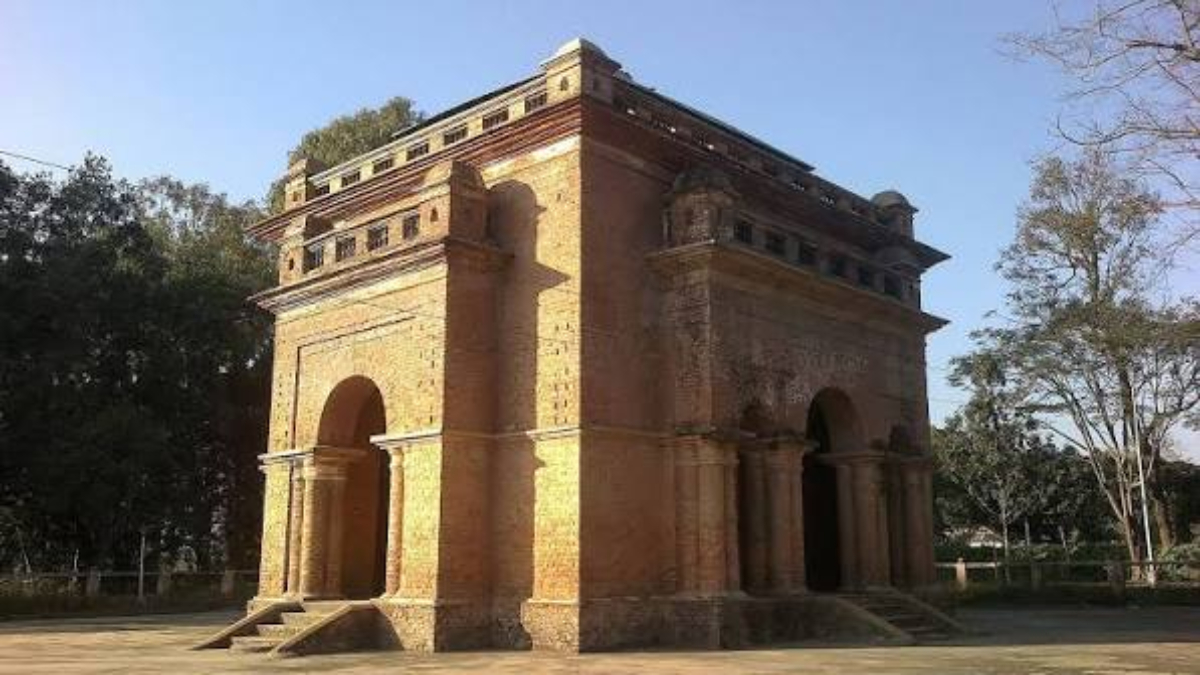
Manipur archives took centre stage on September 15 as Chief Minister Yumnam Khemchand Singh called for stronger efforts to preserve the state’s ancient records, traditional scripts and documentary heritage. The remarks came during the inauguration of the 44th Archives Week Celebration and Records Exhibition-2026 at the Manipur State Archives Complex in Keishampat, Imphal. The five-day programme, being held from September 15 to 19, aims to highlight the historical value of records preserved in the state.
Manipur archives and the need to protect historical records
The Chief Minister’s appeal assumes significance in a state where written records, manuscripts and traditional scripts provide important evidence of its social, cultural and administrative history. Preserving such material is not only about protecting old documents but also ensuring that future generations can study the development of Manipur through original sources.
The Manipur State Archives preserves government, public and private records, including documents written in archaic scripts on indigenous handmade paper, palm leaves and agar bark. The institution was established in March 1982, while the Manipur Public Records Act, 2000 was enacted to strengthen the archival system.
The emphasis on ancient scripts is particularly important because documentary heritage can be vulnerable to deterioration, improper storage and limited accessibility. Conservation, cataloguing and digitisation can help reduce these risks while making historical material available to researchers and the wider public.
New Stack Room building inaugurated
A major feature of this year’s Archives Week is the inauguration of the new Stack Room Building at the Manipur State Archives Complex. The facility is expected to strengthen the institution’s capacity to store and preserve archival material.
The state’s Department of Art and Culture announced that Khemchand would inaugurate the building as the chief guest. Art and Culture and Tourism Minister Khuraijam Loken Singh is presiding over the programme, while Art and Culture Secretary Naorem Praveen Singh is attending as guest of honour.
The Records Exhibition being held alongside the celebrations is showcasing material connected with Manipur’s history and heritage. Such exhibitions can help bring archival collections beyond researchers and specialists, allowing students, citizens and visitors to engage directly with historical documents.
Archival restoration gains momentum
The focus on Manipur archives comes at a time when the state government is also undertaking a separate effort to recover missing administrative records.
The Directorate of Printing and Stationery recently said it was working to recover 881 missing gazettes. So far, 124 gazettes have been recovered, including 116 obtained from the National Archives and eight from local sources. Another 41 gazettes have been reconstructed.
The initiative highlights the wider challenge of preserving government records. Gazettes contain important information about laws, notifications and administrative decisions, making them valuable sources for both governance and historical research.
The Directorate is also working with the National Institute of Electronics and Information Technology, Manipur, to develop an AI-powered Gazette Search system. The proposed system is intended to make records easier to locate and access.
Digitisation adds a new layer to preservation
Digitisation is increasingly becoming an important part of the state’s archival strategy. The Directorate of Printing and Stationery has already introduced e-Gazette Manipur, which provides online access to official records. It has also adopted e-Office and digitally signed file movement, becoming the state’s first paperless directorate, according to officials.
For Manipur archives, combining physical conservation with digital access could help protect fragile originals while allowing researchers to study records without repeatedly handling them.
The importance of preservation also extends beyond government documents. Fifteen fragile 8mm film reels dating from the 1930s to the 1960s are currently being restored and digitised in Bologna, Italy. The footage contains rare visual records of Manipur’s people, landscapes, ceremonies and everyday life.
Preserving scripts and cultural memory
The call to protect ancient scripts also connects with broader efforts to safeguard Manipuri cultural heritage. The Manipur State Archives holds documents written in older scripts and on traditional materials, while researchers and cultural institutions continue to work on manuscripts and historical texts.
Preserving these materials can support academic research, language studies and a better understanding of the state’s past. It can also ensure that historical knowledge does not remain confined to fragile originals or scattered private collections.
As Archives Week continues until September 19, the emphasis is therefore not simply on displaying old records. It is also a reminder that Manipur archives are a living resource for understanding the state’s history, culture and institutions. Strengthening storage, conservation, documentation and digital access can help ensure that these records remain available for generations to come.
Lumsey Jan Sewa Bhawan set for major public service boost in Sikkim