


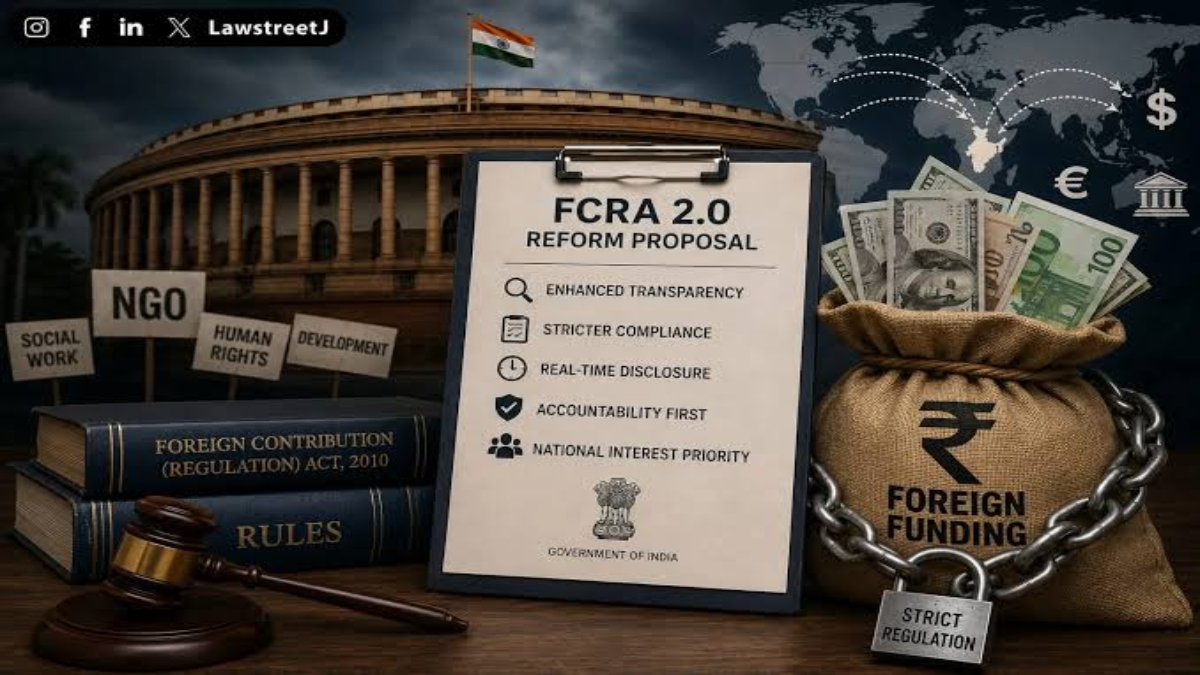
FCRA Bill has triggered a fresh political and public debate in Mizoram after the state BJP accused some church leaders of spreading incorrect information about the proposed amendments to the Foreign Contribution (Regulation) Act. The BJP said claims that the legislation could result in the seizure of churches and other properties bought with locally collected funds were misleading.
The controversy comes days after thousands of people participated in a protest rally organised by the Council of Churches in Mizoram (CCM) in Aizawl. The legislation has also been referred to a Joint Parliamentary Committee (JPC), opening the way for further scrutiny and consultations before Parliament considers it again.
BJP challenges claims over FCRA Bill
Mizoram BJP general secretary Delson Notlia addressed a press conference in Aizawl on Friday and said the proposed amendments were designed to improve transparency and prevent the misuse of foreign contributions for activities considered harmful to national security.
According to Notlia, concerns have particularly focused on Section 16A, which Christian organisations and NGOs fear could facilitate the seizure of assets acquired using foreign contributions if an organisation’s FCRA registration is cancelled or otherwise ceases to remain valid.
The BJP leader, however, rejected allegations that the proposed law would permit authorities to take over churches, schools or other buildings purchased or constructed entirely through local funds.
“There is no such provision,” Notlia said, describing such claims as misleading and unfortunate. He also accused the Mizoram Congress of using the issue for political purposes and attempting to bring church leaders into partisan politics.
Concerns raised by church leaders
Church organisations have maintained that the proposed changes could have serious consequences for institutions dependent on foreign contributions for social, educational and charitable activities.
At the August 11 rally in Aizawl, CCM president Rev Dr R Lalbiakliana alleged that provisions in the FCRA Bill could empower authorities to seize or dispose of assets belonging to church-run NGOs and civil society organisations whose registrations are cancelled, surrendered or not renewed.
Lalbiakliana also expressed concern over schools, hospitals, buildings, vehicles and ambulances connected with organisations receiving foreign contributions. He argued that the proposed provisions could raise questions relating to property rights and judicial oversight.
The CCM rally drew thousands of participants and was backed by political parties in Mizoram except the BJP’s state unit. The demonstration reflected the depth of concern among church organisations over the proposed changes.
Amit Shah meetings and BJP’s clarification
The dispute follows several meetings between church representatives, Mizoram government officials and Union ministers. Mizoram BJP president K Beichhua submitted a representation to Union Home Minister Amit Shah on July 13, according to Notlia.
Chief Minister Lalduhoma and church leaders subsequently met Shah on August 6, raising concerns over provisions dealing with assets after the cancellation or non-renewal of FCRA registrations. Notlia said Shah assured the delegation that the amendments would not operate retrospectively.
The BJP also cited government figures presented during the discussions. Notlia said India received about Rs 17,000 crore in foreign contributions during 2025-26, while Christian organisations received around Rs 3,000 crore, or less than 15 per cent of the total.
FCRA Bill now before parliamentary panel
The controversy has moved beyond Mizoram after both Houses of Parliament approved a motion on August 12 to refer the proposed amendments to a 31-member Joint Parliamentary Committee.
The committee will have 21 members from the Lok Sabha and 10 from the Rajya Sabha. It has been asked to submit its report by the last day of the first week of the Winter Session of Parliament in 2026.
The proposed legislation seeks tighter government oversight of NGOs and foreign funding. It also proposes a designated authority to manage and dispose of assets in circumstances where an organisation loses its FCRA licence. The government has maintained that the legislation is not aimed at any particular religious community.
The referral to the JPC could provide an opportunity for church organisations, NGOs, state governments and other stakeholders to place their concerns before lawmakers. Mizoram Chief Minister Lalduhoma had earlier sought such detailed parliamentary scrutiny.
The latest BJP-Church dispute highlights the competing interpretations surrounding the proposed law. While the BJP says the amendments are intended to strengthen transparency, accountability and national security safeguards, church organisations remain concerned about their possible impact on institutions receiving foreign contributions. With the FCRA Bill now headed for detailed parliamentary examination, the debate is likely to continue as stakeholders seek clarity on its provisions and safeguards.