

Manipur agricultural development is gaining attention as Chief Minister Yumnam Khemchand Singh looks to strengthen farming and revive the state’s economy. The government is focusing on integrated farming, crop diversification, horticulture and better market opportunities to improve rural livelihoods.
The Chief Minister has called for greater use of the state’s agricultural potential, particularly in the hill districts. The approach aims to increase farmers’ incomes, encourage alternative crops and create sustainable economic opportunities through agriculture and allied activities.
CM Reviews Integrated Farming System for Economic Revival
The Chief Minister chaired a high-level review meeting on February 7, 2026, at the Cabinet Hall of the Chief Minister’s Secretariat in Imphal. The meeting focused on promoting the Integrated Farming System (IFS) as a strategy for economic recovery.
During the meeting, Khemchand Singh instructed concerned departments to promote alternative crop cultivation alongside allied agricultural activities. He placed particular emphasis on the hill districts, where diversified farming could strengthen rural livelihoods.
The discussions also examined how Manipur could make better use of its agricultural and horticultural resources. Officials considered opportunities to expand production, improve farmers’ earnings and develop agriculture as a stronger contributor to the state’s economy.
The meeting brought together Chief Secretary Dr Puneet Kumar Goel, Additional Chief Secretary Vivek Kumar Dewangan, Commissioner to the Chief Minister N. Ashok Kumar, Horticulture and Soil Conservation Director K. Devdutta Sharma, and Agriculture Director Peter Salam.
Their participation highlighted the importance of coordination between departments to turn the proposed agricultural strategy into practical development programmes.
Alternative Crops and Allied Activities to Support Farmers
A major part of the Manipur agricultural development strategy involves encouraging farmers to diversify their activities.
Instead of depending on a single crop, farmers could explore suitable alternatives based on local conditions, available resources and market demand. This approach could help households maintain income from different agricultural activities.
The focus on hill districts is particularly important because farming opportunities and geographical conditions vary across Manipur. Therefore, agricultural programmes need to consider local requirements rather than follow a uniform approach.
Additionally, integrating crop cultivation with animal husbandry, fisheries and horticulture could provide farmers with more than one source of income.
For example, livestock and fisheries can complement crop production within an integrated farming model. Such arrangements can also encourage better use of available land and agricultural resources.
Moreover, diversified farming can reduce dependence on individual crops. This may help farming households manage risks associated with unpredictable weather, changing market conditions and seasonal production challenges.
However, farmers will need technical guidance, suitable inputs and access to financial support to adopt these practices successfully.
Export Potential Offers New Opportunities for Manipur
The February review meeting also examined opportunities to increase exports of agricultural and horticultural products.
Manipur has several products with commercial potential. However, expanding their presence in national and international markets will require improvements in processing, packaging, quality certification and transportation.
Value addition can play an important role in this process. Processing agricultural produce before it reaches consumers can increase its market value and create additional employment opportunities.
The state’s black aromatic rice, Chak-Hao, offers an example of the opportunities available through specialised agricultural products.
According to the Governor’s address to the state Assembly, an agreement was signed for the export of 20 metric tonnes of white Chak-Hao rice to Japan. The product also received its first AGMARK certification.
These developments underline the importance of connecting traditional agricultural products with wider markets.
Furthermore, stronger market linkages could encourage farmers to produce according to commercial demand. Better connections between farmers, processors, exporters and buyers would help strengthen the agricultural supply chain.
June Krishi Mela Highlights Agricultural Reforms
The government’s agricultural priorities also featured at the State Krishi Mela 2026, held in Imphal on June 6.
During the event, the Chief Minister encouraged farmers to adopt double and triple cropping systems to increase agricultural output and improve their incomes. He also highlighted the importance of balanced fertilisation and healthier soil management.
Around 400 hectares of land were being earmarked for organic farming. The Chief Minister also said that the distribution of urea fertiliser would be monitored to ensure timely availability.
Another important development was the launch of the Manipur Seed and Organic Certification Agency (MASOCA). The agency is expected to strengthen seed quality and support organic farming certification.
An agreement between the Agriculture Department and the Central Agricultural University was also signed to promote natural farming certification and sustainable agricultural practices.
These initiatives complement the broader Manipur agricultural development agenda by addressing production quality, farming practices and opportunities for organic products.
CM Urges Farmers to Maximise Year-Round Cultivation
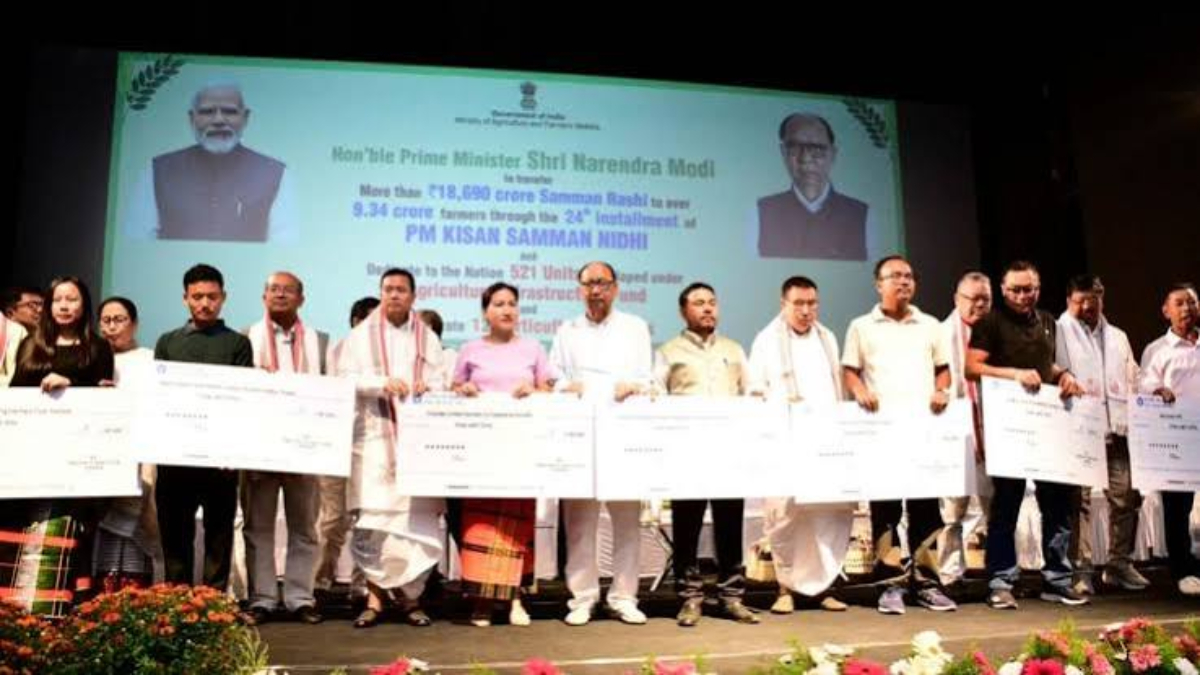
The agricultural focus continued on October 30, when Khemchand Singh attended the PM-KISAN Utsav Diwas at the MSFDS Auditorium in Imphal.
On the occasion, he urged farmers to make productive use of agricultural land throughout the year. He stressed the importance of expanding cultivation and improving productivity to strengthen the state’s agricultural economy.
The programme also included the distribution of benefits under various Agriculture Department schemes.
The event coincided with the nationwide release of the 24th instalment of the Pradhan Mantri Kisan Samman Nidhi (PM-KISAN) scheme by Prime Minister Narendra Modi.
Under the instalment, more than Rs 18,680 crore was transferred directly to approximately 9.34 crore farmer families across the country.
The Chief Minister’s appeal for year-round cultivation adds another dimension to the state’s farming strategy. Greater use of available farmland could help increase production and improve opportunities for agricultural households.
Agriculture Could Become a Driver of Economic Recovery
The government’s renewed attention to farming reflects the importance of agriculture in Manipur’s economic recovery efforts.
Integrated farming, alternative crops, organic cultivation and better export opportunities could collectively strengthen rural incomes. These measures may also create employment and encourage small agricultural businesses.
However, achieving these objectives will require consistent implementation. Farmers need reliable irrigation, quality seeds, modern equipment, technical assistance and access to markets.
The government must also ensure that agricultural development reaches communities across both hill and valley districts.
Ultimately, the success of the Manipur agricultural development strategy will depend on how effectively these initiatives translate into tangible benefits for farmers.
By strengthening agricultural production and connecting local products with wider markets, Manipur could build a more resilient rural economy. The sector may become an important foundation for long-term economic growth and sustainable livelihoods.